
Series: History of Chamba, Himachal Pradesh, India
Phase 3: Culture & Art — Part 11 of 30
This article belongs to a historical series examining how expanding empires and regional powers reshaped life in the western Himalayan hills. As external influences pressed into the mountains, local rulers navigated diplomacy, resistance, and accommodation. This phase explores how wider political currents intersected with entrenched hill traditions, altering governance without entirely displacing older structures.
Twilight in the Ravi Valley
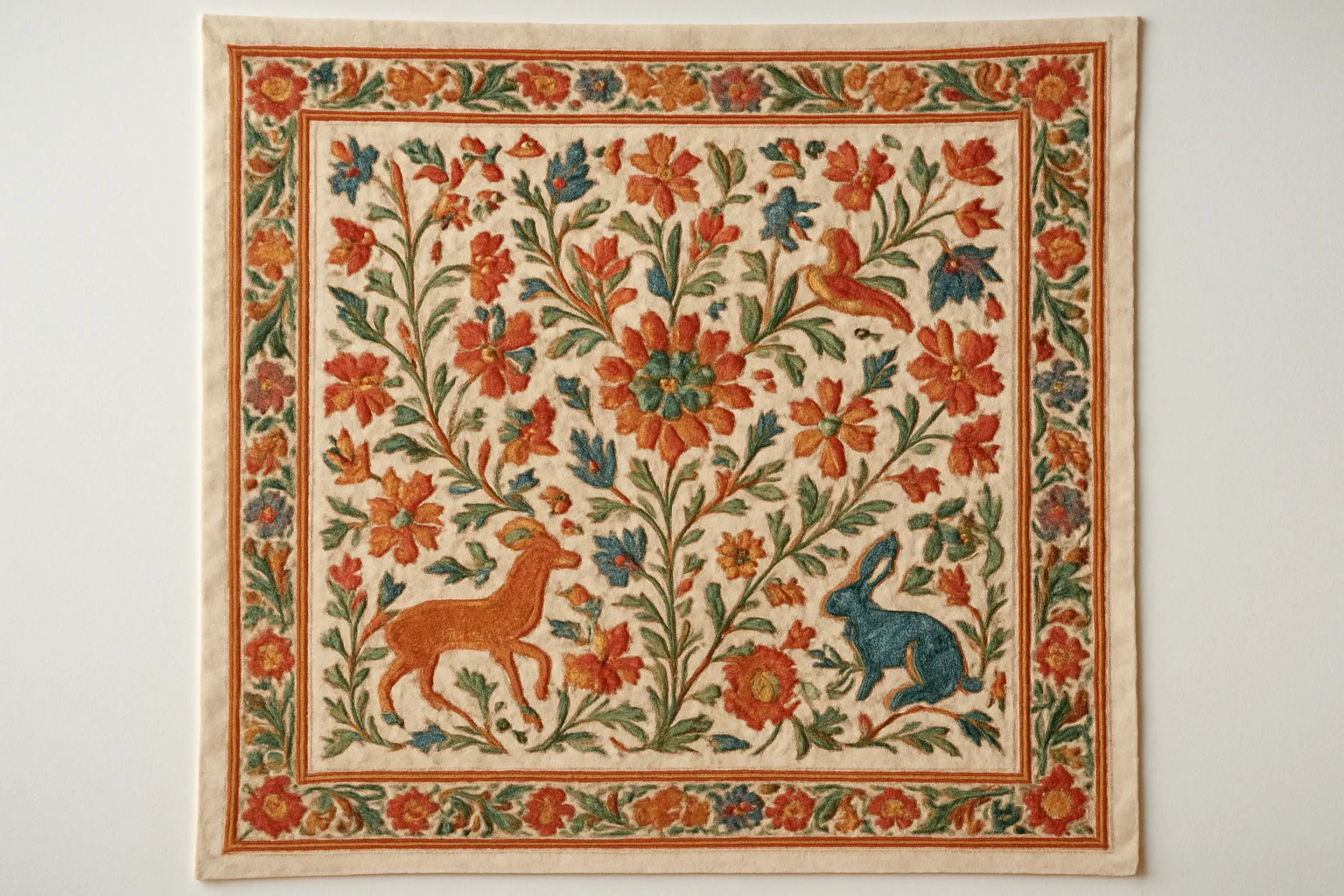
As dusk settles over the Ravi river, the old bazaars of Chamba town glow with the golden haze of lanterns. In a quiet courtyard, a group of women gather, needles glinting in lamplight as their hands move with practiced grace. Between their fingers, brilliant silks dance over soft muslin, telling stories of gods, kings, and the daily rhythms of mountain life. Each stitch is a thread in a tapestry that binds Chamba’s past to its present: the renowned Chamba Rumal.
The Valley’s Ancient Heartbeat
Chamba’s roots reach deep into the Himalayan foothills, its story shaped by both myth and the geography that cradles it. Early oral traditions speak of a land protected by deities and spirits—tales told beside hearths as snow gathered on distant ridges. Yet, even as legend mingled with memory, Chamba’s location at the crossroads of ancient trade routes fostered exchanges of goods, faith, and artistry. The valley, sheltered yet open to pilgrims and merchants, became a crucible for unique cultural expressions.
From the 6th century onward, as chronicled in later gazetteers and Rajput genealogies, the region saw the emergence of small principalities. These hill states—ruled by local chieftains and later by the Rajput dynasts—drew their legitimacy from both martial prowess and patronage of the arts. Chamba, founded formally in the 10th century by Raja Sahil Varman, grew into a center of power and culture, its citadel perched above the river in watchful repose.
From Sanctuary to Court: The Rumal’s Early Origins
The exact origins of the Chamba Rumal—literally “handkerchief of Chamba”—are veiled in a blend of oral lore and scattered archival references. Local stories suggest that women in the valley, drawing from both Pahari and Kashmiri embroidery traditions, began to embellish muslin and khaddar cloths with motifs inspired by their environment: swirling rivers, pine forests, and the pantheon of Hindu deities. These textiles were not mere ornaments. They held ritual significance, used as ceremonial covers for gifts, marriage offerings, and temple rituals.
By the late medieval period, historical inference and court records indicate that the Chamba Rumal became a cherished token within the Rajput courts. Royal women, sequestered in palace zenanas, refined the embroidery style, infusing it with the narrative richness of Pahari miniature painting that flourished under the patronage of Chamba’s rulers. The Rumal, at once utilitarian and artistic, emerged as a symbol of both familial affection and dynastic pride.
Communities, Traditions, and the Needle’s Legacy
It is in the hands of Chamba’s women that the Rumal found its true voice. Across generations, Brahmin, Rajput, and artisan women passed down the art in the intimacy of homes and temple gatherings. The embroidery—characterized by the double satin (do-rukha) stitch—allowed images to appear equally vivid on both sides of the cloth, a technical marvel that set the Chamba Rumal apart from other Indian textiles.
Patterns often drew from the region’s syncretic imagination: scenes from the Mahabharata and Ramayana, local fairs (melas), and the flora and fauna of the hills. Oral traditions speak of mothers preparing Rumals for their daughters’ trousseaux, each piece imbued with personal prayers and family histories. Over time, master embroiderers—some of whom were men trained in the miniature painting ateliers—collaborated with women, blending brush and needle to create complex compositions.
Trade, Exchange, and the Chamba Rumal’s Journey
Chamba’s position along trade routes linking Kashmir, Punjab, and the Gangetic plains meant the Rumal was not confined to the valley. Merchants, pilgrims, and royal envoys carried these embroidered treasures as gifts and diplomatic offerings. By the 18th and 19th centuries, as recorded in regional gazetteers and British accounts, Chamba Rumals adorned temples and courts far beyond Himachal—testament to the valley’s artistic influence.
The Rumal’s aesthetic evolved with contact: new threads, dyes, and motifs arrived from neighboring regions. Yet, its essence remained distinct—a reflection of Chamba’s landscape and its people’s devotion to both beauty and meaning. Even as colonial pressures and changing tastes threatened traditional crafts, the Rumal persisted, cherished by locals and sought after by connoisseurs.
Preservation, Decline, and Renewal
The 20th century brought profound changes. Partition and economic shifts disrupted the rhythms of courtly life and artisanal practice. Many families who once embroidered Rumals for royal patrons turned to other livelihoods. The craft, briefly threatened with extinction, survived through the efforts of a few dedicated practitioners and the intervention of cultural preservationists.
In the late 20th and early 21st centuries, renewed interest from museums, historians, and local organizations sparked a revival. Workshops in Chamba town now teach young women the old motifs and stitches, ensuring the Rumal’s story continues. Today, the Chamba Rumal is recognized as a Geographical Indication (GI) product, a testament to its enduring cultural significance.
Stitching Memory: The Rumal in Chamba Today
Wander the lanes of Chamba and you may see, on a shop wall or in a family home, a Rumal depicting Krishna’s raslila or a local festival immortalized in silk. For many, these textiles are not just heritage—they are living evidence of a community’s creative resilience. The art of the Chamba Rumal echoes the region’s layered history: a craft shaped by faith, family, and the ceaseless flow of the Ravi below.
As this series continues, we will turn from the world of thread and cloth to the other artistic traditions that flourished in Chamba’s shadowed valleys—miniature painting, wood carving, and the music that once echoed through its palace halls.
Previous: Trade Routes Connecting Chamba to Kashmir
Next: Chamba Miniature Paintings Explained