
Series: History of Sirmaur, Himachal Pradesh, India
Phase 3: Religion & Culture — Part 11 of 30
This article belongs to a historical series examining how expanding empires and regional powers reshaped life in the western Himalayan hills. As external influences pressed into the mountains, local rulers navigated diplomacy, resistance, and accommodation. This phase explores how wider political currents intersected with entrenched hill traditions, altering governance without entirely displacing older structures.
Mist Over the Valleys: Sirmaur’s Sacred Beginnings
Dawn creeps softly across the low hills of Sirmaur, a hush broken only by the distant call of temple bells and the slow winding of the Giri and Tons rivers. These valleys, shrouded in mist and shadowed by dense forests, have been sacred ground for as long as memory allows. Here, in the southern reaches of Himachal Pradesh, the landscape itself seems to breathe with the stories of ancient worship and the layered histories of those who have shaped this region.
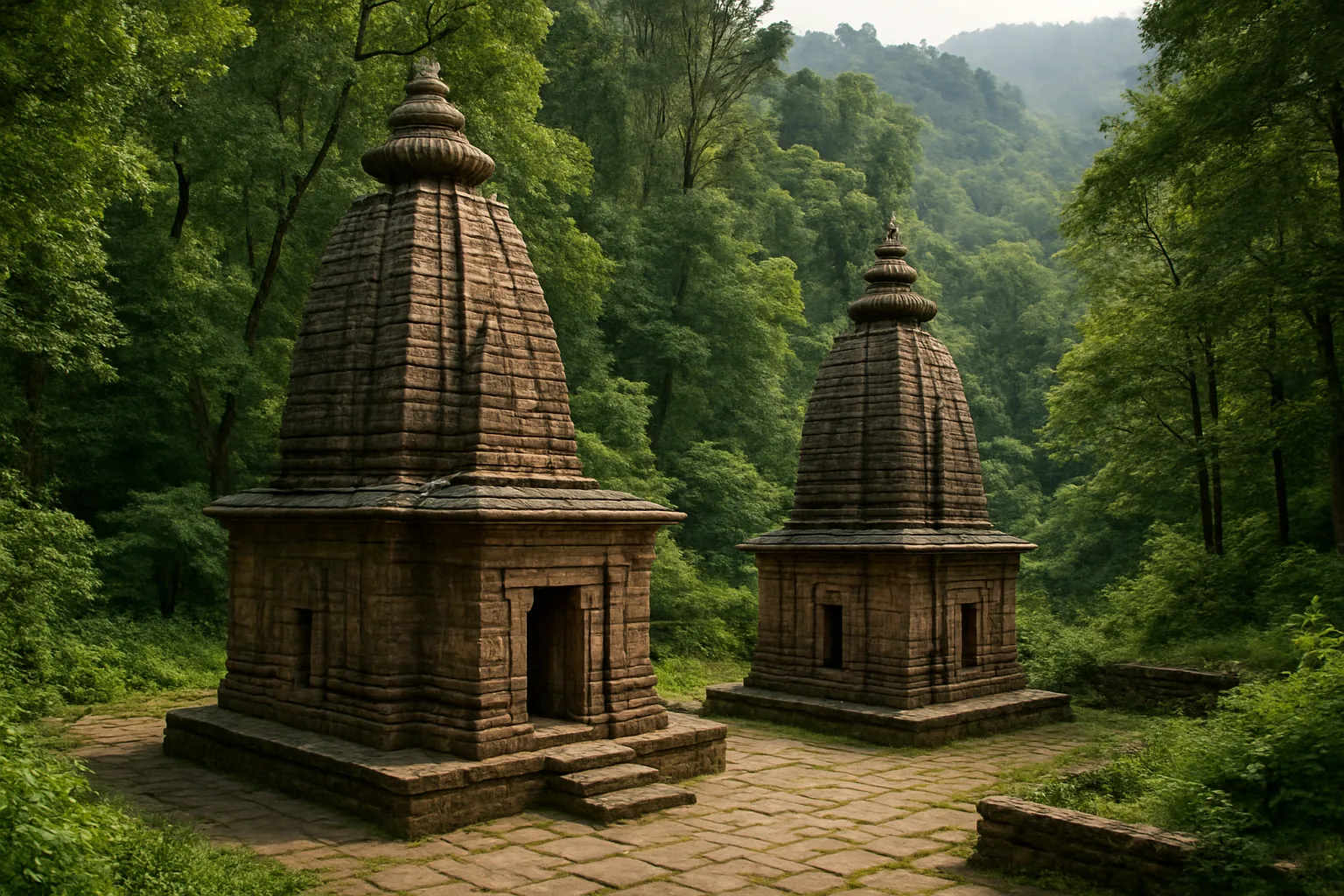
Long before the first lines were inked in the Sirmaur State chronicles or British gazetteers, the people of these hills honored their gods in places where earth and sky met. Sacred groves and quiet shrines, shaped from stone and the living forest, bear witness to a spiritual tradition as old as the hills themselves. In this post, we travel through the earliest chapters of Sirmaur’s sacred geography, tracing how temples and landscape helped define the region’s identity—while keeping a careful eye on what can be discerned from oral tradition, historical inference, and the documentary record.
Ancient Echoes: Oral Traditions and the Roots of Belief
Local lore in Sirmaur holds that the land was once the abode of sages and spirits, a place where the gods themselves walked. Stories handed down in villages like Renuka and Shillai speak of ancient rishis meditating by hidden springs, of Devi and Mahadev appearing in dreams, and of serpent deities dwelling near the riverbanks. These tales, preserved in song and ritual, suggest that the region’s spiritual landscape predates the arrival of formalized temple worship.
Such oral traditions are echoed across the lower Himalayas, where animist beliefs and ancestor veneration likely formed the earliest patterns of faith. The sacredness attached to particular rocks, trees, and water sources in Sirmaur hints at a time when the landscape itself was the temple. While we cannot date these traditions with precision, their persistence into the present day speaks to a continuity of reverence that shaped later religious developments.
From Forest Shrines to Stone Temples: The Early Settlements
By the first centuries CE, as trade routes threaded through the Shivalik foothills, Sirmaur became a crossroads for merchants, pilgrims, and settlers from the plains and neighboring hill states. Archaeological remains and scattered references in early chronicles indicate that small settlements clustered around defensible hilltops and fertile valleys, often near existing sacred sites.
It is here that we see the gradual emergence of formal temple structures. While the earliest shrines may have been wooden or earthen, by the early medieval period—roughly the 7th to 10th centuries—stone temples began to appear. These were modest in scale but rich in symbolism, often dedicated to Shaivite or Shakta deities, as well as local gods and protective spirits. The temple at Renuka, believed by tradition to enshrine the goddess mother of Parashurama, is among the most venerated, its origins lost in antiquity but its importance enduring across dynasties.
Political Patronage: Hill States and the Temple Economy
With the rise of the Sirmaur principality—established, according to the region’s own chronicles, in the late 11th century—religion and politics became ever more entwined. The early rulers of Sirmaur, like their contemporaries in Kangra and Bushahr, recognized the central role temples played in legitimizing authority and organizing local communities.
Royal patronage flowed into temple construction and festivals, with land grants and endowments recorded in copper plates and stone inscriptions. The temples at Nahan, Rajban, and Haripur Dhar flourished under such support, serving not only as centers of worship but as focal points for trade, dispute resolution, and cultural life. These structures, while often modest compared to the grand temples of the plains, were built to endure—anchoring both faith and regional identity.
Trade Routes and Cultural Exchange: Sirmaur’s Religious Mosaic
Sirmaur’s position along vital trans-Himalayan routes brought it into contact with diverse peoples and traditions. While Shaivism and Shaktism remained dominant, the region also absorbed influences from Vaishnavism, folk Buddhism, and Nath yogis traveling from the west. The Giri and Yamuna valleys, in particular, became corridors for merchants hauling salt, wool, and grain—accompanied by mendicants and pilgrims whose practices enriched local religious life.
This cultural mingling is visible in the syncretic character of many Sirmauri temples, where village deities (deota) are often worshipped side by side with mainstream Hindu gods. The persistence of older animist rituals—animal sacrifice, ancestor worship, and the veneration of sacred groves—reflects a pragmatic blending of faiths, shaped by centuries of exchange and adaptation.
Landscape as Mandala: Sacred Geography and Community Identity
For the people of Sirmaur, the landscape itself has always been sacred. Hills and rivers are not mere backdrop but active participants in the region’s spiritual life. The annual jatras (pilgrimages) to shrines like Churdhar—at 3,647 meters, the highest peak in Sirmaur—draw thousands who believe the mountain is the abode of Lord Shiva. Each village, no matter how remote, maintains its own temple or shrine, often linked to the cycles of agriculture and the rhythms of the land.
Gazetteers compiled in the colonial period, though often dismissive of local belief, nevertheless record the centrality of these sacred spaces in community life. The landscape of Sirmaur, marked by stone lingams, carved wooden doors, and holy ponds, became a living mandala—a map of power, memory, and shared purpose.
Endurance and Renewal: Temples in Modern Sirmaur
Despite the seismic changes wrought by colonial rule, Partition, and the pressures of modernity, the sacred landscape of Sirmaur endures. Temples remain at the heart of social and spiritual life, their festivals marking the passage of seasons and the bonds of kinship. Renovations and new constructions continue, often blending ancient forms with contemporary materials, as communities seek to preserve their heritage while adapting to new realities.
Today, the same mists rise over the valleys, and the same bells echo across the hills, connecting present generations to those who first carved shrines from living rock. The temples and sacred sites of Sirmaur are not relics; they are living institutions, shaping identity and offering continuity in a changing world.
Looking Ahead: Faith, Identity, and the Threads of History
As we leave the echoes of temple bells and sacred groves behind, the story of Sirmaur’s religious landscape remains far from finished. The interplay between belief, community, and geography continues to shape the region’s destiny. In the next part of our series, we will turn to the folk traditions and festivals that further illuminate the vibrant cultural life of Sirmaur—where myth, memory, and modernity meet in the shadow of the hills.
Previous: Administration and Village Life in Medieval Sirmaur
Next: Local Deities and Folk Worship in Sirmaur