
Series: The UK Allotment Year
Phase 1: The Allotment Year — Month by Month — Part 9 of 50
This phase walks through the UK allotment year month by month — from planning in January to reflecting in December. Perfect for beginners or seasoned growers who want a month-by-month checklist for thriving plots.
September Harvests: Root Crops, Onions, and Winter Prep
September marks a busy but rewarding chapter on your UK allotment. The soil retains warmth from summer, making it perfect for harvesting root vegetables and onions that have been maturing all season. At the same time, it’s a crucial moment to start preparing your plot for the colder months ahead. Getting these tasks right now will help protect your soil, maintain fertility, and set you up for a strong start in spring. Let’s explore what to focus on this month and how to do it effectively.
Harvesting Root Crops
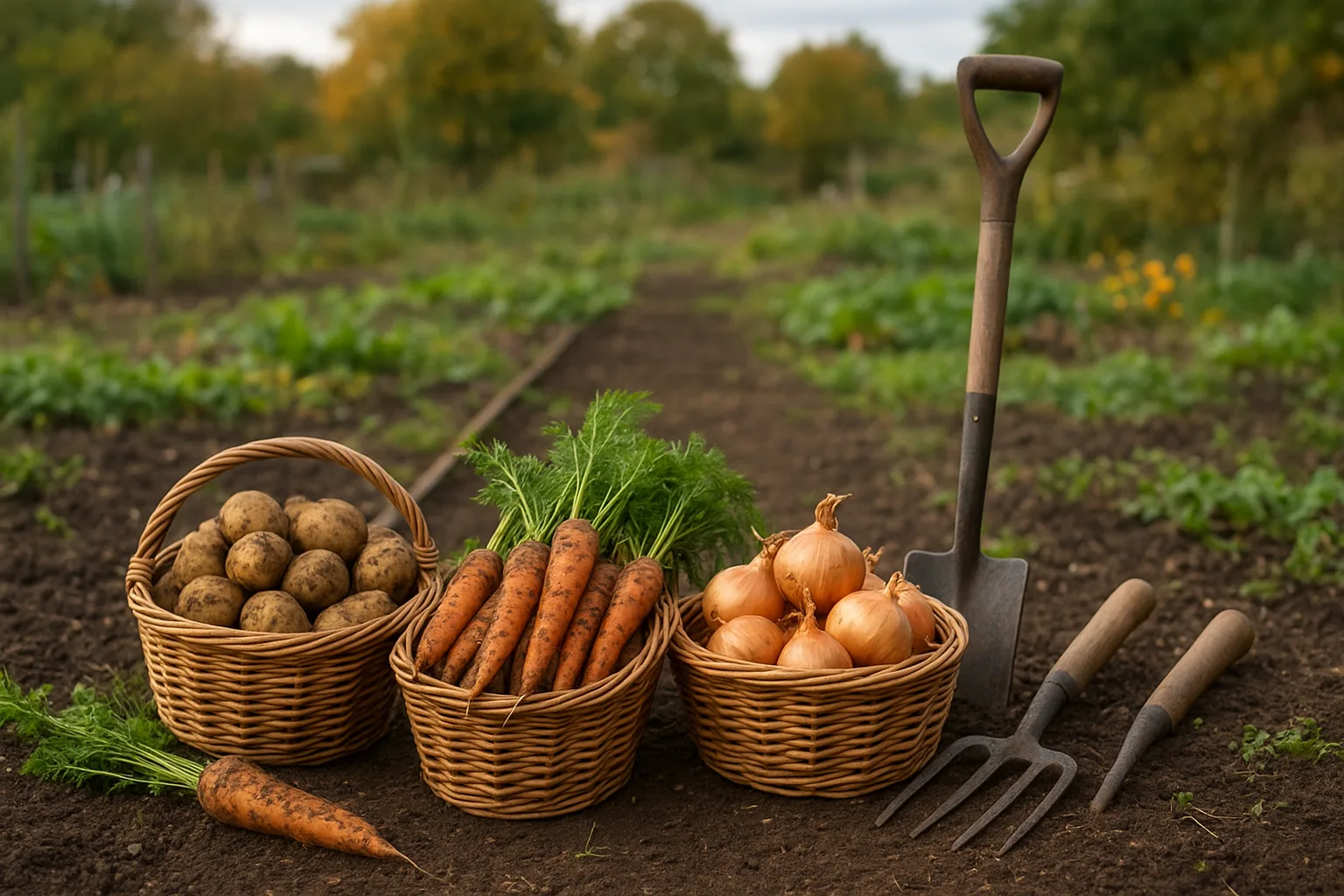
Root crops like carrots, parsnips, beetroot, and turnips generally reach their best size and flavour in September. The cooler nights help improve their sweetness, especially for parsnips. Here’s how to harvest and store them well:
- Check readiness: Carrots and beetroot are usually ready when they’re 2-3cm in diameter. Parsnips take longer but should have a good length and thickness.
- Loosen the soil: Use a fork to gently loosen soil around roots to avoid snapping or bruising.
- Lift carefully: Pull up roots by the base of their stems. Avoid yanking on the greens, as this can damage the crop.
- Trim tops: Cut tops to about 2.5cm above the root to reduce moisture loss during storage.
- Clean but don’t scrub: Brush off excess soil gently. Avoid washing roots until ready to use to prevent rot.
- Store properly: Keep root crops in a cool, dark, and humid place (around 0–5°C). A root cellar, garage, or fridge drawer wrapped in damp sand or newspaper works well.
Lifting and Storing Onions
Onions sown in spring or over-wintered need lifting before the first heavy frosts. Proper drying and storage are key to keeping them firm and flavourful through winter.
- Timing: Lift onions when tops start to yellow and flop over, usually mid to late September.
- Loosen soil: Use a fork to gently lift bulbs without bruising.
- Drying: Lay onions out in a warm, airy spot out of direct sunlight for 1–2 weeks to cure the skins.
- Trim and clean: Cut tops to 5cm and remove loose outer skins once thoroughly dry.
- Store: Keep onions in mesh bags or open crates in a frost-free, ventilated space around 5–10°C.
- Check regularly: Inspect stored onions every few weeks and remove any showing signs of softening or mould.
Preparing Your Allotment for Winter
September’s not just about harvesting; it’s also the ideal time to tidy and prepare your plot for winter. Proper preparation prevents nutrient loss and keeps weeds at bay.
- Clear spent crops: Remove old plants to reduce pests and diseases.
- Weed thoroughly: Pull weeds before they set seed to reduce next year’s workload.
- Dig in green manure: Sow fast-growing green manures like mustard or phacelia now. Later, fork them into the soil to improve fertility.
- Apply organic mulch: Spread well-rotted compost or leaf mould to enrich and protect soil.
- Cover bare soil: Use garden fleece or cloches if you plan to grow winter crops or to protect soil structure.
- Check tools and structures: Clean and sharpen tools, repair raised beds or netting before winter storms.
Tools and Materials for September Tasks
- Garden fork and spade – for careful lifting and digging.
- Hand secateurs or scissors – to trim tops neatly.
- Brush or soft cloth – for cleaning roots gently.
- Compost or well-rotted manure – for winter feeding.
- Green manure seed – mustard, phacelia, or clover.
- Mulch materials – leaf mould, straw, or garden compost.
- Storage containers – mesh bags, crates, or boxes with ventilation.
- Protective fleece or cloches – for covering soil or overwintering crops.
Quick September Checklist
- Harvest root crops and onions at peak maturity.
- Cure onions properly to ensure long storage life.
- Clean and store crops carefully in cool, dry conditions.
- Clear spent crops and weeds from the allotment.
- Sow green manure to improve soil over winter.
- Apply organic mulch to protect and feed soil.
- Check and prepare tools and structures for winter.
Common Mistakes to Avoid
- Harvesting too early: Roots left too small or onions with green tops still firm will not store well.
- Forgetting to cure onions: Storing damp or un-dried onions leads to rot quickly.
- Washing root crops before storage: Excess moisture causes mould and rotting in storage.
- Ignoring weeds: Letting weeds go to seed means more work next year.
- Not protecting bare soil: Exposed soil can erode or lose nutrients over winter.
Next Actions for Your Allotment This Month
As you wrap up your September harvests, start planning your autumn and winter crops. Consider sowing hardy greens like winter spinach or spring onions under cover. Make notes on the successes and challenges of this season to refine your plans for next year. Above all, enjoy the satisfying reward of a well-tended plot and the anticipation of fresh food through the colder months.
By following these simple, practical steps this September, you’ll secure a healthy harvest, protect your soil, and give yourself a head start for a productive spring. Happy harvesting and winter prepping!
Previous: August Abundance: Preserving, Pickling, and Late Sowings
Next: October Allotment Jobs: Composting and Cover Crops for Winter