
Series: The UK Allotment Year
Phase 1: The Allotment Year — Month by Month — Part 8 of 50
This phase walks through the UK allotment year month by month — from planning in January to reflecting in December. Perfect for beginners or seasoned growers who want a month-by-month checklist for thriving plots.
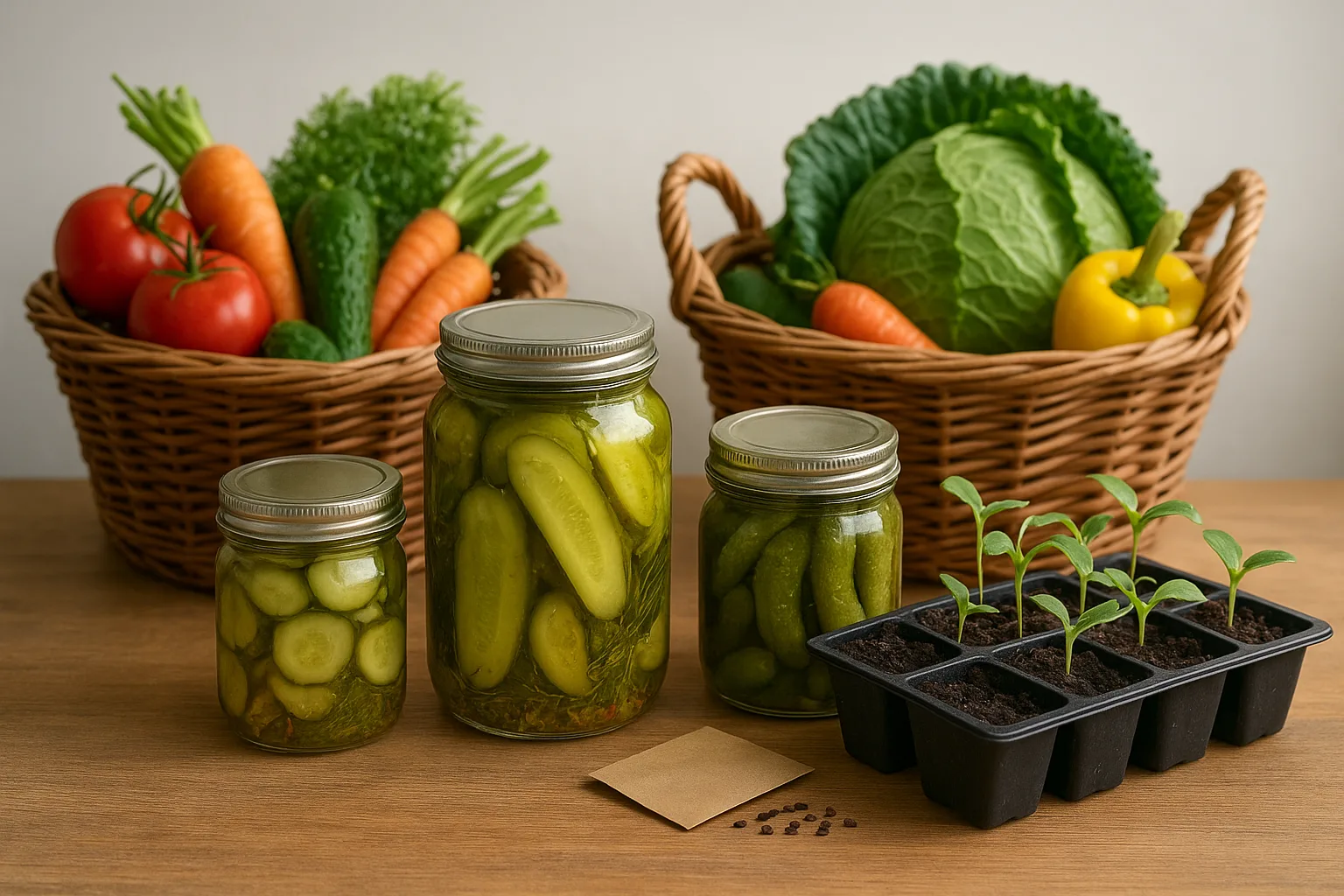
August Abundance: Preserving, Pickling, and Late Sowings
August is a busy, rewarding month on the UK allotment. The summer crops are ripening fast and the plot is bursting with produce. This is the perfect time to focus not only on harvesting but also on extending your enjoyment of these crops through preserving and pickling. Meanwhile, there’s still time to sow certain vegetables that will mature into autumn and winter, ensuring your allotment continues to provide fresh food as the seasons change.
Preserving Your August Harvest
Preserving is a fantastic way to make your summer bounty last through the colder months. Whether you have courgettes, beans, tomatoes, or soft fruits, preserving helps reduce waste and keeps flavours fresh.
- Choose the right produce: Pick vegetables and fruits when they are ripe but still firm. Avoid bruised or overripe items as they don’t store well.
- Blanch vegetables: For many vegetables like beans, peas, and courgettes, briefly blanching in boiling water then plunging into cold water helps preserve colour, texture, and nutrients before freezing or canning.
- Freezing: Ideal for beans, peas, sweetcorn, and soft fruits. Use freezer-safe containers or bags, remove excess air, and label with date and contents.
- Jams and jellies: Soft fruits like raspberries or blackberries make delicious preserves. Use natural setting agents or traditional sugar methods. For a lower-sugar option, consider apple pectin or fruit juice concentrates.
- Drying: Herbs and some fruits can be dried using a dehydrator or a warm, airy spot. This is a great eco-friendly method to store flavours without additives.
Pickling: Adding Tang and Crunch
Pickling is another brilliant way to extend your harvest and add exciting flavours to your meals. August is ideal for pickling cucumbers, onions, beans, and even courgettes.
- Prepare your vegetables: Wash thoroughly and cut into even pieces for uniform pickling.
- Choose your pickling liquid: A simple mix of vinegar (malt or cider vinegar are popular), water, salt, and sugar forms the base. Add spices like mustard seeds, dill, peppercorns, or garlic for extra flavour.
- Use clean sterilised jars: Sterilise jars and lids by boiling or using a dishwasher on a hot cycle to prevent spoilage.
- Fill and seal: Pack vegetables tightly into jars, pour over hot pickling liquid leaving a small gap at the top, then seal immediately.
- Store in a cool, dark place: Most pickles benefit from resting for 2-4 weeks before eating and can keep for several months unopened.
Late Sowings for Autumn and Winter Crops
Though August signals the end of peak growing season, there’s still plenty to do to keep your allotment productive into autumn and winter.
- Leafy greens: Sow hardy salad leaves like winter lettuce, rocket, and mustards. They grow quickly and can be harvested young.
- Brassicas: Sow autumn/winter varieties of cabbage, kale, and Brussels sprouts now for harvesting in late autumn or early winter.
- Root vegetables: Sow late carrots, turnips, and radishes. Choose fast-growing or hardy varieties that tolerate cooler weather.
- Garlic and shallots: August is prime time to plant garlic cloves and shallots for harvesting next summer.
- Use cloches or fleece: Protect tender young seedlings from early frosts with horticultural fleece or cloches to extend the growing season.
- Prepare soil: Clear spent summer crops and enrich soil with well-rotted compost or organic fertiliser to ensure strong growth of late-sown crops.
Tools and Materials for August Tasks
- Sharp kitchen knife and chopping board for preparing vegetables.
- Large preserving pan or saucepan for making jams and pickling liquids.
- Sterilised glass jars with airtight lids for pickling and preserving.
- Freezer bags and containers for freezing produce safely.
- Blanching pot or large saucepan with a colander for quick vegetable blanching.
- Dehydrator or a warm, dry, airy space for drying herbs and fruit.
- Horticultural fleece or cloches for protecting late seedlings.
- Compost and organic fertiliser to boost soil fertility.
Quick Checklist for August Abundance
- Harvest ripe vegetables and fruits regularly to avoid waste.
- Blanch and freeze surplus beans, peas, and courgettes promptly.
- Start making jams and jellies with soft fruits.
- Prepare and fill jars for pickling cucumbers, onions, and beans.
- Sow late crops such as winter lettuces, brassicas, and root vegetables.
- Plant garlic and shallots for next year’s harvest.
- Protect late sowings with fleece or cloches as needed.
- Clear spent crops and add compost to replenish soil.
Common Mistakes to Avoid
- Delaying preservation: Don’t leave vegetables and fruits sitting too long after harvesting, as they can spoil and lose flavour.
- Improper blanching: Over or under-blanching can affect texture and colour; follow timing guidelines carefully (usually 1-3 minutes).
- Not sterilising jars: Skipping sterilisation risks spoilage and unsafe preserves.
- Sowing too late: Some crops need a minimum growing period; check variety-specific timings to avoid disappointment.
- Ignoring pests on late crops: Keep an eye out for slugs and caterpillars, which remain active into autumn and can damage tender seedlings.
Next Steps for Your Allotment in August
With preserving, pickling, and late sowing well underway, your allotment will remain productive and rewarding through autumn and beyond. Keep harvesting regularly, tidy spent crops, and prepare your soil for winter. Start planning your crop rotation and seed orders for next year’s growing season to stay ahead. August’s work sets the foundation for a fruitful autumn and a well-stocked larder.
Enjoy the abundance of August and the satisfaction of saving and extending your harvest. With these simple, practical steps, your allotment will continue to provide fresh, homegrown produce all year round.
Previous: July Allotment Tasks: Watering, Weeding, and Succession Planting
Next: September Harvests: Root Crops, Onions, and Winter Prep