
Series: History of Una, Himachal Pradesh, India
Phase 2: Medieval Period — Part 10 of 30
This article forms part of a continuing series that follows the gradual emergence of organised power in the western Himalayas. As small communities gave way to clans, chieftainships, and hill states, patterns of rule, alliance, and conflict began to take shape. This phase examines how authority was negotiated through land, ritual, and warfare, laying the groundwork for regional kingdoms that would dominate the medieval landscape.
A Night Ride Near the River
Imagine the spring of 1556. A crescent moon glimmers over the Sutlej, its pale light flickering on the restless current. Two horsemen—messengers from the court of Kangra—race along the forested banks, clutching urgent letters for the fort at Una. News of an approaching Mughal army, sweeping up from Punjab, must reach local chieftains before dawn. Every hoofbeat echoes the tension of a region perched on the edge: Una, the threshold between mountain strongholds and the northern plains, stood to decide the destinies of many.
The Crossroads of North India
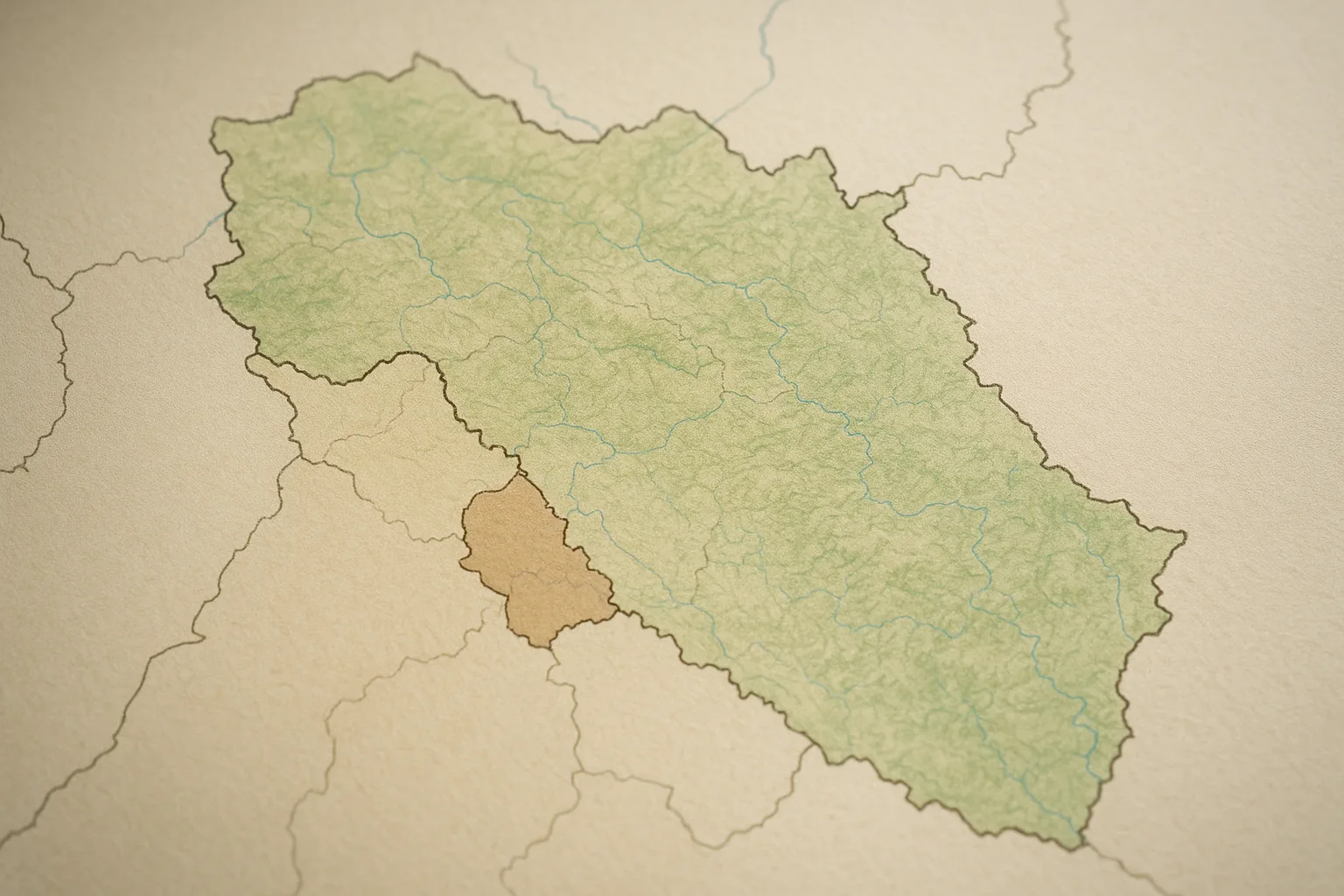
To understand Una’s medieval significance, we must first see its geography. Cradled in the low Shivalik hills, Una sits where the hills gently surrender to the fertile plains of Punjab. The Sutlej and Swan rivers mark its landscape, providing both defense and access. For centuries, this borderland was more than a backdrop—it was the stage on which empires rose and fell.
Una’s position placed it directly on the ancient trade and invasion routes connecting Delhi, Lahore, and the Himalayan kingdoms. Caravans laden with salt, wool, and spices wound their way through its valleys. Armies, too, followed these same paths: from the legendary incursions of Mahmud of Ghazni in the 11th century to the Mughal expansion in the 16th, Una was never far from the ambitions of kings.
Between Kangra’s Fortresses and Punjab’s Plains
To the north, the formidable fortresses of Kangra—most famously the sprawling Kangra Fort—dominated the hills. For medieval rulers, controlling Una meant commanding the gateway to these strongholds. When the rulers of Kangra, such as Raja Sansar Chand in later centuries, sought to reinforce their autonomy, they relied on the hill passes and fords near Una to move troops and provisions.
To the south and west sprawled the kingdoms of Punjab. From the Sultanate courts of Delhi to the Sikh confederacies, Punjab’s rulers saw Una as a buffer—sometimes a bastion, sometimes a breach. The Gagret and Amb passes funneled traffic through Una’s valleys, making it a prize as well as a pressure point.
The Rajput Houses and Their Dilemmas
Throughout the medieval period, Una’s fate was closely tied to the Rajput principalities that held sway over Himachal’s lower hills. The Katoch dynasty of Kangra, tracing its lineage to ancient times, intermittently claimed Una as a feudal outpost. Yet pressure from Punjab was constant. The Ghaznavids and later the Ghurids, advancing from Multan and Lahore, sent raiding parties across Una’s riverbanks, testing the resolve of the Rajput defenders.
Records from Persian chroniclers like Firishta describe how local chieftains—thakurs and ranas—negotiated, resisted, or sometimes submitted to the flood of invaders from the plains. When Sultan Firoz Shah Tughlaq campaigned in the region during the 14th century, his armies skirted the foothills, seeking to subdue minor forts and tax the lucrative trade routes passing through Una’s territory.
Commerce, Culture, and Conflict
Despite its vulnerability, Una thrived on the crossroads. Local markets, such as the ancient haats near Bangana and Gagret, attracted traders from both hill and plain. The movement of people brought not only goods, but also ideas. Sufi saints from Punjab, like Sheikh Farid, are known to have traveled the region, leaving behind legends and shrines that dot the countryside to this day.
Yet commerce and culture could not entirely shield Una from conflict. When Zain Khan Sirhindi, the Mughal governor of Sirhind, attempted to reinforce Mughal authority in the mid-16th century, Una again found itself on the front lines. The armies of Akbar, advancing north after the Second Battle of Panipat in 1556, sought to bring the fractious hill chiefs under imperial control. Skirmishes erupted near the river crossings and hill passes, as Una’s local rulers tried to balance submission and self-preservation.
Sanctuaries and Strongholds
Across the centuries, Una’s people learned to adapt. During invasions, villagers took refuge in temple complexes and fortified hamlets. The revered Chintpurni and Sheetla Devi temples, perched atop the ridges, became sanctuaries as well as centers of local governance. Oral traditions recall how local priests and community elders mediated between warring sides, offering safe conduct to traders and pilgrims alike.
Over time, Una’s settlements grew more resilient. Defensive watchtowers—many now lost to time—once overlooked the main routes. The remains of old earthworks and crumbling walls, visible in the fields near Amb and Tahliwal, hint at a community shaped by vigilance and negotiation.
The Tides of Mughal Power
By the late 16th century, the Mughal Empire’s grip on the region tightened. Akbar’s policy of integration brought relative stability. Revenue officials, known as amils, were dispatched to Una, tasked with collecting taxes and maintaining order. Persian became the language of administration, and Mughal coins began circulating in the bazaars.
Still, local identity endured. The Rajput chiefs of Una, though nominally loyal to the Mughals, maintained their traditions and alliances with Kangra. When the Mughal Empire eventually weakened, Una once again found itself exposed—this time to new powers rising in Punjab, particularly the Sikh misls. The shifting fortunes of the region are mirrored in the folk songs and ballads still sung in Una’s villages, tales of battles, bargains, and betrayals on the borderlands.
Legacy: Shaped by the Threshold
Today, the echoes of Una’s medieval past are felt in its resilient communities and layered identities. As a district, Una stands as a living reminder of the crossroads it has always been—a place where mountain and plain, tradition and change, meet and mingle. The river crossings that once carried armies now bustle with commerce and pilgrimage. The temples and old market sites, centuries-old, remain gathering places for stories and memories.
Una’s strategic legacy is not merely a matter of maps and borders. It is etched in the rhythms of daily life, in the festivals that blend hill and plain customs, and in the enduring spirit of negotiation and adaptation. In a world still shaped by boundaries and bridges, Una’s story offers a timeless lesson in resilience—and in the creative, sometimes precarious, art of living at the threshold.
Previous: Religious Centres and Faith Practices in Medieval Una
Next: Sikh Expansion into the Una Region