
Series: History of Solan, Himachal Pradesh, India
Phase 2: Medieval Period — Part 9 of 30
This article forms part of a continuing series that follows the gradual emergence of organised power in the western Himalayas. As small communities gave way to clans, chieftainships, and hill states, patterns of rule, alliance, and conflict began to take shape. This phase examines how authority was negotiated through land, ritual, and warfare, laying the groundwork for regional kingdoms that would dominate the medieval landscape.
Before Dawn: Life Begins in Solan’s Valleys
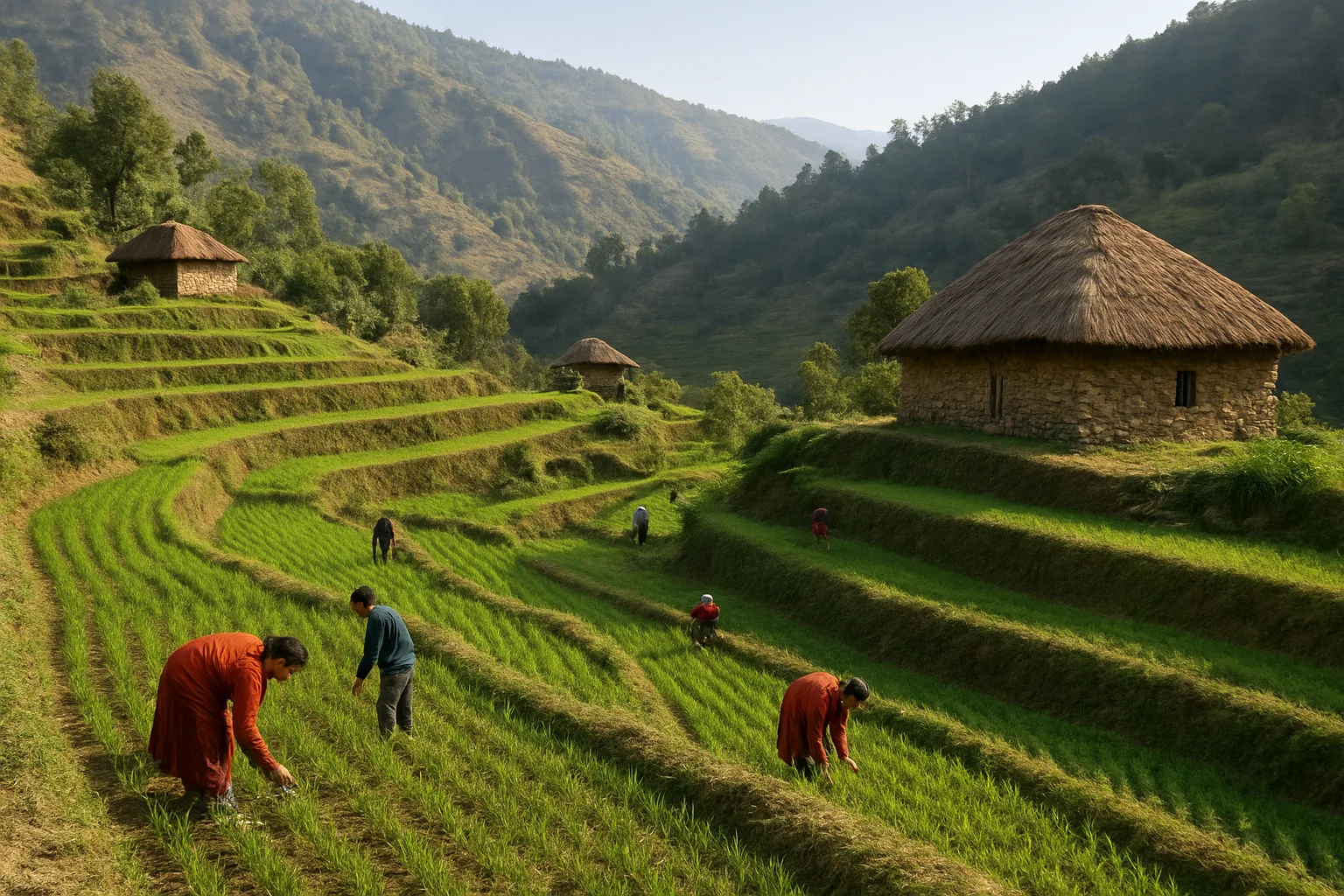
A faint silver glow crests the ridges above Solan. The year is 1420. A farmer named Bhanu rises from his thatched hut, stretches beneath a sky still dotted with stars, and listens for the first gurgle of water in the kuls—the ancient channels that feed his fields. The air is sharp and fragrant with pine, but his mind is on the wheat he must sow before the sun grows hot. In these Himalayan foothills, survival is measured by the rhythm of seasons and the yield of the earth.
From Forest to Field: The Shaping of Solan’s Landscape
Long before Solan was a town, its hillsides were thick with oak, pine, and deodar forests. The medieval centuries—roughly from the 8th to the 16th—saw the gradual transformation of these wild lands. Local Rajput chieftains, including the rulers of the erstwhile Baghal and Keonthal states, encouraged clearing tracts of forest for cultivation. Oral traditions and early land grants record how entire families would migrate from lower plains, hacking terraces into slopes by hand and coaxing crops from rocky soil.
The act of creating arable land was both a feat of engineering and a ritual of belonging. Villagers built dry stone walls to hold back earth, and each generation expanded the terraces inch by inch. The scars they left on the mountainsides were marks of both toil and hope—a living testament visible even today.
The Heart of Rural Economy: Crops, Seasons, and Livelihoods
Medieval Solan’s rural economy revolved around the rabi and kharif crop cycles. Wheat and barley dominated the winter harvest, while maize, millet, and pulses flourished in the summer. The monsoon, arriving in June, was both a blessing and a peril—too little rain spelled famine, while too much could wash away precious soil. Livestock—cattle, goats, and sheep—were vital companions, providing milk, manure, and muscle for plowing.
Farming tools were simple but effective: wooden ploughs tipped with iron, hand-forged sickles, and baskets woven from bamboo. Men, women, and children worked side by side, their days punctuated by the call of the nagada drum from the village temple, marking time for sowing, weeding, and harvesting. Surplus grain was stored in mud-plastered granaries, safe from rain and rodents, traded with neighboring valleys, or offered at local fairs and festivals.
Community and Custom: The Village as a Living Organism
Medieval Solan’s villages were more than clusters of houses; they were tightly-knit communities bound by shared labor, faith, and ritual. The panchayat, a council of elders, resolved disputes and managed common resources—especially water. The system of kul irrigation channels required constant cooperation: cleaning, repairing, and distributing precious water in a region always at the mercy of the climate.
Life was steeped in custom. The arrival of spring was celebrated with folk songs and the naag puja, invoking serpent deities for rain and fertility. During harvest, villagers gathered for the baisakhi mela, exchanging news, seeking blessings, and reaffirming the bonds of kinship. The role of the temple priest, or purohit, extended beyond ritual—he was a keeper of oral history and local lore, ensuring the community remembered its origins and obligations.
Land, Power, and the Rajput Chieftains
The medieval period saw the consolidation of local power by Rajput dynasties. The rulers of Baghal, with their seat at Arki, and neighboring Keonthal, established a feudal order. They claimed the right to tax the harvest and grant land to loyal retainers or Brahmins. The village headman, or muqaddam, acted as the intermediary between the peasants and the court, ensuring tribute flowed uphill—sometimes in grain, sometimes in labor, but always under the watchful eyes of the chieftain’s men.
These landholding patterns shaped the social fabric. While the peasantry bore the brunt of hardship, they also developed strategies of negotiation—offering gifts, invoking local gods, or seeking protection from rival rulers. The memory of famines and raids lingered, but so did stories of resilience, when entire villages rebuilt after landslides or bandit attacks.
Women in the Fields: Labor, Status, and Story
Women’s work was the backbone of rural life in medieval Solan. At dawn, they fetched water from mountain springs, gathered firewood, and tended kitchen gardens. During planting and harvest, their hands were everywhere—sowing seeds, threshing grain, weaving wool, and preparing meals for weary laborers.
Folk songs and legends from this era, still sung in Solan’s villages, attest to women’s central role. The tale of Rani Sundari, who led her village in rebuilding terraces after a devastating flood, is recited every spring. Yet, women’s status was circumscribed by custom; their voices in the panchayat were rare, and inheritance of land typically passed through male heirs. Despite these limits, women shaped the rhythms of work and tradition, their lives woven into the very fabric of the land.
Trade, Travel, and the Outside World
Though tucked in the hills, Solan was never isolated. Mountain trails crisscrossed the region, carrying traders, pilgrims, and wandering monks. Barter thrived: grain for salt, woolen shawls for iron tools, honey for colored dyes. The fairs at Solan and nearby Kasauli became annual crossroads, drawing merchants from the plains of Punjab and distant Tibet.
Occasionally, news of distant wars or visiting dignitaries reached even the remotest hamlets. In the late medieval era, envoys from the Mughal court passed through, seeking tribute or safe passage. The influence of new rulers brought changes—new taxes, new crops, and, eventually, new faiths. Yet, the essential rhythms of rural life endured.
The Enduring Legacy: Medieval Roots in Modern Solan
The echoes of medieval agriculture and rural life still sound in Solan’s landscape and culture. The terraced fields, sculpted by hand centuries ago, remain the region’s green signature. Festivals, folk songs, and irrigation rituals persist—threads of continuity linking past and present. Today’s farmers use modern tools but still share water, honor the seasons, and gather for temple fairs much as their ancestors did.
In remembering Bhanu and his world—the sweat, the song, the long shadows across the fields—we glimpse the foundations of Solan’s enduring identity. In the resilience and cooperation of rural life, Solan found the strength to adapt, survive, and flourish, season after season.
Previous: Village Administration and Economy in Medieval Solan
Next: Temples and Faith in Pre-Colonial Solan