
Series: History of Kinnaur, Himachal Pradesh, India
Phase 2: Medieval Period — Part 6 of 30
This article forms part of a continuing series that follows the gradual emergence of organised power in the western Himalayas. As small communities gave way to clans, chieftainships, and hill states, patterns of rule, alliance, and conflict began to take shape. This phase examines how authority was negotiated through land, ritual, and warfare, laying the groundwork for regional kingdoms that would dominate the medieval landscape.
Twilight Over the Sutlej: Kinnaur’s Turning Point
On a crisp autumn evening centuries ago, the shadows of cedar and pine stretched long across the valleys of Kinnaur. The river Sutlej, ancient and unyielding, flowed as it always had, carving its way through rock and memory. Yet the people along its banks sensed a change in the air—not just the coming of cold winds, but the stirring of power beyond their ridges. The medieval period was dawning, and with it, the presence of the Bushahr kingdom, whose ambitions would soon leave an indelible mark on Kinnaur’s destiny.
Between Myth and Memory: Kinnaur Before the Kingdom
Long before the rise of Bushahr, Kinnaur’s story unfolded in the rhythms of oral tradition and local lore. Its inhabitants—Kinners—traced their ancestry to the semi-divine beings of Hindu and Buddhist mythology, said to dwell in the high Himalayas. Songs echoed of the Pandavas’ exile, of the sage Parashurama’s wanderings, and the region’s sacred connection to Mount Kinnaur Kailash.
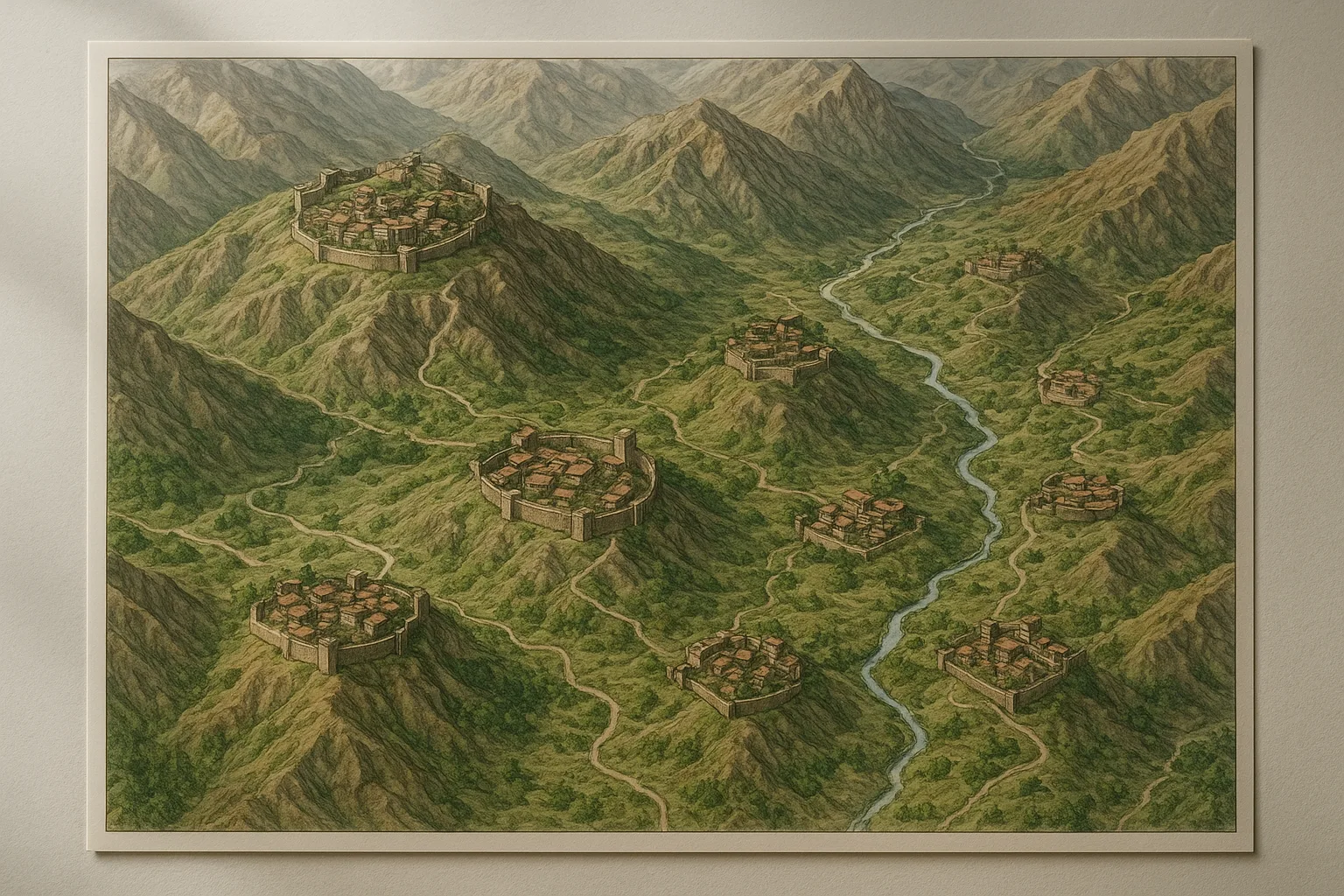
Historical inference, however, suggests a more pragmatic beginning. Early Kinnaur was a tapestry of small village republics and tribal settlements, each governed by customary law and ritual authority. The valleys—Sangla, Kalpa, Nichar—were isolated yet subtly linked by the arduous trans-Himalayan trade routes. These communities, shaped by harsh winters and bountiful summers, depended on barley, buckwheat, and apple orchards, weaving a life both self-reliant and interdependent.
Trade, Temples, and the Tapestry of Faith
Even before the first Bushahr rajas, Kinnaur was no stranger to outside influences. Traders from Tibet, Ladakh, and the Gangetic plains crossed its high passes, bearing salt, wool, turquoise, and stories. The ancient Hindustan-Tibet Road, whose origins reach deep into antiquity, wove through these valleys, transforming Kinnaur into a crossroads of commerce and culture.
Temples rose from riverbanks and hilltops, blending Buddhist stupas with wooden shrines to local deities. The syncretic faith of the Kinners—part Hindu, part Buddhist, wholly their own—emerged from centuries of exchange and adaptation. Oral traditions recall the arrival of Buddhist monks and the slow, sometimes uneasy, coexistence with indigenous animist practices. By the early medieval era, these spiritual cross-currents had become the very soul of Kinnauri identity.
Bushahr’s Ascent: From Hill State to Mountain Power
The transformation of Kinnaur began in earnest with the rise of the Bushahr kingdom. According to regional chronicles and gazetteers, Bushahr’s origins are traced to the lower Sutlej valley, with its capital at Kamru and later Rampur. By the 15th and 16th centuries, Bushahr had emerged as a formidable hill state, rivaling its neighbors in wealth and influence.
Historical records, though fragmentary, describe a gradual extension of Bushahr’s authority into upper Sutlej valleys, including Kinnaur. The process was seldom a single conquest; rather, it unfolded through marriage alliances, trade agreements, religious patronage, and—occasionally—force. The rajas of Bushahr, keen to control lucrative trade with Tibet, established garrisons and outposts along the main routes, forging a network of power that bound Kinnaur ever closer to their domain.
Communities and Alliances: The Kinners Respond
The advent of Bushahr’s rule brought both challenge and opportunity for Kinnaur’s communities. Village chieftains—known as Morangs—negotiated their autonomy, sometimes resisting, sometimes collaborating, with the new overlords. Oral traditions from villages like Chini and Pooh recall moments of rebellion and reconciliation, tales of local heroes who bargained fiercely for their people’s rights.
Bushahr’s influence was most profound in the organization of land and tribute. The kingdom introduced new systems of taxation, revenue collection, and legal arbitration, often blending them with existing customs. Over time, a distinct Kinnauri nobility emerged, their fortunes tied to the court at Rampur but their loyalties rooted in the land.
Belief Systems Under Bushahr: Sacred and Secular Authority
The Bushahr rajas, aware of the delicate religious balance in Kinnaur, became patrons of both Hindu shrines and Buddhist monasteries. They endowed temples at Kalpa and Sangla, sponsored annual festivals, and mediated disputes among monks and priests. In return, the spiritual leaders of Kinnaur offered blessings and legitimacy, weaving the authority of the raja into the fabric of the sacred landscape.
This alliance was not without tension. Periodic disputes over temple lands or the appointment of priests reflected deeper questions of identity—a struggle between preserving local tradition and embracing the wider world. Yet, for most Kinners, daily life continued much as before, guided by the cycles of harvest, pilgrimage, and the ever-present mountains.
The Roads That Shaped a Region
Perhaps the most enduring legacy of Bushahr’s ascendancy was the transformation of Kinnaur’s place in the wider Himalayan world. The kingdom invested in the maintenance of roads and bridges, safeguarding the flow of caravans between India and Tibet. Rampur’s annual Lavi fair became a magnet for traders, artisans, and pilgrims from distant lands, drawing Kinnaur firmly into the orbit of global commerce.
With each passing season, the valleys grew more cosmopolitan. New ideas, goods, and peoples arrived—some welcomed, others eyed with suspicion. Yet through it all, the Kinners adapted, preserving their language, their rituals, and their fierce devotion to home.
Legacy and Continuity: The Roots Remain
The centuries of Bushahr’s influence left Kinnaur transformed, but never erased its ancient roots. The blend of autonomy and alliance, the interweaving of faiths, and the resilience of local communities remain visible in the region’s festivals, architecture, and daily life even today. The echoes of those medieval negotiations still shape Kinnaur’s relationship with its neighbors and its sense of self.
As we turn to the next chapter in this series, the story of Kinnaur’s encounter with wider empires and the arrival of new challenges awaits. Yet the foundations laid during the era of Bushahr endure, a testament to the enduring spirit of these Himalayan valleys.
Previous: Ancient Trade Routes Linking Kinnaur to Tibet
Next: Local Chieftains and Village Governance in Medieval Kinnaur