
Series: History of Kangra, Himachal Pradesh, India
Phase 2: Medieval Power — Part 7 of 30
This article forms part of a continuing series that follows the gradual emergence of organised power in the western Himalayas. As small communities gave way to clans, chieftainships, and hill states, patterns of rule, alliance, and conflict began to take shape. This phase examines how authority was negotiated through land, ritual, and warfare, laying the groundwork for regional kingdoms that would dominate the medieval landscape.
The Dawn Over the Valley
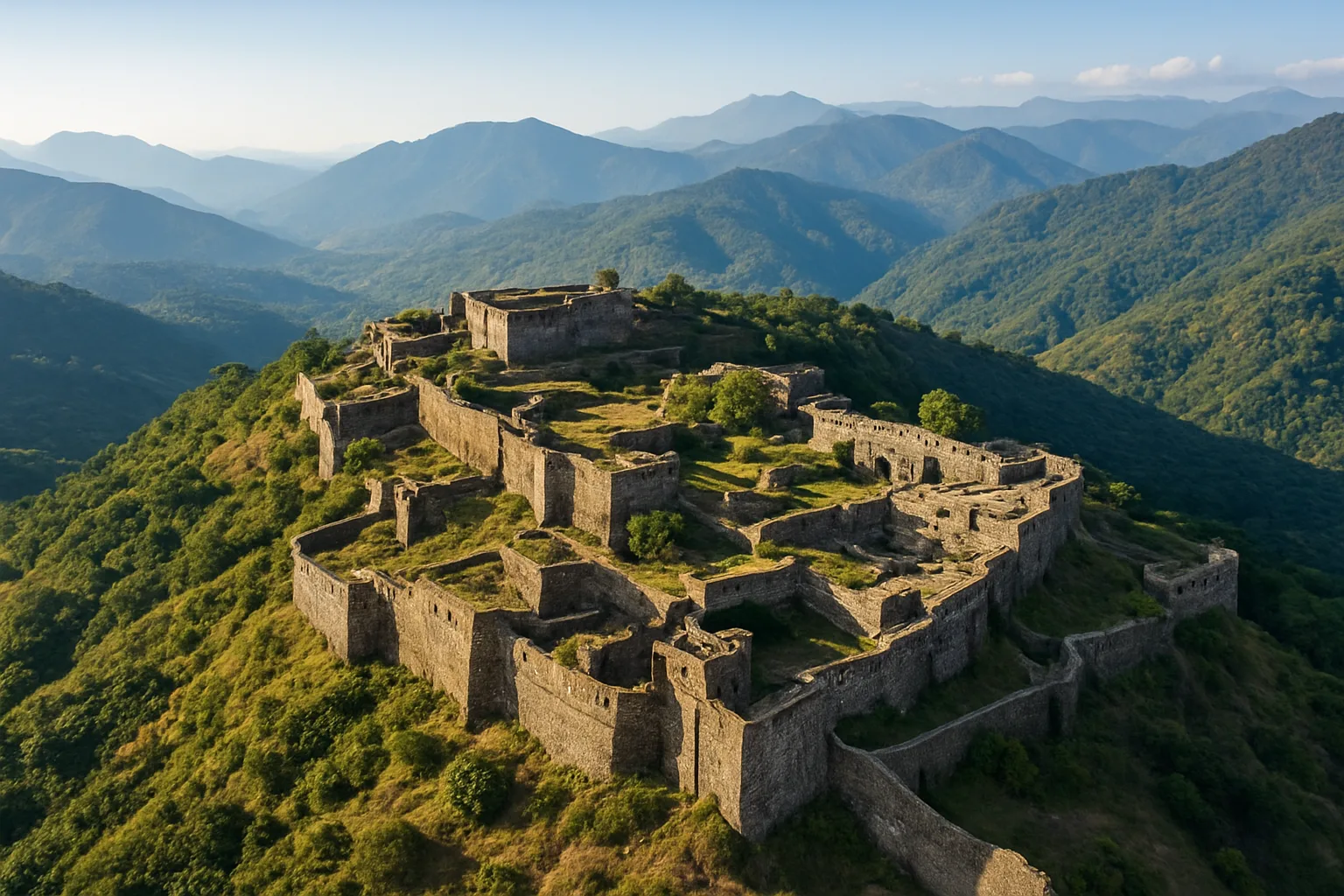
As the first light of day crests the Dhauladhar range, a silent sentinel dominates the landscape: Kangra Fort. Its massive ramparts, carved from native stone and weathered by centuries of monsoon and sun, command the confluence of the Banganga and Manjhi rivers. Here, the air is heavy with both legend and memory. For those who approach through the twisting foothills of Himachal Pradesh, the fort is more than an architectural marvel—it is the living heart of a region where myth and history have always entwined.
Ancient Anchors: The Land and Its People
The Kangra valley, nestled between snow-clad peaks and deep forests, has drawn settlers for millennia. Archaeological finds—pottery shards, early coins, and temple remains—signal a continuous thread of habitation dating back to the dawn of the first millennium BCE, if not earlier. The earliest communities here were shaped by the rhythms of the Beas river, cultivating fertile terraces and worshipping local deities whose echoes survive in today’s folk traditions.
As ancient trade routes threaded from Central Asia into the Indian subcontinent, Kangra’s position became strategic. Caravans laden with salt, wool, and precious stones crossed its valleys, linking the region to wider commercial and cultural currents. The fort’s eventual rise was no accident; it was a response to both bounty and threat, a guard post for those who called this land home.
Myths in Stone: Oral Traditions and Early Chronicles
Legend asserts that Kangra Fort was founded by the Trigarta dynasty, a lineage that traces its roots to the epic Mahabharata. According to local lore, the fort’s original stones were laid by Susharma Chandra, a king who fought beside Duryodhana at Kurukshetra. While these stories color the imagination and are preserved in the region’s ballads and pahari oral traditions, historians caution against taking them at face value. The Mahabharata’s blend of history and myth makes it a tantalizing but slippery source.
Still, these tales do more than entertain; they have shaped the fort’s identity and the prestige of the rulers who claimed descent from such ancient heroes. The earliest written gazetteers from the British era, and Persian chronicles from the Mughal period, both reference enduring traditions about Kangra’s antiquity—even if the lines between myth and verifiable fact remain blurred at the edges.
The Birth of a Citadel: Historical Inference and Early Settlement
While precise dates elude us, evidence suggests that a fortified structure existed at Kangra as early as the 4th century BCE. Accounts by Greek chroniclers following Alexander’s campaigns mention powerful hill states to the east, likely including the proto-Kangra polity. Excavations have unearthed coins of the Audumbara and Kuninda tribes, indicating a flourishing culture and administrative complexity by the early centuries CE.
By the time of the Gupta Empire’s northern expansion (4th–6th centuries CE), Kangra’s importance as a regional stronghold was codified. The fort, perched above the river valleys, was both refuge and symbol—a physical manifestation of the hill states’ determination to remain autonomous, even as empires rose and fell on the plains below.
The Chandra Rajas and the Rise of Kangra
The Chandra dynasty, sometimes called the Katoch rulers in later sources, first appears in more concrete historical records around the 10th century CE. These rulers claimed unbroken lineage from the Trigarta kings of legend, using both oral traditions and the fort’s imposing presence to legitimize their reign. The regional gazetteers compiled during British rule—drawing on both Persian and local sources—describe the Chandra rajas as fiercely independent, often resisting the encroachment of larger powers.
Under their rule, Kangra Fort reached its zenith. The rulers sponsored temples, cultivated alliances with neighboring hill states, and oversaw the flourishing of a local culture that blended Vedic, Shaivite, and indigenous Himalayan beliefs. The fort itself became more than a military bastion; it was a sacred site, housing idols and relics that drew pilgrims from across the mountains.
Trade, Temples, and the World Beyond
Kangra’s location on important trade arteries ensured its prosperity, but also painted a target. The valley’s markets brimmed with goods from distant lands—cashmere wool, saffron, and even turquoise from Tibet. Around the fort’s base, a vibrant town grew, its bazaars echoing with the rhythms of barter and prayer. The famous Jawalamukhi temple, with its eternal flame, drew both traders and pilgrims, weaving Kangra into the spiritual geography of North India.
Religious tolerance and syncretism marked the region. While the Chandra rulers patronized Hindu temples, Buddhist influences filtered in from the north, and Sufi mystics sometimes found refuge in the valleys. Such cultural pluralism would become a defining trait of Kangra society, even as invasions and conflicts loomed on the horizon.
Invasions and Endurance: The Fort in the Medieval Imagination
As the medieval era unfolded, Kangra Fort became the focal point of conquest and resistance. Mahmud of Ghazni’s infamous raid in 1009 CE, chronicled in both Persian and local records, marked the fort’s first collision with the wider currents of Islamic expansion. The fort’s defenders, outnumbered and besieged, fought with legendary tenacity. Though Mahmud ultimately seized its treasures, Kangra’s walls endured—and the Chandra dynasty soon reasserted their presence.
Over the following centuries, Kangra Fort would witness countless sieges, alliances, and betrayals. The Delhi Sultanate, the Mughal Empire, and later the Sikhs all coveted control of its heights. Yet, remarkably, the fort almost always returned to the hands of the local rulers, a testament to both its strategic design and the fierce loyalty of the people it sheltered.
Echoes of the Past: Kangra’s Living Legacy
Today, the stones of Kangra Fort bear the scars and stories of centuries. Visitors wandering its labyrinthine passages can still sense the weight of history—where every arch and courtyard speaks of battles, festivals, and the shifting tides of power. The fort remains a focal point for community memory and pride, a tangible link to the valley’s ancient roots.
The traditions born around Kangra Fort continue to shape the region’s festivals, art, and identity. As we follow the story deeper into the medieval era in the next part of this series, the fort’s role as a stage for larger dramas—conquest, resistance, and cultural synthesis—will only grow more vivid. The stones may be silent, but in Kangra, the past is always present, whispering its legends to those willing to listen.
Previous: Rise of the Katoch Dynasty
Next: Wars with Neighbouring Hill States