
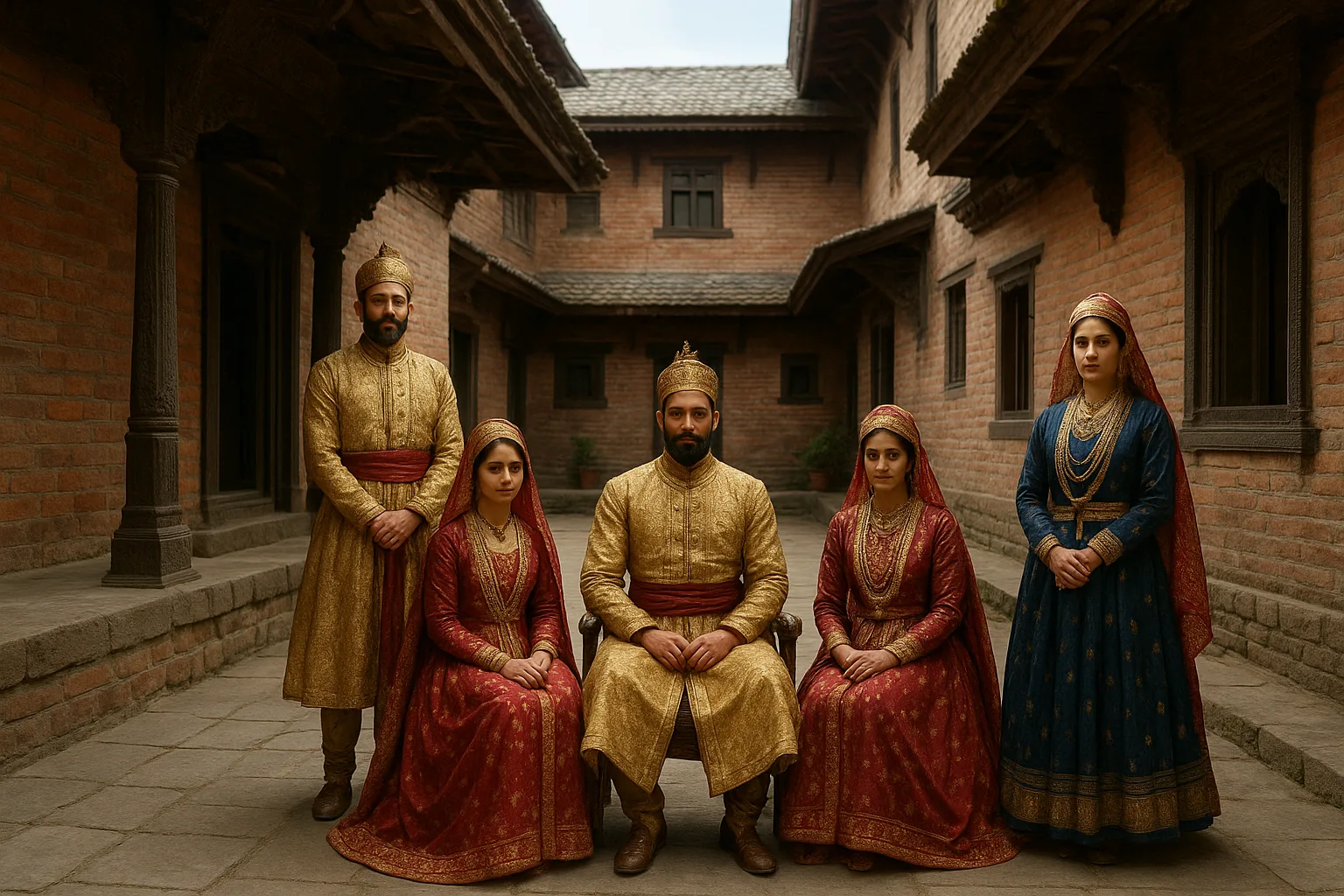
Series: History of Mandi, Himachal Pradesh, India
Phase 2: Medieval Kingdom & Dynasties — Part 7 of 30
This article forms part of a continuing series that follows the gradual emergence of organised power in the western Himalayas. As small communities gave way to clans, chieftainships, and hill states, patterns of rule, alliance, and conflict began to take shape. This phase examines how authority was negotiated through land, ritual, and warfare, laying the groundwork for regional kingdoms that would dominate the medieval landscape.
In the Shadow of the Hills: Mandi’s Medieval Dawn
The air is crisp along the banks of the Beas River. Mist curls above ancient stone shrines as the hills wake to the hush of dawn. In this moment—somewhere in the 13th century—the valleys that will become Mandi stir with human intent. Caravans wind through cedar forests, their bells echoing across the ridges. It is here, amid forest and river, that the Sen Dynasty quietly begins to shape a kingdom whose legacy lingers still.
From Oral Memory to Written Record
Mandi’s past is layered. Centuries of oral tradition, fragmentary chronicles, and later British-era gazetteers all offer windows—sometimes cloudy, sometimes clear—into its origins. Local lore, still recounted at village firesides, speaks of warrior ancestors and divine interventions. Yet, as we sift through these stories, a factual anchor emerges: by the late medieval period, this region was a crossroads for trade, culture, and evolving political power.
While mythic tales often attribute the founding of hill states to legendary heroes, historical inference and the earliest records point to a more gradual process. The Sen Dynasty stands at this threshold—where memory becomes history, and legend surrenders to the pen.
The Roots of Settlement: Communities and Faith
Long before the Sens rose to prominence, the valleys of present-day Mandi were home to diverse communities. Indigenous groups—now remembered in folk tradition as the Kol, Kanet, and other hill tribes—cultivated the land and worshipped local deities. Nature spirits, river goddesses, and the guardian devtas of each hamlet formed a living religious mosaic.
By the early medieval period, waves of migration and cultural diffusion brought new faiths and castes into the region. Brahmin settlements appeared, and Buddhist influences lingered from earlier centuries. Small hamlets clustered along streams and trade paths, while hilltop forts—some now lost to time—hinted at rising local chieftains. These were the seeds from which the first organized polities would grow.
Trade Routes and the World Beyond
Medieval Mandi was never isolated. The valleys saw a constant flow of traders and pilgrims, carrying salt, wool, and stories from the Punjab plains, Tibet, and the distant east. The Beas and its tributaries served as lifelines, connecting hill folk to far-off markets and religious centers.
Caravanserais—a blend of hostel and marketplace—sprang up along key routes. These bustling crossroads became melting pots, where merchants, mendicants, and local chiefs exchanged not only goods but also ideas and news of distant wars and dynasties. In this vibrant landscape, the Sen Dynasty would find both opportunity and challenge.
The Sen Dynasty: Myth and Memory
The origin stories of the Sens are woven as much from myth as from fact. Oral traditions, especially those preserved in the family genealogies (vamshavalis) and recited by bards, trace their descent to the legendary Sen rulers of Bengal. Some tales recount a royal exile who journeyed west, seeking new dominion in the Himalayan foothills.
Historical inference suggests a more pragmatic narrative: a warrior clan, perhaps fleeing upheaval in the Gangetic plains or seeking fortune amid the fragmented hill states, gradually established themselves as local rulers. By the late 13th and early 14th centuries, the Sens had become the dominant power in what would become Mandi, carving their authority from a patchwork of clan territories and older principalities.
The Rise of a Hill Kingdom
What set the Sens apart in this competitive landscape? They proved deft at both war and alliance. Early rulers—names like Ajbar Sen and Bahu Sen echo through the chronicles—built stone forts on commanding heights, asserting control over trade routes and river crossings. They married into local clans, weaving a web of kinship that helped quell rivalries.
Equally important was their embrace of the region’s spiritual traditions. The Sens patronized ancient temples and introduced new ones, skillfully aligning themselves with the powerful local priesthoods and devtas. Under their rule, the religious life of the valley flourished, blending ancient practices with the growing influence of Shaivism and Vaishnavism. These acts of patronage laid the groundwork for a distinctive Mandi identity—rooted in the land, yet open to the world beyond.
Chronicles and Early Administration
The earliest written records from the region—later compiled by British administrators and local chroniclers—paint a picture of a nascent hill state. The Sens established systems for tax collection and justice, drawing upon both customary law and royal decree. The capital shifted from Bhiuli to the fortified site that would become Mandi town, signaling a new era of centralization and ambition.
Relations with neighboring states were complex. The rugged terrain bred both independence and rivalry. At times, the Sens clashed with the rulers of Suket, Kullu, and Chamba; at others, they forged alliances through marriage and trade. Yet throughout, their hold on the Beas valley strengthened, even as greater powers—Delhi sultans, and later, the Mughal empire—cast long shadows to the south.
Legacy in Stone and Story
The Sen Dynasty’s imprint on Mandi is tangible even now. Ancient temples, some bearing inscriptions of early rulers, still stand as testament to their vision. Local festivals recall their patronage, and the dialects of the valley preserve echoes of their courtly culture.
But perhaps their most enduring legacy is less visible: a political and cultural fabric that could endure both turbulence and change. The Sens set the precedent for adaptability that would define Mandi’s history—absorbing outside influences, yet fiercely preserving local traditions.
Reflection: Old Roots, Living Heritage
In today’s Mandi, the past is never far away. The rhythms of daily life, the sacred groves, and the stories told at dusk all bear traces of the Sen era—a time when the region first found its voice as an independent hill state. The valleys remain crossroads, where the old and the new mingle as they have for centuries.
As we journey forward in this series, we will see how Mandi’s medieval foundations weathered the storms of empire and the ambitions of later dynasties. The next chapter will follow the kingdom’s evolution under Mughal influence and the forging of new alliances—a story of resilience and reinvention shaped by the legacy of the Sens.
Previous: Foundation of the Mandi State: Raja Bahadur Sen
Next: How Mandi Emerged as a Powerful Hill Principality