
Series: History of Lahaul & Spiti, Himachal Pradesh, India
Phase 2: Medieval Trans-Himalayan Rule — Part 6 of 30
This article forms part of a continuing series that follows the gradual emergence of organised power in the western Himalayas. As small communities gave way to clans, chieftainships, and hill states, patterns of rule, alliance, and conflict began to take shape. This phase examines how authority was negotiated through land, ritual, and warfare, laying the groundwork for regional kingdoms that would dominate the medieval landscape.
Silent Passes, Whispering Origins
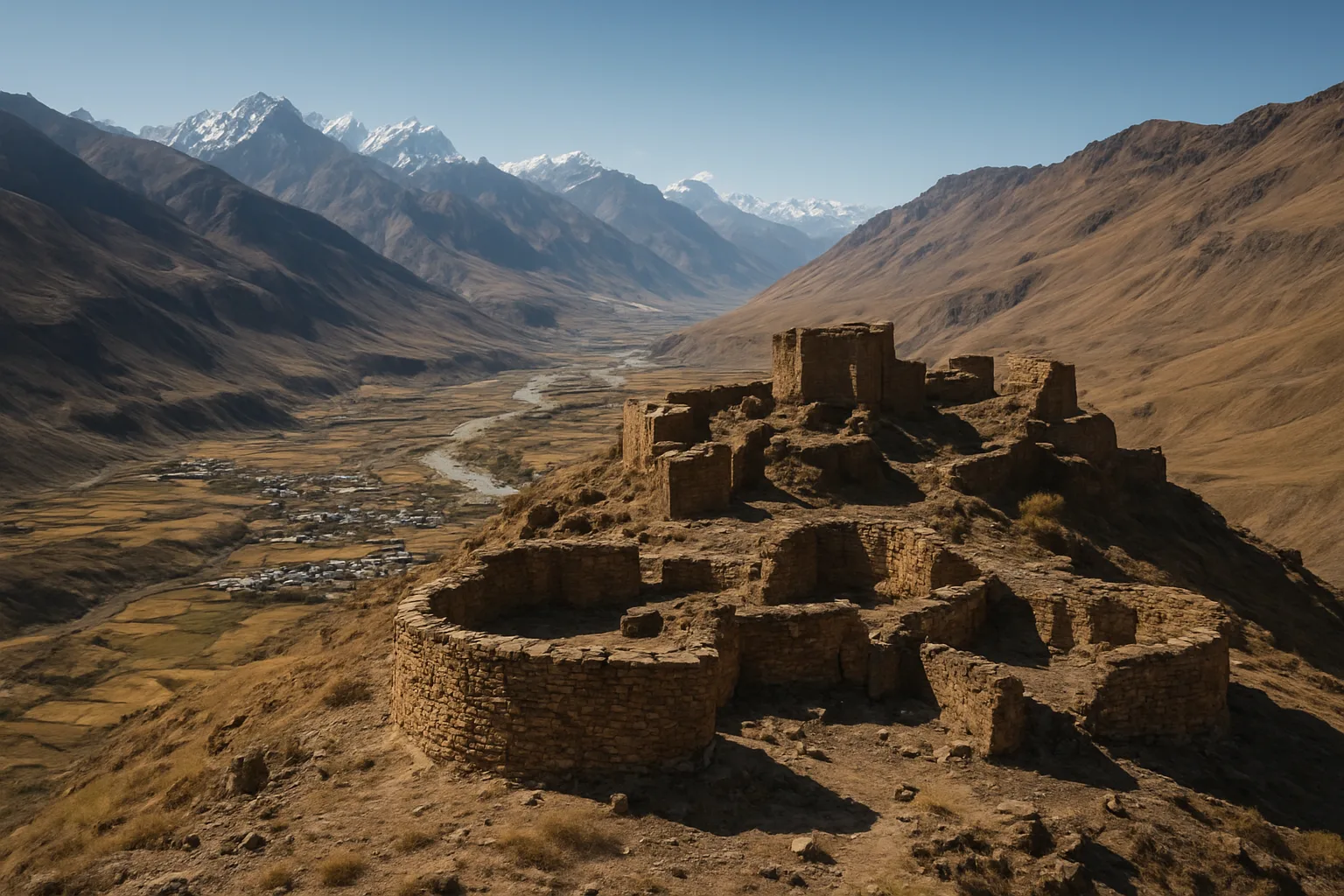
It is a morning in Spiti, sometime before the world’s great empires took shape. The valley lies swaddled in silence, save for the lowing of yak herds and the crunch of distant boots on frost. The air is thin and bright. A handful of stone dwellings cling to the valley sides above the Spiti River, their roofs blackened by centuries of wind and prayer.
Here, at an altitude where only the hardiest lives persist, the first threads of political organisation begin to entwine. Archaeological evidence is scarce, yet the land itself—crisscrossed by faint footpaths and ancient cairns—offers mute testimony to early human presence and evolving authority.
Legends, Inference, and the First Settlers
Oral traditions in Spiti, echoed in the folk tales of neighboring Kinnaur and Tibet, speak of a time when deities and demons shaped the land. The valley, some say, was once a sea, drained by the mighty serpent spirits of the Himalayas. Such myths, while not historical in themselves, encode memories of migration and transformation. They suggest that Spiti was never truly isolated, but a place where cultures met and mingled at the roof of the world.
Historians infer, based on early settlement patterns, that the first permanent communities arrived in the first millennium CE, perhaps earlier. These were agro-pastoralists—likely of Tibetan and Central Asian origin—drawn by the valley’s shelter, water, and access to highland pastures. Evidence from the Spiti Archaeological Survey points to modest clusters of stone-and-mud homes, granaries, and shrines, organized loosely along the river’s course.
Communities and the Seeds of Authority
From the outset, survival in Spiti required coordination. The harsh climate, with its scant rainfall and short growing season, demanded collective management of water, livestock, and trade. Early villages, such as those at Tabo and Kaza, appear to have operated as communal republics—their affairs guided by village elders and councils, chosen for age, wisdom, or lineage.
These councils (yulpa, in the old dialects) met in open courtyards or within the shelter of the earliest monasteries. They arbitrated disputes, organized irrigation, and negotiated with passing traders. Over time, certain families or clans—often those who first claimed the best land or who controlled access to mountain passes—emerged as local leaders, foreshadowing the later rise of hereditary chiefs.
Belief Systems and Monastic Influence
Spiti’s earliest belief systems blended animist traditions with the growing influence of Buddhism, which arrived from Tibet in the 8th and 9th centuries CE. Before the construction of monumental monasteries like Tabo (founded in 996 CE), the valley’s faith was kept in stone cairns, sky burials, and the veneration of local mountain spirits.
The coming of Buddhism transformed not only religious practice but also the valley’s political landscape. Monastic institutions became centers of both learning and authority. Monks mediated disputes, collected taxes in the form of barley and butter, and maintained written records—introducing a new layer of governance atop the existing village councils. In time, the great gompas would rival secular leaders in power, their abbots consulting with both local chiefs and distant kings.
Ancient Routes, Emerging States
Spiti was never a closed world. For millennia, the valley’s high passes—Kunzum, Parang La, and Shipki—linked it to Ladakh, Tibet, Kinnaur, and Lahaul. These routes carried not just salt, wool, and turquoise, but also ideas and modes of rule. Early chronicles and regional gazetteers, such as those compiled during the British Raj, recall a past when Spiti was both a sanctuary and a crossroads, sometimes independent, sometimes under the sway of neighboring powers.
By the early medieval period (10th–13th centuries), the rise of the Guge Kingdom in western Tibet and the expanding influence of Ladakh brought new forms of political organisation. Local chiefs, or nonos, began to act as intermediaries between Spiti’s villages and the courts of distant monarchs. Tribute was extracted, alliances forged, and the outlines of a recognisable state began to take shape—though always adapted to Spiti’s unique topography and traditions.
Documented Structures in Early Chronicles
The first clear references to Spiti’s political organisation appear in Tibetan and Ladakhi chronicles from the 11th century onward. These texts, preserved in monastic libraries, describe a valley governed by a patchwork of local rulers, each owing varying degrees of allegiance to larger polities. The British-era Gazetteer of the Kangra District records that, even into the 19th century, Spiti’s villages maintained a remarkable degree of autonomy, each with its own council, codes, and customs—echoes of a much older order.
Yet, as Tibetan Buddhism’s influence deepened, monastic hierarchies sometimes overrode secular authority. The abbot of Tabo, for example, was known to issue edicts on matters ranging from tax collection to marriage. The valley’s political life thus oscillated between the sacred and the secular, a balance that would persist for centuries.
Legacy: The Roots That Endure
Today, the rhythms of ancient Spiti still pulse in the valley’s communal fields, its festivals, and the quiet authority of its local councils. The enduring partnership between monastic and secular leadership—born of necessity in a harsh land—remains visible in the region’s governance and social life. Even as roads and digital networks bind Spiti more tightly to the outside world, its political culture draws on traditions shaped before the first kings rode over the Kunzum Pass.
As our series continues, we will follow these roots into the era of medieval trans-Himalayan rule, when new powers and shifting alliances recast Spiti’s place in the wider world.
Previous: Life and Survival in the Ancient Cold Desert
Next: Influence of Ladakh and Tibetan Kingdoms on Spiti