
Series: History of Kinnaur, Himachal Pradesh, India
Phase 1: Ancient & Trans-Himalayan Roots — Part 4 of 30
This article is part of a broader historical series exploring the earliest layers of human presence in the western Himalayas. Beginning with landscape, belief, and early patterns of movement and settlement, the series traces how communities adapted to mountainous environments long before formal states or written records emerged. These foundational centuries shaped cultural memory, local traditions, and relationships with the land that would endure through later periods of change.
Where Mountains Forge Memory: Kinnaur in Deep Antiquity
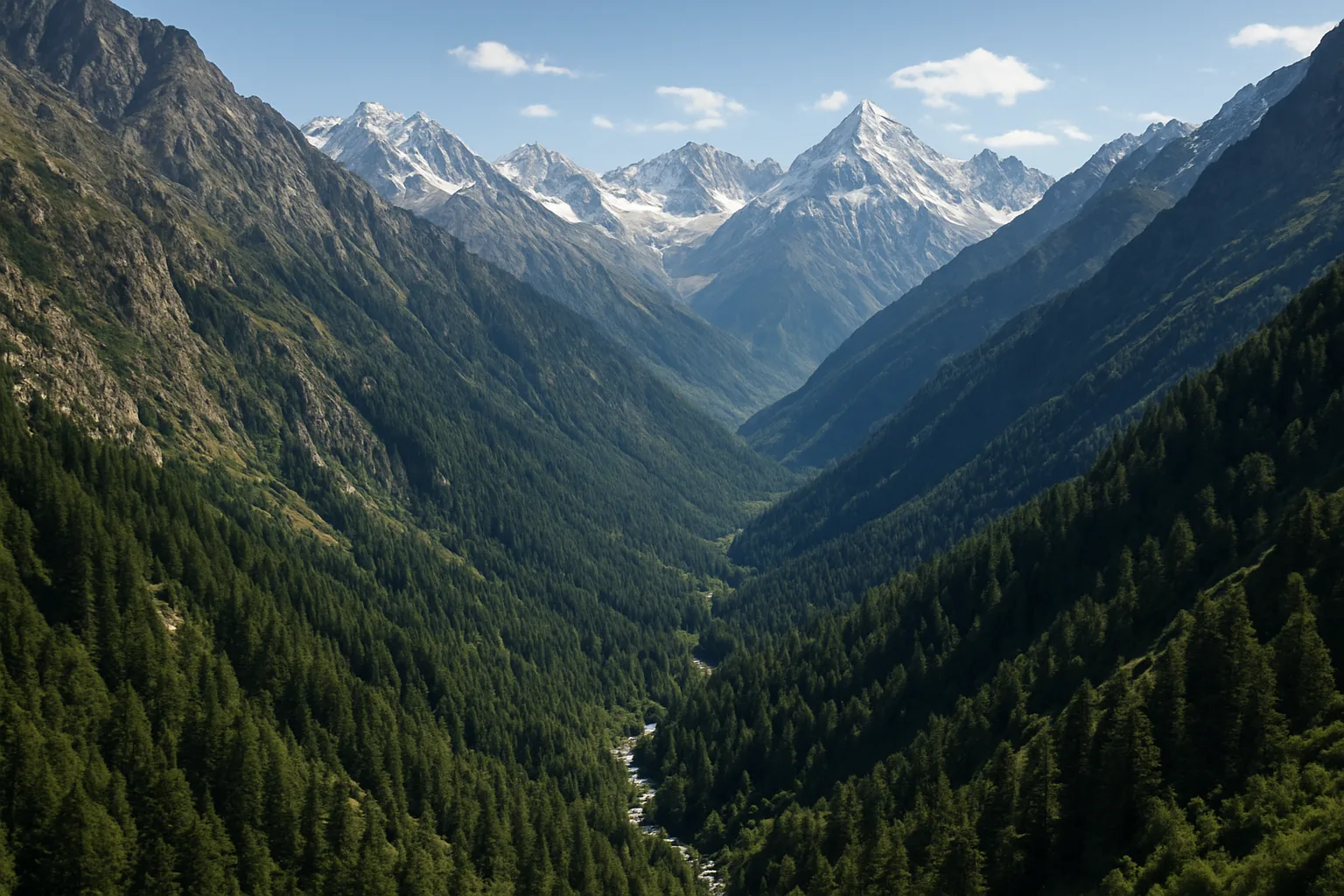
The wind is thin and sharp above the Sutlej gorge, where ancient pine and deodar forests cling to slopes that plummet into shadow. In this land, now known as Kinnaur, time once moved to rhythms set by glaciers and the slow carving of rivers. Imagine a morning some 2,000 years ago: before the arrival of chroniclers, before the boundary lines of empires, a scattering of hamlets lies scattered across inaccessible ridges. The only paths are those of sheep and shepherds, and the world beyond the next mountain is a rumor whispered in the wind. Here, geography is not merely a backdrop but the architect of destiny.
High Valleys and Deep Barriers: The Shape of the Land
Kinnaur’s location—tucked in northeastern Himachal Pradesh, bordering Tibet—has always been both a blessing and a challenge. The region’s terrain is defined by the Sutlej River, which slices through the Himalayas, creating steep valleys and dizzying altitudes. Elevations rise from around 2,300 meters at the riverbanks to over 6,800 meters at the peaks, among them the revered Kinnaur Kailash.
Historical inference, supported by regional gazetteers and early British surveys, suggests that these formidable natural barriers fostered enduring isolation. For centuries, the people of Kinnaur lived largely insulated from the political tempests that swept across the Indo-Gangetic plains and the Tibetan plateau. The passes—Shipki La, Charang La—remained closed for much of the year, preserving a rhythm of life shaped by the seasons and the silence of stone.
Oral Memory, Myth, and the Land
Oral tradition in Kinnaur is as rugged and enduring as its mountains. Myths tell of the Kinners, semi-divine beings in Hindu cosmology, whose music is said to echo in these valleys. Locals recount tales of gods and goddesses who walked the land, their footsteps now marked by sacred stones and ancient shrines. While these stories are not historical facts, they preserve a deep collective memory—a sense that this landscape has always been alive with meaning.
Such mythologies are intertwined with the lived experience of isolation. The earliest belief systems in Kinnaur blended animism, ancestor worship, and later, elements of Hinduism and Buddhism. Every grove, spring, and peak had its spirit; rituals and festivals came to mark not just the turning of seasons but the boundaries between the seen and unseen worlds. These traditions, handed down in song and story, remain central to Kinnaur identity.
The First Settlements: Life on the Edge
Archaeological traces are scarce in Kinnaur’s high terrain, but historical inference—drawing on oral accounts and the region’s enduring clan structure—suggests that the earliest communities were semi-nomadic, reliant on pastoralism and shifting cultivation. Villages such as Kamru and Kalpa, now ancient in local memory, are believed to have emerged as early hubs, each ruled by its own council of elders or local chieftain.
The population was never large: the land’s bounty was hard-won, with terraced fields carved into steep hillsides and livestock herded along perilous slopes. Yet this scarcity bred a fierce sense of autonomy. Over time, distinct kin groups and clans, such as the Kanets and the Khasas, established themselves, each tracing ancestry to legendary founders. These early settlements, always vulnerable to avalanches and landslides, relied on kinship and ritual to bind their scattered members.
Trade Routes and the Distant World
Despite its seclusion, Kinnaur was never entirely cut off. The ancient Sutlej valley formed part of the trans-Himalayan trade routes connecting India with Tibet and Central Asia. Caravans laden with wool, salt, turquoise, and grain would brave the high passes in summer, forging tenuous links between worlds.
Regional chronicles and travelers’ accounts from later centuries describe how these exchanges brought not only goods but ideas—Buddhism, for instance, likely entered Kinnaur along these routes, mingling with local beliefs. The famous Shipki La pass, now a border point, was already known as a gateway for traders and pilgrims. Yet, for much of the year, snow rendered these connections unreliable, reinforcing the land’s essential isolation.
Emergence of Hill States and Early Political Organization
As centuries passed, the need for collective defense and resource management led to the gradual emergence of proto-political structures. Oral traditions recall legendary rulers—often semi-mythical—who founded lineages and built the first fortresses. Kamru, for instance, became the seat of a local chieftain whose authority was rooted in both military strength and ritual legitimacy. In these early hill states, power was diffuse and always at risk from the unpredictable elements.
The outer world’s influence was limited but not absent. By the first millennium CE, as attested in regional gazetteers, Kinnaur’s ruling houses began to acknowledge the suzerainty of larger Himalayan polities—first Guge in Tibet, later the Bushahr state. Yet, the region’s isolation ensured that such ties remained flexible, negotiated seasonally, and often interrupted by nature’s will.
Belief Systems: Where Worlds Meet
Kinnaur’s spiritual landscape reflects its position at a crossroads. Animist traditions coexisted with early forms of Hinduism, brought by wandering ascetics or traders. By the early medieval period, Buddhism—spreading from Tibet—added new deities, rituals, and philosophies to the mix. The result was not a replacement of old beliefs, but a layering: local gods were often equated with Hindu or Buddhist figures, and festivals blended elements from all traditions.
This syncretism is still visible today in Kinnaur’s temples and monasteries, where ancient stones and wooden carvings depict a pantheon that is both local and universal. The region’s priestly families—some tracing ancestry to the earliest settlers—continue to mediate between worlds, keeping alive rituals whose origins predate written history.
Legacy of Isolation: The Roots Remain
This first epoch of Kinnaur’s history—shaped by geography, isolation, and the slow emergence of community—left enduring marks. Even as roads and modern borders have redrawn the map, the memory of these ancient foundations persists in language, ritual, and the very rhythms of daily life. To walk the paths of Kinnaur today is to feel the presence of those who, centuries ago, carved out hope and meaning from stone and silence.
In the next part of our series, we will journey further into the age of early kingdoms and the gradual opening of Kinnaur to wider currents—where myth and memory begin to meet the record of chroniclers and the ambitions of empires.
Previous: The Kinners: Mythology and Identity of an Ancient People
Next: Ancient Trade Routes Linking Kinnaur to Tibet