
Series: History of Mandi, Himachal Pradesh, India
Phase 1: Ancient & Mythological Roots — Part 3 of 30
This article is part of a broader historical series exploring the earliest layers of human presence in the western Himalayas. Beginning with landscape, belief, and early patterns of movement and settlement, the series traces how communities adapted to mountainous environments long before formal states or written records emerged. These foundational centuries shaped cultural memory, local traditions, and relationships with the land that would endure through later periods of change.
Along the Riverbanks: Mandi’s Earliest Crossroads
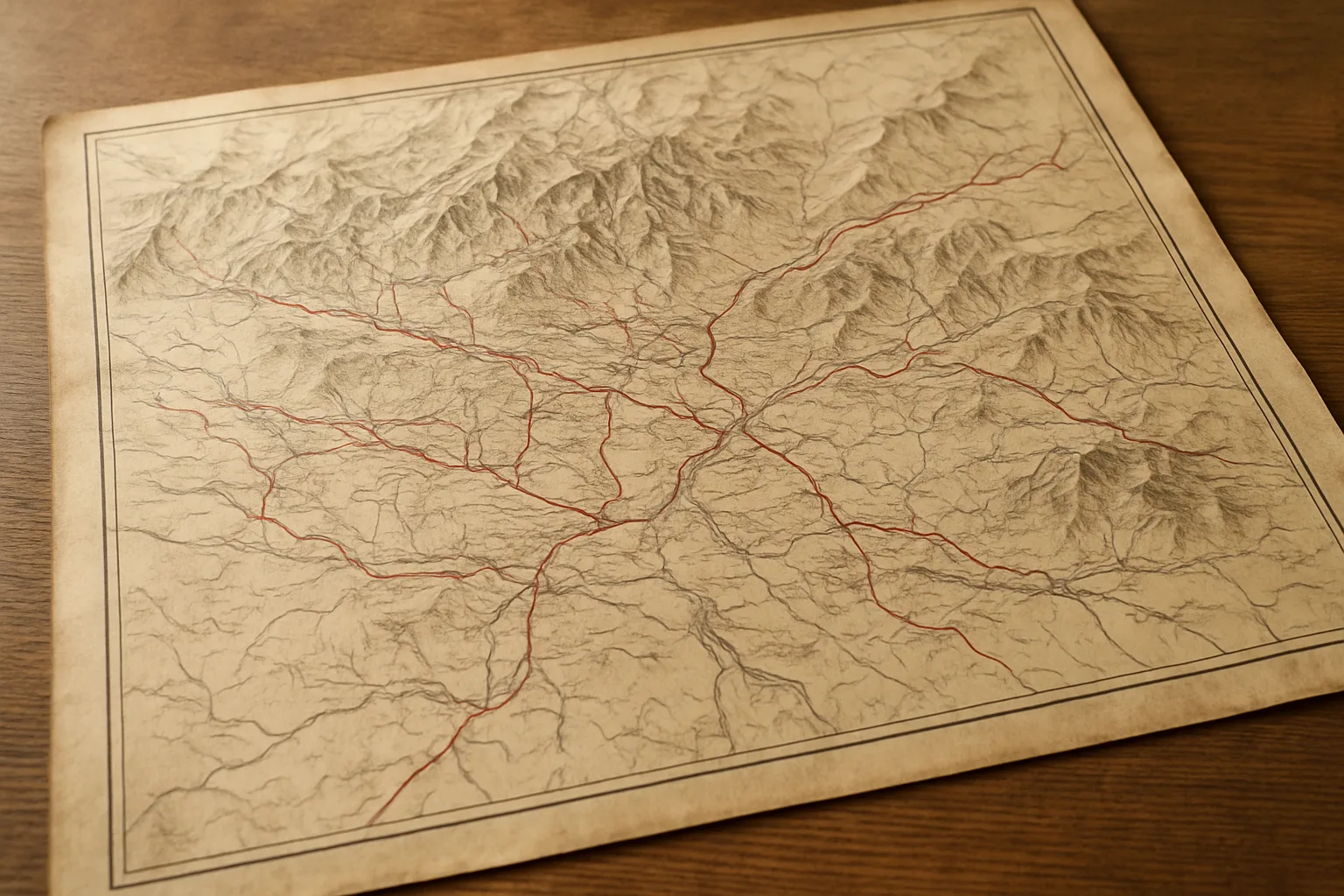
Morning mist coils above the Beas River, sunlight catching on terraced fields and stone shrines scattered along the banks. In this ancient Himalayan valley, what now seems quiet once thrummed with travelers’ voices and the clatter of mule caravans. Long before the town of Mandi found its name, the region was already a vital artery in the living map of the Western Himalayas—a place where distant worlds met, exchanged, and transformed.
Modern archaeological understanding, supported by fragments of pottery and early settlement patterns, places human habitation in this region as early as the 2nd millennium BCE. Yet, unlike the grand cities of the Indus or Ganges plains, these valleys nurtured smaller, close-knit communities—each shaped by the rhythms of the rivers and the promise of what lay beyond the next ridge.
Between Myth and Memory: Oral Traditions of the Valley
Local lore, passed down through generations, paints Mandi as a land cradled by the gods. Tales of sage Mandavya’s penance—said to have given the valley its name—mingle with stories of wandering traders and pilgrims, their paths etched into memory as much as earth. These oral traditions, though fluid and embroidered with myth, preserve echoes of a region always open to outsiders: a place of arrival and departure, of markets and meeting grounds.
Some traditions recall the valley as a resting place for merchants traveling between the Punjab plains and Lahaul-Spiti, or even farther toward Central Asia. While the details blur between legend and plausible history, the persistence of these stories testifies to the valley’s ancient role as a threshold rather than a cul-de-sac.
The Geography of Exchange: Rivers, Passes, and Early Settlements
Geography made Mandi both accessible and essential. The Beas, gushing down from the Rohtang Pass, was more than a water source—it was a natural highway threading together isolated valleys. Early settlements clustered along this river and its tributaries, forming a loose network of agricultural hamlets and fortified hillocks. Terraced farming, an innovation suited to steep terrain, anchored these communities, while forest tracks and river fords allowed movement even in harsh seasons.
Key passes, such as those at Jalori and Rohtang, connected Mandi’s valleys to the trading worlds of Kullu, Kangra, and beyond. Archaeological finds in nearby valleys—copper tools, black-and-red ware pottery, and beads—suggest a web of commerce and cultural exchange long before written chronicles appear. The region’s earliest inhabitants, likely of proto-Munda or Tibeto-Burman origins, were joined over centuries by Indo-Aryan speaking peoples, gradually weaving a rich tapestry of language and belief.
Trade, Tribute, and the Emerging Hill States
By the later centuries BCE and into the early Common Era, the Western Himalayas witnessed the rise of small principalities—each presided over by local chieftains or thakurs. The valley that would become Mandi lay at the crossroads of these emerging powers. The early hill states of Suket and Kullu, referenced obliquely in Rajput chronicles and later Mughal records, both claimed access to the lucrative trade that passed through these hills.
Salt, wool, grain, and metalware were the staples of this commerce. Salt caravans from the Punjab plains wound their way up into the highlands, while pashmina and wool flowed down from Lahaul and Tibet. Over time, local rulers imposed taxes and established market centers—prefiguring the role Mandi would play as a regional capital centuries later. The region’s strategic significance drew not only traders but also wandering ascetics, Buddhist monks, and, eventually, armies seeking to control these profitable corridors.
Belief Systems on the Move: Pilgrims, Shrines, and Syncretism
Trade routes do more than move goods—they carry ideas, rituals, and gods. The Mandi valley bears quiet testimony to this: ancient stone shrines, riverside lingams, and Buddhist relics discovered in outlying hamlets. Oral traditions speak of Buddhist sages who meditated in these hills, and local legends often blend Shaivite and Buddhist motifs, suggesting a long coexistence of faiths.
As the Silk Road flourished farther north, Mandi lay on a secondary, yet vital, network of pilgrimage and learning. The valley’s shrines—dedicated to deities like Bhima Kali, Kamaksha, and Triloknath—became nodes in a spiritual geography that stretched from the Gangetic plains to Ladakh and Tibet. By the early medieval period, these syncretic traditions fused local animism with the grand cosmologies of Hinduism and Buddhism, a process visible in festivals and temple rituals that persist today.
Documented Glimpses: Early Chronicles and Gazetteers
For centuries, written records of the region remained sparse, often produced by outsiders passing through. Persian chronicles from the Mughal era, and later British gazetteers, describe Mandi primarily in terms of its strategic position—an important stop on the route from Punjab to the inner Himalayas. Yet, these accounts offer crucial glimpses: bustling weekly mandis (markets), fortified villages perched above the river, and a polyglot population adept at both commerce and negotiation.
By the seventeenth century, the region’s importance was formalized with the emergence of the Mandi princely state—a subject we will explore in greater detail in subsequent parts of this series. But the roots of that political power, as these early records hint, lay in centuries of trade, migration, and cultural interplay.
Echoes in the Present: Mandi’s Living Heritage
Today, the old trade routes have faded into roads and highways, but their imprint endures in Mandi’s markets, festivals, and the diverse heritage of its people. The annual Shivratri fair, drawing merchants and pilgrims from across the Himalayas, echoes the valley’s ancient role as a meeting ground. Even as modernity reshapes the landscape, the stories, customs, and commerce that once defined these hills continue to bind past and present.
In the next part of our series, we will delve deeper into the formation of early hill polities, examining how shifting alliances and migrations set the stage for the rise of Mandi as a kingdom. The valley’s ancient crossroads, it seems, still lead forward.
Previous: Why Mandi Is Known as the Kashi of Himachal Pradesh
Next: Early Human Settlements Along the Beas River in Mandi