
Series: History of Kullu, Himachal Pradesh, India
Phase 1: Ancient & Mythological Roots — Part 2 of 30
This article is part of a broader historical series exploring the earliest layers of human presence in the western Himalayas. Beginning with landscape, belief, and early patterns of movement and settlement, the series traces how communities adapted to mountainous environments long before formal states or written records emerged. These foundational centuries shaped cultural memory, local traditions, and relationships with the land that would endure through later periods of change.
Whispers Beneath Himalayan Peaks
A chill lingers in the cedar-scented air as dawn breaks over the Kullu Valley. Far below the craggy summits of the Pir Panjal, rivers twist like ribbons of silver, threading ancient villages and terraced fields. Even today, the first sun on these Himalayan slopes feels older than memory itself. It is here—between sky and earth—that India’s mythic imagination finds one of its most fertile homes. Every rock, grove, and stream seems to carry a story, passed across generations in the smoky glow of hearth fires.
The World Before Time: Kullu in the Ancient Imagination
Long before written chronicles, Kullu existed as a land of legend. Its very name, local tradition holds, is rooted in Sanskrit: ‘Kulantapitha’, the “end of the habitable world.” For early travelers and hill folk, the valley must have seemed just that—a secret place beyond the reach of ordinary kings and armies, protected by wild rivers and towering snows. The earliest references to the region appear in texts like the Mahabharata and Puranas, where the northwestern Himalayas are cast as the backdrop for cosmic events and epic journeys.
But for the people who called these valleys home, myth was not merely a tale to be retold. It was a living reality, woven into the rhythms of daily life and the contours of the land itself.
Oral Traditions: The Stories That Shape a Valley
Unlike the grand palaces and written records of the plains, Kullu’s past survives largely in the oral traditions of its mountain communities. Here, deities are not distant abstractions but living presences—each village boasts its own tutelary gods (deotas), whose origins often reach deep into prehistory. Local bards and temple priests, called gur and pujaris, have for centuries acted as keepers of memory, recounting stories that blend nature, divinity, and human fate.
One foundational legend tells of Manu, the ancestral lawgiver, who survived a primordial flood and is believed to have set foot in the region after his epic journey. The temple of Manu in Manali stands as a silent witness to this mythic migration, drawing pilgrims who seek a connection to the dawn of humankind. In another tale, the Pandavas, exiled heroes of the Mahabharata, are said to have roamed these forests, leaving behind sacred stones and mysterious caves. Such stories, though impossible to verify, are deeply embedded in local identity, shaping rituals, festivals, and the very sense of place.
Myth and Memory: Distinguishing Legend from Early History
Historians and travelers—like those who compiled the Kullu District Gazetteer in the late nineteenth century—have long grappled with the challenge of separating myth from fact in the Himalayas. While the presence of ancient shrines and archaeological remains points to millennia of settlement, the precise origins of Kullu’s communities remain elusive. What is clear is that the valley’s legends served a crucial function: they provided a framework for understanding the land’s dangers and blessings, legitimizing the authority of village elders and sanctifying the annual rhythms of sowing, harvest, and migration.
Over time, as small hill states began to emerge and trade routes opened through perilous passes, myth and memory intertwined with more tangible threads of political history. The valley’s strategic position—linking India with Tibet and Central Asia—attracted traders, pilgrims, and would-be conquerors, each leaving traces in the evolving tapestry of belief and custom.
Early Settlements and the Shape of Society
Archaeological finds—stone implements, pottery shards, and early temple sites—suggest that human habitation in Kullu stretches back at least two millennia. Early settlers likely belonged to tribal groups who practiced animistic religions, venerating rivers, trees, and mountain spirits. With time, these beliefs blended with influences carried by migration and trade, giving rise to the region’s distinctive syncretism.
Key communities began to form: pastoralists who moved their flocks between high-altitude pastures and winter villages; cultivators who terraced the hillsides for barley, millet, and buckwheat; artisans who fashioned tools and ceremonial objects from local stone and metal. Each group contributed to a shared cosmology that found expression in Kullu’s festivals, oral epics, and communal rituals.
The rise of small hill polities—rudimentary kingdoms and chieftaincies—brought new layers of social organization. These early states, ruled by dynasts who traced their lineage to legendary heroes or divine ancestors, relied on both force and religious sanction to maintain control. Yet even as political boundaries shifted, the deeper mythic framework endured, binding successive generations to the land and its gods.
Belief Systems: From Animism to Living Deities
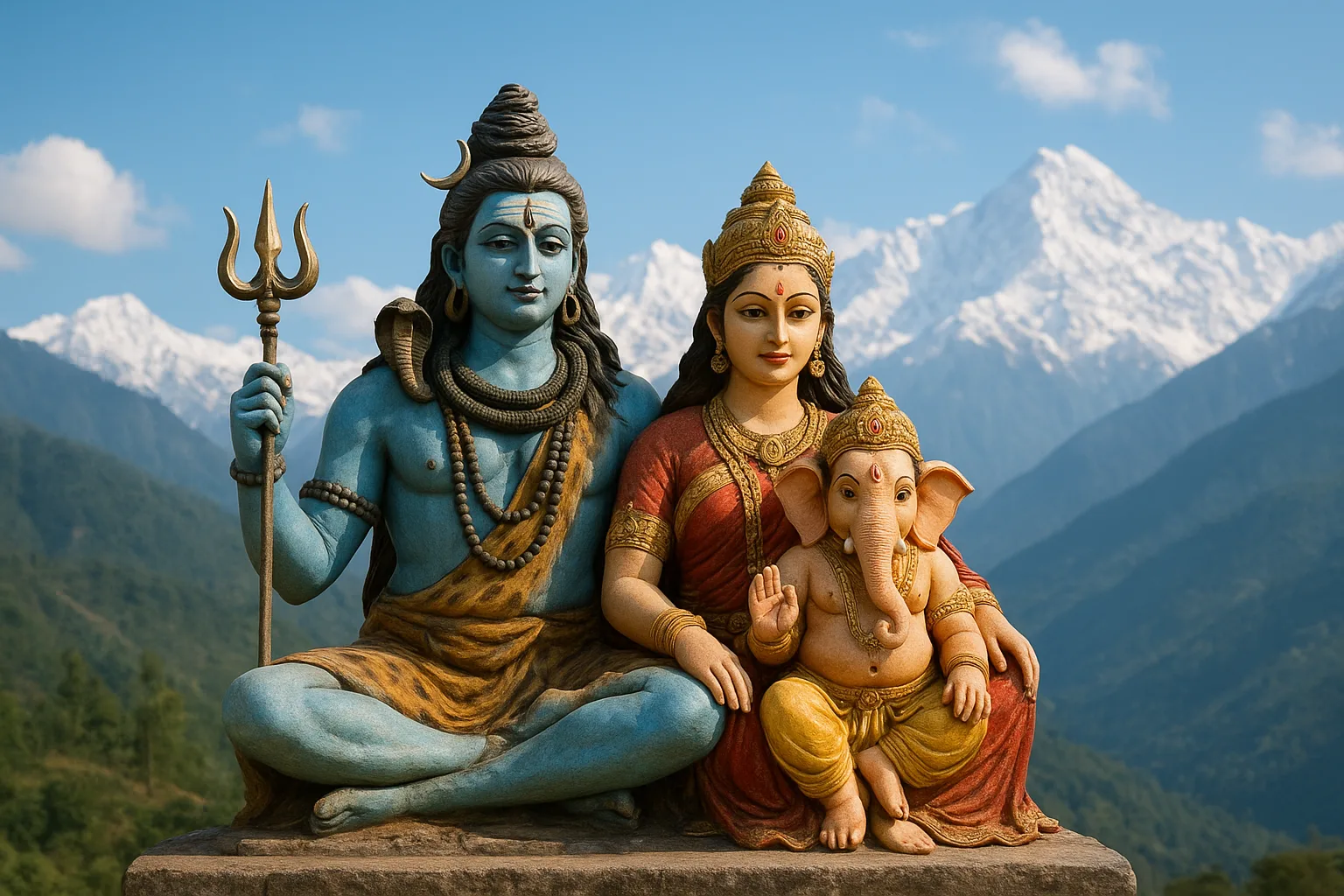
Kullu’s religious landscape is a palimpsest—layer upon layer of belief. Animistic worship of nature spirits gradually gave way to more formalized cults centered on village deities, many of whom are still venerated through elaborate annual processions. Some deotas are believed to be incarnations of pan-Indian gods like Shiva or Vishnu; others retain distinct local personalities, their stories preserved in unique dialects and ritual practice.
Unlike many regions, where temples are static monuments, Kullu’s deities are living presences: they travel between villages in ornate palanquins, settle disputes, bless crops, and even take sides in local politics. Oral traditions recount how rival deotas have settled ancient scores, or how certain gods once migrated from distant lands—echoing the movement of peoples and ideas along Himalayan trade routes.
Religious syncretism is evident in the valley’s festivals, which blend Vedic rites, Buddhist echoes, and indigenous customs. The famed Kullu Dussehra, for example, gathers hundreds of local gods in a great assembly, dramatizing both the valley’s cultural unity and its rich diversity.
Trade Routes and the Making of a Crossroads
Geography made Kullu both a sanctuary and a crossroads. Its high passes—Rohtang, Jalori, and beyond—linked the Indian plains with the Tibetan plateau, fostering centuries of trade, pilgrimage, and cultural exchange. Caravans laden with wool, salt, and precious stones once wound their way through these valleys. Alongside material goods, travelers carried new stories, beliefs, and technologies, enriching the local fabric of myth and memory.
By the early medieval period, Kullu had begun to emerge as a recognized hill state, with its own dynastic lineages and a growing network of temples and forts. Yet the valley’s mythic inheritance remained ever-present, shaping the legitimacy of rulers and the loyalties of their subjects. Even as political boundaries shifted and new powers rose, the ancient stories endured, whispered among the pines and celebrated in seasonal rites.
Echoes of the Past: Kullu’s Living Legacy
Today, the mythological roots of Kullu are not relics—they are the living soul of the valley. Temple festivals, sacred groves, and ancestral legends remain integral to daily life, connecting villagers to a shared past that is both real and imagined. In a world of rapid change, these ancient stories are not simply markers of identity; they are blueprints for resilience, community, and meaning.
As this series continues, we will journey from Kullu’s mythic dawn into the first stirrings of statehood and recorded history. The next chapter will illuminate how early rulers and dynasties shaped the valley, forging new traditions while honoring the spirits of old. The past, in Kullu, is never far away—it is as close as the next legend, waiting to be retold.
Previous: Kulantapitha: Ancient References to Kullu in Vedic Literature
Next: Early Human Settlements in the Beas Valley