
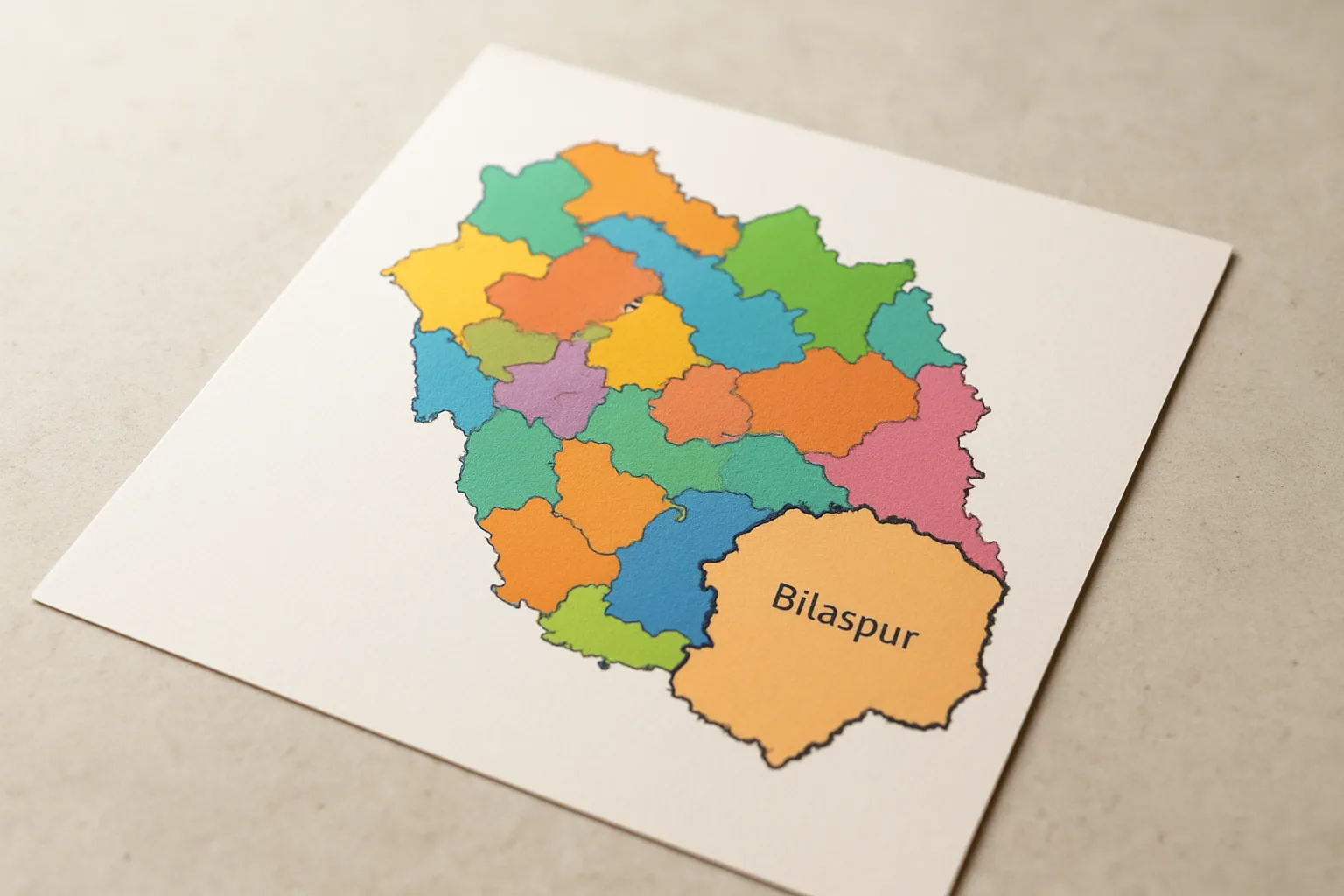
Series: Bilaspur Himachal History
Phase 5: Modern Era — Part 23 of 29
The Night the Waters Rose
On an early May morning in 1963, a hush fell over Bilaspur’s ancient alleys. The Gharwali temple bell, which for centuries rang out over the old town, was silent. Families gathered on rooftops, watching as the turquoise waters of the Sutlej slowly, inexorably, crept up the valley. It was a moment of both awe and anguish. The Bhakra Dam, the so-called ‘Temple of Modern India,’ was now complete—and Bilaspur, as generations had known it, was about to vanish beneath the surface forever.
Bilaspur Before the Dam: A Hill State’s Quiet Rhythm
For centuries, Bilaspur had been a princely state nestled in the lower Himalayas. Ruled by the Chandel dynasty since the 7th century, the town grew on trade routes linking the hills with the Punjab plains. Its palace overlooked the Sutlej, and its bazaar bustled with wool, salt, and ghee merchants. Raja Anand Chand, the last ruler before independence, presided over a population deeply woven into the rhythms of the river and the rituals of hillside life.
Local legends and colonial-era gazetteers alike described Bilaspur as a place of quiet dignity, proud temples, and a distinctive, lilting dialect. By 1947, the state had weathered centuries of Mughal, Sikh, and British influence, retaining a stubborn sense of identity even as the tides of history shifted around it.
Independence and a New Union
India’s independence in 1947 brought Bilaspur’s royal era to an end. Raja Anand Chand signed the Instrument of Accession. In October 1948, Bilaspur became a separate Chief Commissioner’s province, administered directly from Delhi. The arrangement was short-lived: by 1954, Bilaspur merged with Himachal Pradesh, losing its princely autonomy. For many, the change was abrupt—a proud hill state suddenly folded into a growing union, its future tied to distant decisions.
Yet the people of Bilaspur were less concerned with flags than with survival. The post-independence years brought fresh hopes and anxieties. Would the hills be left behind as India modernized? Or would the new state bring roads, schools, and opportunity?
The Bhakra Dam: Promise and Displacement
Few could have foreseen the scale of change that the Bhakra Dam would bring. Conceived by British engineers and revived by Indian planners, the dam was designed to tame flooding, generate electricity, and irrigate the thirsty plains of Punjab and Haryana. Jawaharlal Nehru, India’s first Prime Minister, proclaimed Bhakra “the new temple of resurgent India.”
But for Bilaspur, the dam was a cataclysm. Construction began in 1948. Thousands of workers, engineers, and officials poured into the region, transforming sleepy villages into bustling camps. As the dam wall rose, it became clear: the old Bilaspur town, along with dozens of villages, would be submerged by the reservoir. Over 100,000 people faced displacement.
The government promised compensation and resettlement. Some families were relocated to the new ‘New Bilaspur’ town, built on higher ground with grid-planned streets and concrete houses. Others scattered across Himachal, Punjab, and even Rajasthan, their roots severed from ancestral land. Oral histories recall the sorrow of leaving behind temples, burial grounds, and memories—while some looked to the future with hope for better schools and jobs.
Rebuilding Identity: The Rise of New Bilaspur
By the mid-1960s, New Bilaspur had emerged as a planned township. Instead of winding bazaar lanes and wooden houses, there were wide avenues, government offices, and the imposing Bhakra Dam as a looming backdrop. The district headquarters shifted here, bringing officials and a new administrative culture.
Schools, hospitals, and government quarters marked a break from the feudal past. The sense of community, however, was harder to rebuild. Old families clustered together, recreating social networks in unfamiliar surroundings. The annual Nalwari Cattle Fair, once held by the riverbanks, was revived in the new town, serving as a cultural anchor as Bilaspurites navigated change.
Yet, echoes of loss lingered. The Gharwali temple was painstakingly relocated brick by brick, but many shrines and homes could not be saved. The memory of the sunken town became a kind of local legend, passed down in stories and photographs.
Economic Transformation and New Challenges
The Bhakra Dam brought electricity, irrigation, and jobs—but not all benefits were evenly shared. Some former landowners became prosperous, investing in transport and industry. Many displaced families struggled to adapt, taking up labor or moving to distant cities in search of work.
Bilaspur’s strategic location on the Chandigarh-Manali highway spurred trade and tourism. The district became a gateway for travelers heading to Kullu and Lahaul-Spiti. Hydel projects, cement factories, and government offices reshaped the economy, drawing people from across Himachal and beyond. Yet, the scars of displacement—land disputes, lost livelihoods, and longing for home—remained part of the local fabric.
Notably, the dam itself became an unlikely symbol of pride. School children toured its galleries; generations of engineers and politicians pointed to its gleaming turbines as proof of India’s ambition. For Bilaspur, the dam was a paradox: both destroyer and creator, a monument to loss and progress alike.
Cultural Continuity in a Modern Town
Through all these upheavals, Bilaspur’s culture endured. The Chandel Rajput lineage continued to play a ceremonial role at local festivals. Folk music, Pahari art, and the distinctive Bilaspuri dialect persisted in homes and gatherings. Temples—old and relocated—remained centers of faith.
Local writers and historians, like Lala Lachhman Das and Dr. Surinder Pathak, chronicled the region’s saga, ensuring that young generations remembered their origins. The annual dosh (fair) season, with its music and wrestling, became a vital link to the past, helping to anchor identity in a changing world.
New Bilaspur, for all its cement and planning, was never just a replacement—it became a living community, defined by resilience, adaptation, and memory.
Bilaspur Today: Living with the Past
Walk along the reservoir’s edge on a misty morning, and you’ll often meet elders pointing out where the old palace once stood, or where their childhood home was swallowed by water. The Bhakra Dam, with its immense blue expanse, is both a boundary and a bridge—linking Bilaspur’s past to its future.
The district remains a crossroads: of tradition and modernity, of memory and aspiration. Its schools and colleges draw students from across Himachal. Its temples and fairs continue to weave old customs into new celebrations. And in every household, stories of displacement and renewal are told and retold, shaping how Bilaspur sees itself and is seen by others.
As Bilaspur looks ahead, it does so with the hard-won knowledge that transformation is rarely simple, and that every act of creation carries echoes of what was lost. The spirit of a sunken town, and the promise of a new one, are forever entwined—reminding everyone who calls this land home that history is not just remembered, but lived, every day.
Previous: Why Bilaspur Became a Rare Part-C State
Next: Bhakra Dam: The Project That Redrew Bilaspur’s Map