
Series: Bilaspur Himachal History
Phase 5: Modern Era — Part 22 of 29
The Night the Waters Rose
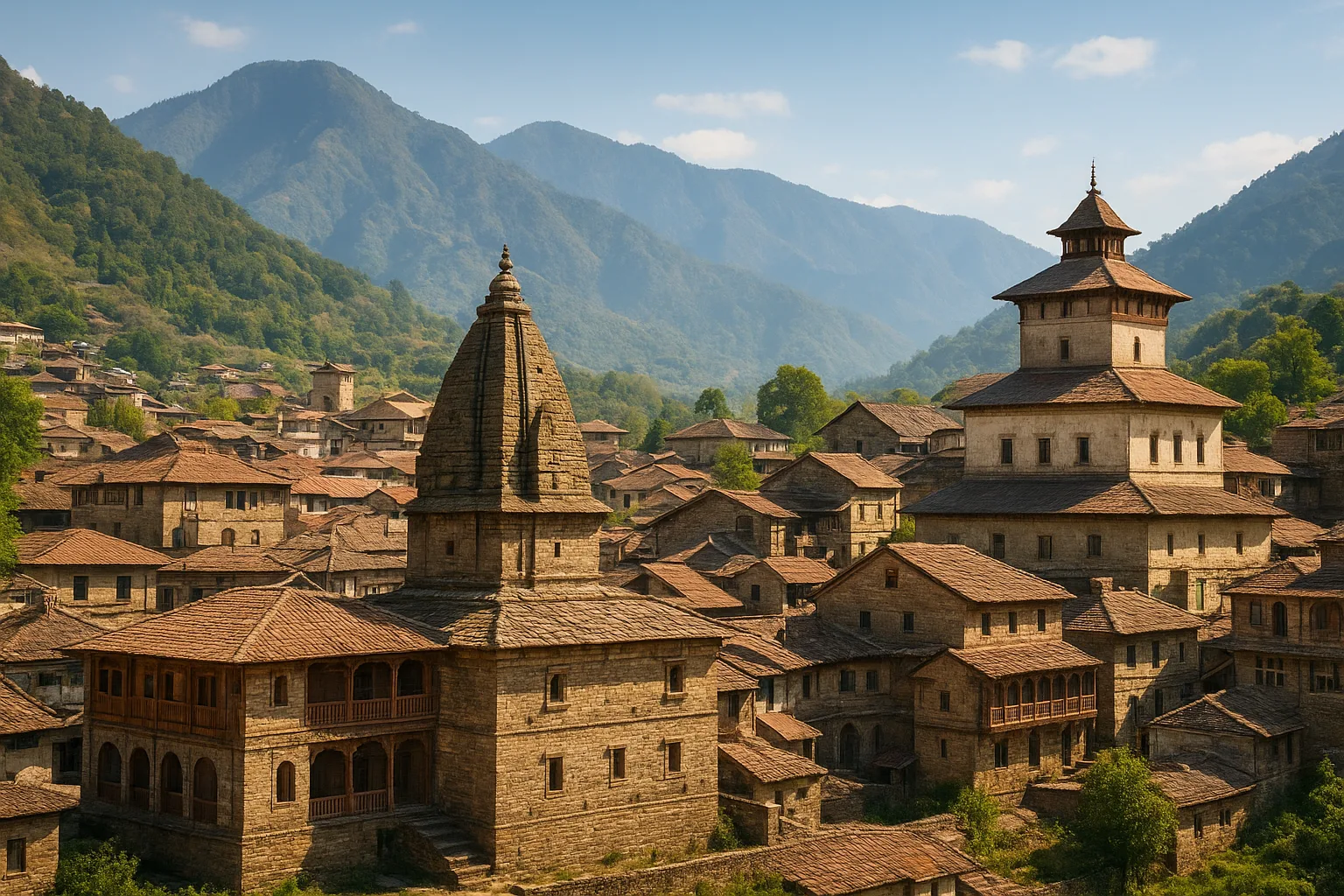
Monsoon clouds pressed low over the valley in July 1954, their shadows rippling across fields and rooftops as the Sutlej River climbed higher each day. In the heart of Bilaspur, families hurriedly packed their belongings, glancing back at homes that had sheltered generations. The old town—once a bustling riverside capital and the seat of the Chandel dynasty—stood on the verge of an irreversible transformation. The Bhakra Dam, a symbol of India’s post-independence ambition, had turned the river into an unstoppable force. Within weeks, the familiar lanes and temples of Bilaspur would disappear beneath the water, lost to the world but not to memory.
Bhakra Dam: Promise and Displacement
India’s first Prime Minister, Jawaharlal Nehru, called the Bhakra Dam the “Temple of Modern India.” Its construction promised light and water for millions, and a new era for the fledgling nation. Yet, for those living in old Bilaspur, it also meant the end of a way of life. The dam’s rising reservoir would submerge their town, their fields, and the ancient royal palace that had watched over the valley for centuries.
Government officials and engineers descended on Bilaspur, blueprints in hand, to map out a future for the soon-to-be displaced. As the waters crept closer, the town’s residents faced a dilemma: cling to their ancestral homes or trust in the uncertain promise of ‘New Bilaspur’—a town that existed only on paper and in hope.
Planning a Town on the Move
The challenge of relocating Bilaspur was unprecedented in independent India. Planners from the Central Public Works Department and the Himachal Pradesh administration had to conjure a thriving urban space from scratch, balancing the needs of thousands of uprooted families with the realities of limited resources and hilly terrain.
Unlike the organic sprawl of the old town, New Bilaspur would be a grid: straight roads, planned markets, civic spaces, and designated residential quarters. The new site, several kilometers uphill from the doomed valley, was chosen for its relative safety from future floods. The plan sought to preserve community ties—families from the same neighborhoods were resettled together where possible, and care was taken to allocate land for temples and shrines, acknowledging the spiritual heart of the displaced people.
From Blueprint to Reality
By 1955, as heavy machinery rumbled through the valley below, the first foundations were dug into the red earth of the new site. Temporary shelters and government offices sprang up quickly, but the transition was far from smooth. Many families arrived with little more than what they could carry, having watched their possessions—and memories—vanish beneath the rising reservoir.
The construction of New Bilaspur was a test of patience, resilience, and adaptability. The summer sun beat down on laborers as they laid bricks and poured concrete, forging new streets named after lost villages: College Road, Hospital Road, and Gole Market. Gradually, the town’s skeleton took shape—schools, a hospital, government offices, and markets to serve a population learning to live amidst dust and uncertainty.
Remembering What Was Lost
For many, the wounds of displacement ran deep. The old Bilaspur Palace, a marvel of late Mughal architecture and Chandel heritage, was lost to the water, its domes and courtyards now visited only by fish. The revered temples of Naina Devi and Lakshmi Narayan had to be carefully dismantled and reconstructed brick by brick in the new town—a painstaking process that became a symbol of both loss and continuity.
Stories of submerged orchards, vanished ghats, and sunken markets passed from elder to child, keeping alive the soul of the old town. Local poets and chroniclers, such as Pandit Ram Nath and Shyam Sundar Sharma, memorialized the vanished Bilaspur in verse and prose, anchoring the new community in a shared remembrance.
Rebuilding Identity: Festivals, Rituals, and Resistance
As New Bilaspur settled into its new geography, residents found ways to preserve their distinctive culture. The Sair and Minjar festivals, once celebrated on the banks of the Sutlej, now took place in new parks and open spaces. The first Navratri after resettlement saw the entire town participate in a procession to the relocated Naina Devi temple, reaffirming devotion and unity.
Yet, not all adapted easily. Some older families resisted the transformation, clinging to the hope that the waters would recede or that government compensation would improve. Others left Bilaspur altogether, scattering to distant towns or cities. For those who stayed, rebuilding was not just about bricks and roads, but about reconstructing a sense of belonging from the fragments of the past.
New Faces, New Challenges
The arrival of new institutions—such as the Government Polytechnic and the District Courts—drew outsiders and fresh energy to the town. Markets buzzed with traders and visitors from Mandi, Hamirpur, and beyond. But modernity brought its own challenges: water shortages, power cuts, and the struggle to balance tradition with the demands of a rapidly changing Himachal Pradesh.
Through the 1970s and 80s, New Bilaspur expanded further, its population rising steadily. The town’s layout, once criticized as sterile and impersonal, slowly acquired its own rhythms: weekly markets, cricket matches in the school grounds, and the annual melas that drew crowds from across the region. The echoes of old Bilaspur lingered in music, dialect, and the shared memory of a river that gave and took in equal measure.
The River’s Legacy: Bilaspur Today
Today, the reservoir of the Bhakra Dam glimmers where the old town once stood, its surface calm but its history restless beneath. New Bilaspur, with its neat roads and bustling bazaars, stands as a testament to adaptation and survival. The river’s power—once a threat—now sustains life, providing electricity and irrigation to much of northern India, even as it reminds residents of the fragility of home.
For the people of Bilaspur, the story of displacement and rebuilding is more than a chapter in history; it is the foundation of their identity. The town’s resilience, creativity, and tenacity live on in every festival, every shopfront, and every family story. As Bilaspur continues to grow and change, the memory of the night the waters rose—and the morning a new town was born—remains its guiding spirit, shaping a future rooted in both loss and hope.
Previous: 1948: The Year Bilaspur Joined Independent India
Next: The Political Decision That Merged Bilaspur with Himachal Pradesh