
Series: History of Shimla, Himachal Pradesh, India
Phase 1: Ancient & Early Roots — Part 2 of 30
This article is part of a broader historical series exploring the earliest layers of human presence in the western Himalayas. Beginning with landscape, belief, and early patterns of movement and settlement, the series traces how communities adapted to mountainous environments long before formal states or written records emerged. These foundational centuries shaped cultural memory, local traditions, and relationships with the land that would endure through later periods of change.
Shadows in the Deodar: The Earliest Human Presence
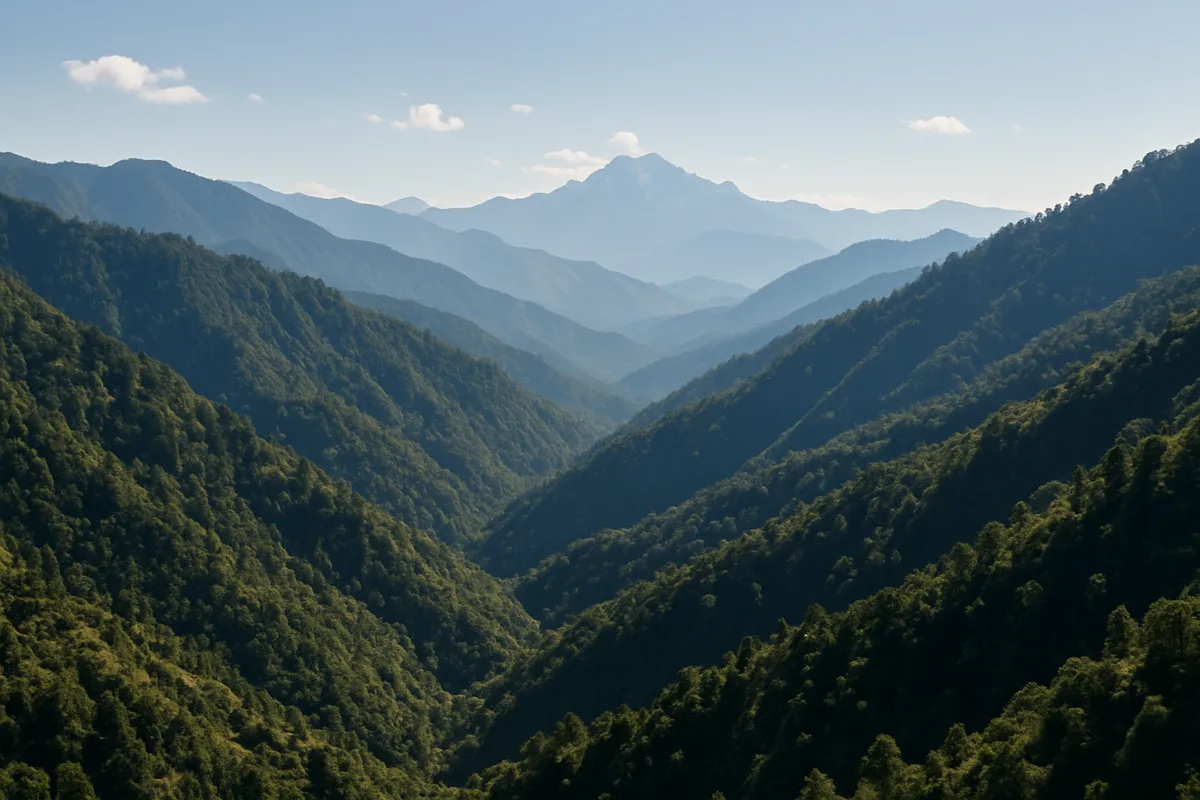
Morning mist drifts between the dark trunks of Himalayan deodar, the forest breathing in silence as it has for millennia. Here, high above the plains, the hills of present-day Shimla have long guarded their secrets. Yet beneath the leaf litter and stones, the land bears traces of lives lived long before the town’s famous ridge bustled with summer visitors. The story of Shimla’s earliest inhabitants begins in the borderlands of prehistory and tradition, where myth, archaeological inference, and the first glimmers of political history intertwine.
Landscape and Origins: The Ancient Uplands in Regional Perspective
Geographically, the Shimla hills form part of the lesser Himalayas, a rugged terrain stretching across the modern state of Himachal Pradesh. This region, set between the Sutlej and Yamuna rivers, has always served as both barrier and corridor—shielding upland communities from the lowland empires, while also linking them, however tenuously, to the wider northern subcontinent.
Archaeological evidence from the greater Himachal region, particularly in the valleys of the Sutlej and Beas, suggests that human presence here dates back at least to the later Neolithic period (roughly 2000–1000 BCE). Though the high ridges around Shimla itself yield few direct finds, stone tools discovered in nearby valleys indicate that seasonal migration and rudimentary settlement were possible in these hills thousands of years ago. The earliest communities likely practiced shifting agriculture, animal husbandry, and forest gathering—subsistence patterns that would endure for centuries.
Oral Traditions and the Mythic Landscape
Local oral traditions, passed down through generations, weave a tapestry of legendary figures and events. Among these, stories of the Pandavas—heroes of the Mahabharata—echo in the hills. Villagers near Jakhu and other ancient sites still recount how the exiled princes sought refuge in these forests, leaving behind footprints in stone and place names that persist in collective memory. In these tales, the land is not a passive backdrop but an actor: sacred groves, hidden springs, and crags are imbued with the presence of deities and ancestors.
Such beliefs, while not historical accounts in the modern sense, reveal how early communities understood their world—rooting themselves in a landscape alive with meaning. Deodar groves became the abodes of spirits like Jakhu dev, while local legends often merged with wider Hindu narratives, creating a unique syncretism characteristic of Himachal’s upland culture.
Emergence of Early Communities and Belief Systems
By the first millennium BCE, it is plausible that small tribal communities—later known in regional chronicles as the Koli, Khas, and Dagi—inhabited pockets of the Shimla hills. The Khasas, mentioned in epics and early Sanskrit literature, are believed to have settled across much of the western Himalayas, their societies structured around clan and kinship rather than centralized authority. The Kolis, traditionally forest dwellers, established themselves in the lower slopes and valleys, relying on hunting, gathering, and terrace cultivation.
These early societies venerated a pantheon of local deities—often linked with natural features and spirits—while gradually absorbing elements of mainstream Hinduism. The tradition of devta worship, with village gods acting as both spiritual protectors and social arbiters, would become a defining trait of the region. Oral histories suggest that ritual dances, animal sacrifice, and seasonal fairs were integral to community life long before the advent of written chronicles.
Hill States on the Horizon: From Clan to Kingdom
While centralized kingdoms flourished in the plains, the hills of Shimla remained a mosaic of loosely-organized chiefdoms well into the early Common Era. The earliest written references to organized states in the region appear in later medieval records, but local gazetteers and Rajput chronicles hint at the gradual emergence of petty principalities from the sixth century CE onwards.
The rise of the Bushahr and Keonthal houses—whose legends trace to migrating Rajput clans—exemplifies this slow transformation. Oral histories collected in the Gazetteer of the Simla District describe how ruling families established fortified villages and levied tribute from surrounding hamlets. Yet power remained diffuse, and inter-clan rivalry was frequent. The terrain, as always, shaped political life: valleys and ridges fostered autonomy, even as occasional overlords sought to knit the hills into a broader polity.
Trade, Passage, and Contact
Despite their apparent isolation, the Shimla hills participated in broader networks of exchange. Ancient trade routes—some tracing the Sutlej valley, others cutting across the passes—linked the region to Tibet, Central Asia, and the plains of Punjab. Salt, wool, and forest products moved along these paths, as did religious ideas and crafts. The movement of traders, pilgrims, and wandering ascetics helped bind the hills to the great cultural currents of northern India, even as local traditions persisted with remarkable tenacity.
Continuities: Ancient Roots in Modern Shimla
Though much has changed since the days when the first settlers cleared patches of forest for millet and barley, the hills around Shimla retain echoes of their ancient past. Place names, annual festivals, and the enduring authority of local deities all speak to a landscape shaped as much by tradition as by modernity. The mist that gathers on the ridges still blurs the boundaries between legend and lived experience, reminding residents and visitors alike that these uplands have always been a meeting ground of memory and change.
The next part of this series will trace how the scattered hill principalities of early medieval Shimla gradually contended with outside powers—setting the stage for new alliances, challenges, and transformations in the centuries to come.
Previous: Before Shimla: Ancient Settlements in the Shimla Hills
Next: Tribal and Pastoral Communities of Pre-British Shimla