
Series: History of Shimla, Himachal Pradesh, India
Phase 1: Ancient & Early Roots — Part 1 of 30
Echoes Beneath the Deodar: Entering the Ancient Hills
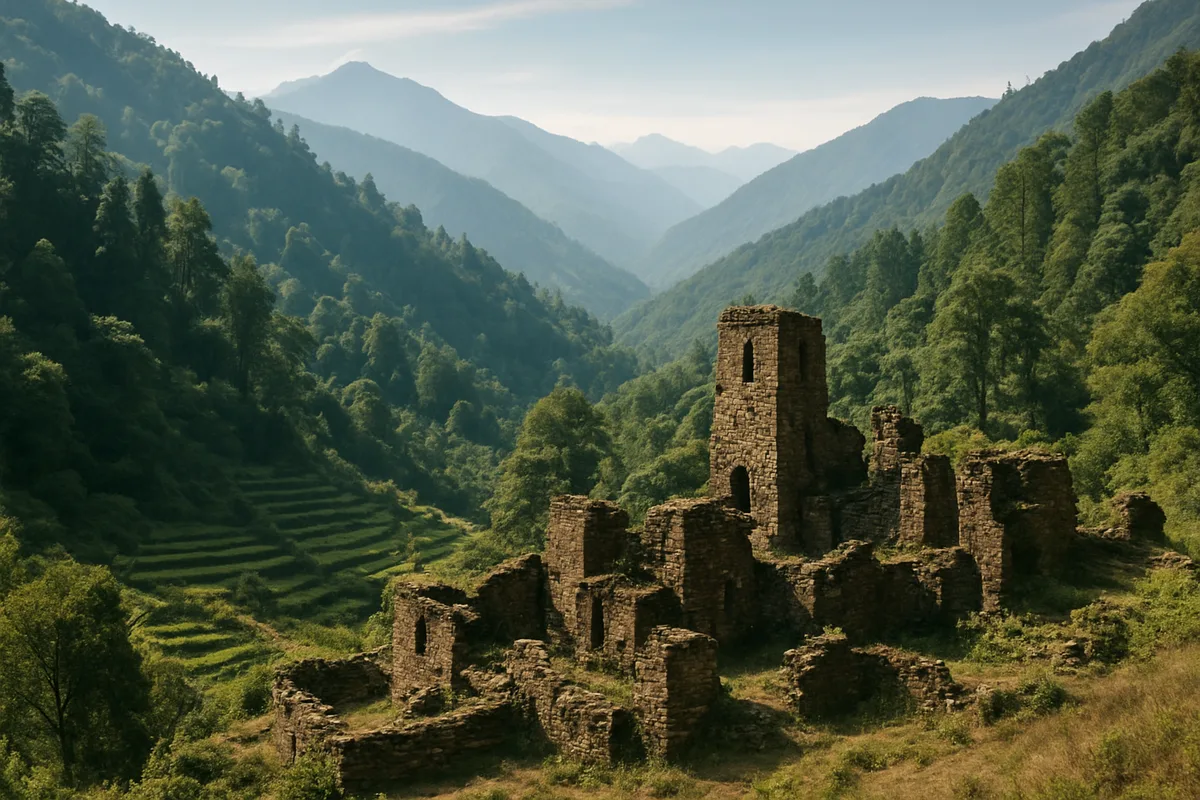
The air in the upper hills of Shimla is often tinged with the scent of deodar, pine, and damp earth. In the quiet before sunrise, the silence is broken only by the call of Himalayan thrushes and the distant rush of streams carving their way through ancient rock. This landscape, perched between the high Shivalik ridges and the deeper valleys of the Sutlej, has witnessed thousands of years of human presence—layered, elusive, and enduring.
Early Geographies and the Shape of Settlement
What is now Shimla district occupies a strategic ridge line in the lower Himalayas, rising to over 2,200 metres. The region’s earliest historical anchor lies in its geography: a natural corridor between the mid-Himalayas and the plains. Archaeological traces in nearby valleys and linguistic evidence suggest that, as early as the second millennium BCE, these hills saw seasonal movement of herders and the earliest agriculturalists. Small clearings amidst forests, terraced slopes, and ancient paths hint at a rhythm of life closely attuned to the land’s contours and cycles.
By the Iron Age, the region formed part of a broad cultural zone extending westward toward the Sutlej and eastward toward the upper Giri and Pabbar rivers. These watersheds, referenced in later chronicles and folk traditions, provided both sustenance and boundaries, shaping the earliest communities.
Oral Traditions and the Sacred Landscape
Oral traditions in the hills, handed down through generations, speak of a time when deities, spirits, and ancestors moved freely through forests and over rocky outcrops. Local mythology often weaves Shimla’s ancient past into the grand tapestry of Indian epic cycles. In some villages, it is recounted that the Pandavas of Mahabharata legend are said to have wandered through these hills during their exile, leaving behind sacred stones and hidden springs. Such traditions, while not historical in the strict sense, reflect a deep-rooted reverence for the landscape and its perceived sanctity.
Village deities—known as devtas—remain at the heart of local belief systems. Oral genealogies and temple records kept by hereditary priests suggest that these cults predate written history, evolving independently of the broader Vedic pantheon. Seasonal festivals, processions, and the maintenance of sacred groves mark a continuity that ties today’s villages to their ancient forerunners.
Communities and the Emergence of Early Hill Societies
While archaeological evidence within Shimla proper remains sparse, regional studies and gazetteers—such as those compiled during colonial surveys—point to the gradual emergence of settled communities by the early centuries CE. These were primarily small, kin-based groups practicing terrace farming, animal husbandry, and forest gathering. The Gaddis and Gujjars, pastoral groups with deep roots in Himachal, are believed to have frequented the highland pastures for centuries, their seasonal migrations forming part of a broader pattern of movement across the western Himalayas.
The valleys of the Sutlej and its tributaries were home to early agrarian societies, while higher ridges saw a mix of semi-nomadic and settled life. Over time, these communities began to consolidate around defensible hilltops and fertile slopes, giving rise to the first rudimentary hill states. By the late first millennium, faint traces of clan leadership and hereditary chieftainship can be inferred from local traditions and early administrative customs.
Trade Paths and Encounters on the Mountain Routes
The hills around Shimla were never isolated. Ancient footpaths, many of which survive as present-day bridle roads, once carried traders, pilgrims, and itinerant craftsmen between the plains and the upper Himalayas. The broader region lay at the nexus of several mountain routes: westward toward the Sutlej basin and the old kingdom of Bushahr; southward into the Siwaliks and the Punjab plains; and northward, linking with the high passes leading toward Tibet.
Historical records from neighbouring valleys indicate that salt, wool, and grains were among the earliest goods exchanged, with the hills acting as both barrier and bridge. The migration of people—whether for trade, pilgrimage, or seasonal work—brought new ideas, crafts, and religious influences into the region, slowly knitting together a mosaic of diverse hill societies.
From Myth to Memory: The First Hill States
The earliest written references to organized political entities in the Shimla hills appear in medieval chronicles and administrative records from neighbouring principalities. By the 10th century CE, small states such as Keonthal, Jubbal, and Bushahr began to assert their presence, though their origins are often shrouded in legend. Local rulers traced their lineages to epic heroes or ancient sages, blending myth and memory to legitimize their authority.
These nascent hill states were typically centred on fortified villages or temples, with authority resting in a council of elders or an emerging hereditary chief. Governance was closely tied to ritual and the stewardship of land, forests, and water—resources that remained the lifeblood of these communities. Though political boundaries shifted with the fortunes of rival clans, the essential rhythm of life in the hills persisted, shaped by both continuity and slow, incremental change.
Ancient Roots, Living Legacy
The contours of ancient Shimla are not always visible in the built environment, but they persist in local memory, agricultural practices, and the enduring presence of sacred groves and shrines. The interplay of myth and history, of migration and settlement, laid the foundations for the region’s later political and cultural development. The earliest patterns of community life—rooted in the land and shaped by the challenges of the Himalayan environment—continue to inform how Shimla’s people relate to their landscape and to each other.
As this series moves forward, the next part will explore the medieval consolidation of hill states in greater detail, tracing how shifting alliances, royal lineages, and the arrival of new faiths transformed the ancient hills into a complex tapestry of principalities and traditions.
Next: Geography That Shaped Early Life in the Shimla Region