
Series: The UK Allotment Year
Phase 4: Preserving & Using Your Harvest — Part 34 of 50
After the abundance of summer and autumn, this section dives into how to store, preserve, and enjoy your allotment produce year-round.
Freezing Herbs and Leafy Greens for Winter Use
As autumn settles across UK allotments, many plot holders find themselves with a plentiful supply of herbs and leafy greens ready to harvest. This is the perfect time to think about freezing these fresh flavours to carry the taste of summer well into winter. Freezing is an excellent way to preserve freshness, nutrients, and aroma without the need for jars or complicated equipment. With a little planning and the right techniques, you can enjoy your homegrown herbs and greens long after the growing season ends.
Why Freeze Herbs and Leafy Greens Now?
The cool, dry days of early autumn are ideal for picking herbs and greens at their peak. Many of these crops begin to slow down or bolt as temperatures drop, so harvesting and freezing them now locks in vibrant flavours and nutrition. Unlike drying, freezing maintains a fresher taste and colour, especially for delicate herbs such as basil or parsley. It also avoids waste by helping you store surplus crops before frosts arrive.
Key Steps to Freezing Herbs and Leafy Greens
- Harvest at the right time: Pick herbs and leafy greens in the morning after dew has dried but before the heat of the day fades, ensuring they are dry and fresh.
- Wash gently: Rinse your greens and herbs in cold water to remove soil or insects, then pat dry thoroughly with a clean tea towel or salad spinner to prevent ice crystals forming during freezing.
- Prepare for freezing: Depending on the type, either freeze whole leaves, chop them, or make herb cubes (see below).
- Freeze quickly: Spread herbs or leafy greens in a single layer on a baking tray lined with baking parchment and freeze until solid. This prevents clumping so you can take out just what you need later.
- Store properly: Transfer frozen herbs or greens into labelled, airtight freezer bags or containers. Remove as much air as possible to avoid freezer burn.
Freezing Methods for Different Herbs and Greens
Some herbs freeze best whole, while others suit chopping or blending. Leafy greens like spinach or chard can also be frozen, often after blanching.
- Whole leaf freezing: Perfect for hardy herbs such as rosemary, thyme, or sage. Simply wash, dry, and freeze flat on trays before bagging.
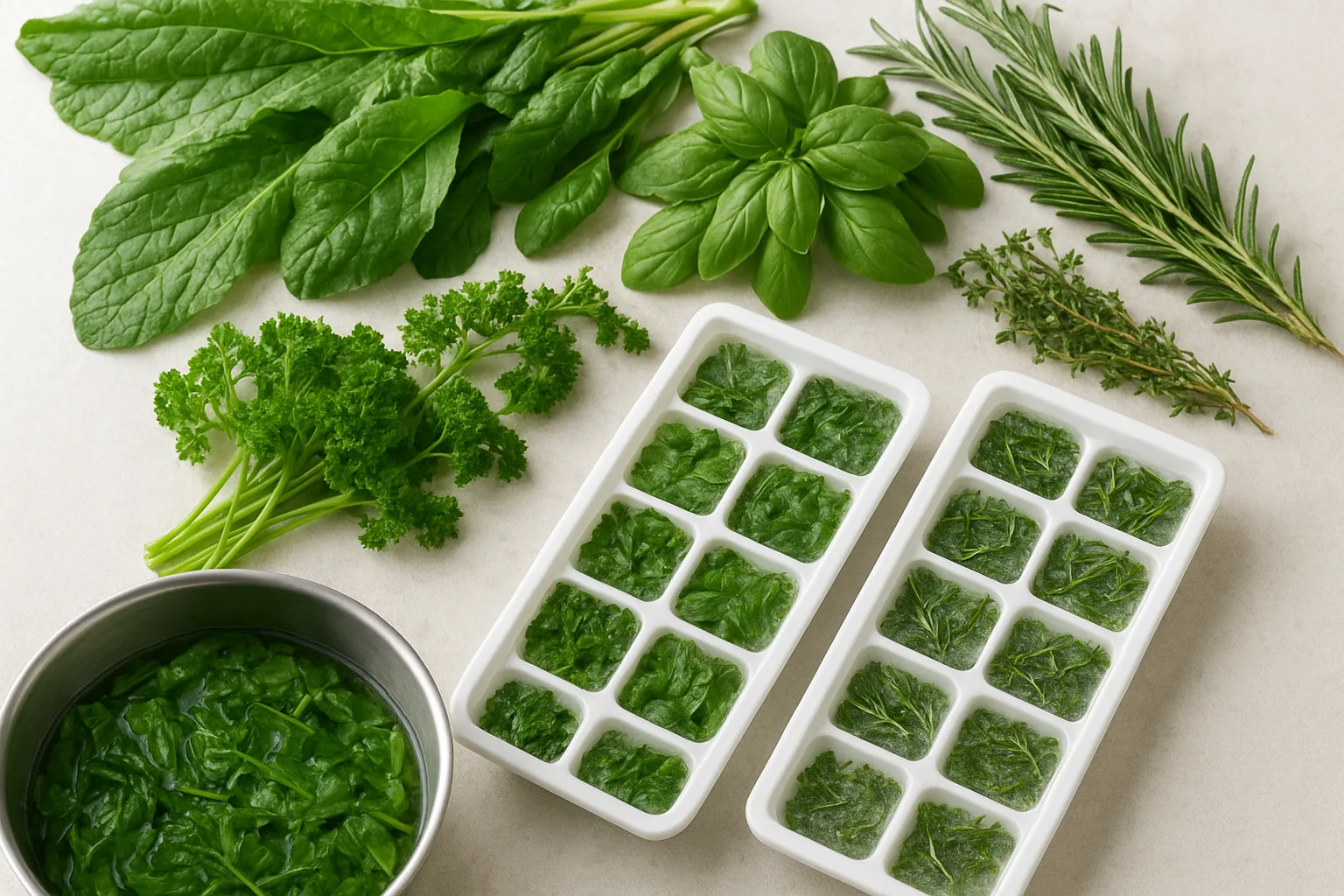
- Chopped herb cubes: Chop soft herbs like parsley, coriander, chives, or basil, then pack into ice cube trays. Fill with water or olive oil and freeze. Once frozen, pop cubes into a bag to use in cooking.
- Blanching leafy greens: For spinach, kale, chard, or other greens, blanch quickly in boiling water for 1–2 minutes, then plunge into cold water. Drain and dry thoroughly before freezing in portions.
- Freezing without blanching: Some tender greens like young lettuce leaves or rocket can be frozen raw but may lose texture. Use these mainly for cooking rather than salads.
Tools and Materials You’ll Need
- Sharp scissors or garden shears for harvesting
- Large bowl or sink for washing
- Clean tea towels or salad spinner for drying
- Baking tray and baking parchment for flash freezing
- Ice cube trays for herb cubes
- Airtight freezer bags or containers, preferably reusable or biodegradable for eco-friendliness
- Permanent marker for labelling with date and contents
Seasonal Timing and Quick Wins
In the UK, late summer through early autumn (August to October) is prime time for harvesting and freezing herbs and leafy greens. Try to freeze crops before the first heavy frosts, as freezing damaged leaves may reduce quality. A quick win is to make herb cubes with parsley or basil harvested in early September; these freeze well and are an easy addition to winter stews or sauces.
Common Mistakes to Avoid
- Freezing wet leaves: Excess moisture leads to ice crystals and soggy texture. Always dry thoroughly before freezing.
- Overfilling bags or containers: Leaves may clump together and be hard to separate later. Freeze in thin layers first.
- Not labelling packages: Without dates and contents, you risk wasting older frozen goods.
- Freezing herbs with woody stems: These can be tough to eat. Strip leaves off tough stems before freezing.
- Ignoring blanching for leafy greens: Some greens lose colour and nutrients without blanching before freezing.
Quick Checklist for Freezing Herbs and Leafy Greens
- Harvest herbs and greens on a dry, cool day
- Wash and dry thoroughly
- Decide on freezing method: whole, chopped, cubes, or blanched
- Flash freeze on trays to avoid clumping
- Transfer to labelled airtight containers or bags
- Place in freezer promptly
- Use within 6–12 months for best flavour
Next Actions for This Phase
As part of the The UK Allotment Year series, this phase focuses on preserving and using your harvest. This month, gather your herbs and leafy greens before the frosts hit, and set aside a day to freeze your produce following the steps above. Start with your most abundant crops and experiment with herb cubes—these are fantastic for adding bursts of flavour to winter meals.
Alongside freezing, consider other preservation methods like drying or making pestos and chutneys to diversify your winter pantry. Keep a simple record of what you freeze and when, so you can enjoy your allotment’s bounty all year round.
Happy freezing and enjoy the taste of your allotment through chilly months!
Previous: How to Make Jam from Homegrown Fruit
Next: Building a Simple Outdoor Produce Drying Rack