
Series: History of Solan, Himachal Pradesh, India
Phase 2: Medieval Period — Part 7 of 30
This article forms part of a continuing series that follows the gradual emergence of organised power in the western Himalayas. As small communities gave way to clans, chieftainships, and hill states, patterns of rule, alliance, and conflict began to take shape. This phase examines how authority was negotiated through land, ritual, and warfare, laying the groundwork for regional kingdoms that would dominate the medieval landscape.
The Dawn Mist Over Solan
In the pre-dawn quiet of a medieval morning, somewhere in the pine-covered hills of Solan, a sentry strained his ears for distant hoofbeats. Only a few flickering lanterns illuminated the winding path up to the fort, marking the thin line between Solan and its neighbors. Beyond those hills, rival banners of Bilaspur, Baghat, and Keonthal fluttered in the wind, each representing a court where intrigue and ambition simmered. For centuries, Solan existed not as a solitary bastion, but as a crossroads—its destiny shaped by the fortunes and whims of greater hill states that hemmed it in from all sides.
The Patchwork of Hill Kingdoms
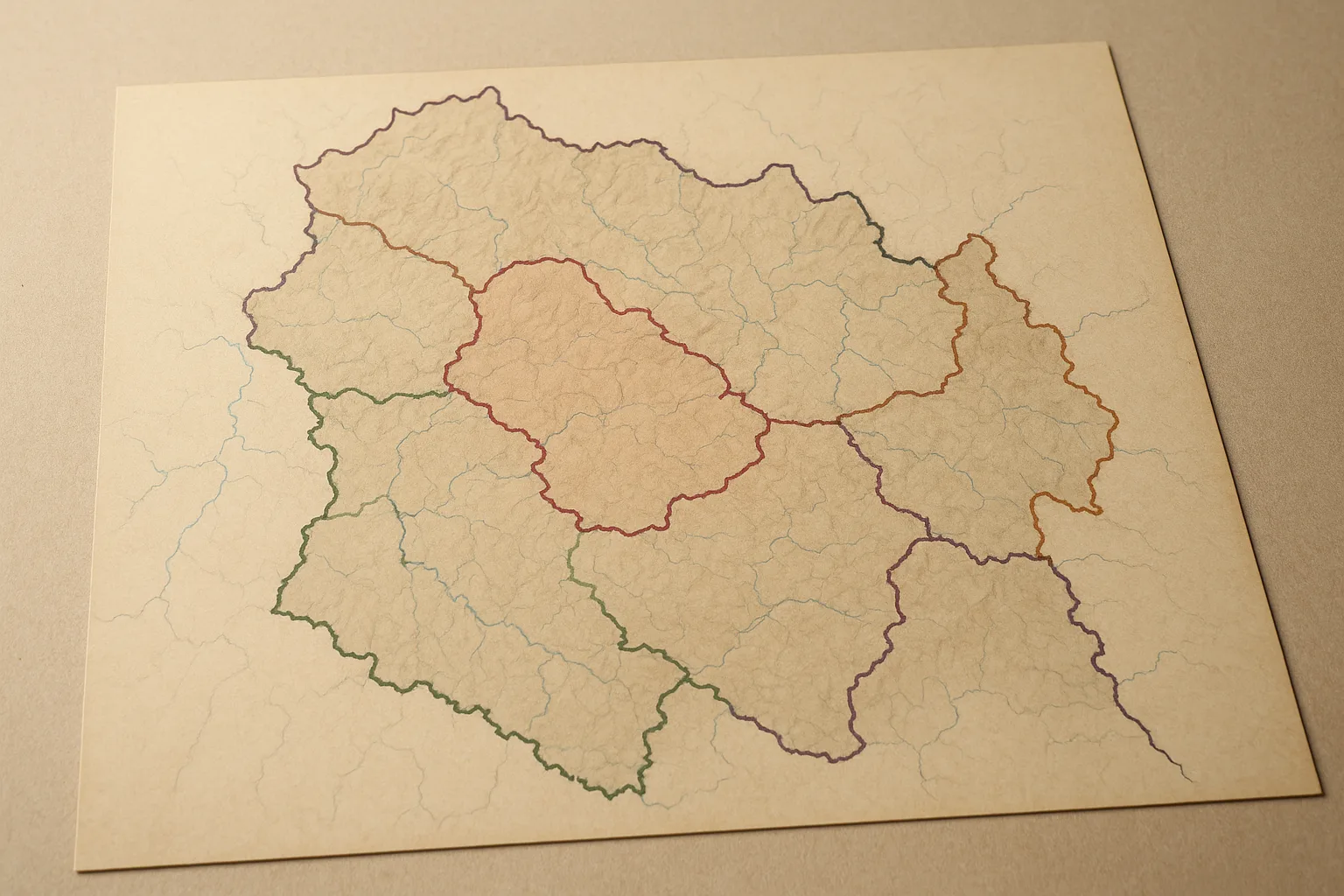
The medieval period in Himachal Pradesh was defined by a tapestry of small but fiercely independent principalities. Solan’s story can’t be separated from the rise and fall of these hill states, many of which trace their roots to legendary Rajput lineages fleeing the turbulence of the northern plains. Kingdoms such as Bilaspur (Kahlur), Keonthal, Baghat, and Jubbal were not only Solan’s neighbors but also its overlords, protectors, and at times—its adversaries.
The rugged terrain offered natural defenses but also isolated the communities. In this landscape, alliances were as fragile as the mountain mist. For smaller settlements like Solan, the play of power among neighbors was both a threat and a lifeline. A minor shift in royal favor or a marriage alliance could upend the daily rhythms of village life overnight.
Bilaspur’s Shadow: Early Domination
By the 11th and 12th centuries, Bilaspur had emerged as a dominant force in the lower hills. Its rulers, claiming descent from Chandel Rajputs, expanded their influence northward. The fertile valleys and strategic passes near Solan were too valuable to ignore. Chroniclers record that Bilaspur’s kings often demanded tribute from the chieftains of Solan and neighboring hamlets, integrating them into a loose but effective network of vassalage.
The court at Bilaspur was known for its opulence and strict codes. When Bilaspur’s envoys arrived in Solan, villagers gathered at the marketplace, bracing for new edicts or taxes. Yet, the relationship was not purely extractive. Bilaspur’s protection shielded Solan from more aggressive neighbors and allowed trade to flourish along the old salt routes that wound through the hills.
Keonthal and the Shifting Balance of Power
As centuries passed, the rise of Keonthal added a new dimension to Solan’s political reality. Founded in the 13th century, Keonthal’s rulers established their seat at Junga, a formidable fortress northeast of Solan. Their ambitions soon brought them into competition—and sometimes open conflict—with Bilaspur.
For the people of Solan, this rivalry was a double-edged sword. On the one hand, it offered opportunities: clever local leaders could play the two courts against one another, extracting concessions in exchange for loyalty. On the other, it meant that Solan was often caught in the crossfire when skirmishes erupted along the borders. Oral histories from the region recall harrowing tales of sudden raids and hurried negotiations, with Solan’s elders acting as intermediaries to preserve peace and autonomy.
Baghat, Jubbal, and the Web of Alliances
To the southeast, the princely state of Baghat emerged as a new player. Its rulers, based at Arki, were renowned for their military discipline and diplomatic cunning. Baghat’s influence ebbed and flowed, but its proximity meant that Solan’s fate was never far from its concerns. During periods of Bilaspur or Keonthal weakness, Baghat would extend its reach through treaties or force, sometimes stationing troops near Solan’s trade routes.
Jubbal, farther to the northeast, was smaller but fiercely independent. Its rulers cultivated alliances with both Keonthal and Baghat, providing Solan with yet another avenue for political maneuvering. The intricate web of treaties, marriages, and feuds among these states made Solan a place where allegiances could shift overnight, and where local leaders had to be as adept at reading the mood in distant courts as at managing their own affairs.
Local Leadership: The Rise of Solan’s Own Elites
While Solan was often under the suzerainty of its powerful neighbors, it was never merely a passive pawn. By the late medieval period, local elites—often drawn from influential landholding families—began to assert themselves. Sometimes recognized as local rajas or thakurs by their overlords, these leaders negotiated their own terms of tribute and governance. They became the intermediaries between Solan’s people and the courts of Bilaspur, Keonthal, and Baghat.
The emergence of these local dynasties brought a measure of stability, but also new tensions. Ambitious thakurs could exploit the rivalries between neighboring states, but risked retribution if their balancing act failed. For the common people, the presence of a local protector offered hope during troubled times but also exposed them to the consequences of political missteps.
Everyday Life in a Contested Land
The political maneuverings of distant courts shaped daily existence in ways both subtle and stark. Tribute collections could strip villages of their surplus, while periods of peace brought festivals, fairs, and the arrival of traders from as far as Tibet and Kashmir. The construction of temples, often sponsored by both local and foreign rulers, became a means of displaying loyalty and piety while rooting Solan’s communities more deeply in the land.
Oral traditions, still recited in Solan’s villages today, recall both the hardships of military levies and the excitement of royal visits. These stories speak of resilience and adaptability—qualities that would become hallmarks of Solan’s identity as it navigated the tides of history.
Legacy of the Hill States in Solan’s Culture
The centuries of shifting overlordship left an indelible mark on Solan’s character. Administrative structures, local dialects, and even culinary traditions bear traces of Bilaspur, Keonthal, Baghat, and Jubbal. The old salt and wool trade routes, once jealously guarded by rival rajas, laid the foundations for Solan’s later prosperity as a crossroads of commerce and culture.
Today, the echoes of those medieval rivalries and alliances linger in Solan’s festivals, folk songs, and the deep sense of regional pride that animates its people. Recent archaeological finds and the careful preservation of temple records help us piece together a portrait of a community that was never isolated, but always in dynamic conversation with the world beyond its hills.
A Living Heritage
Solan’s medieval history is more than a chronicle of conquests and alliances—it is a testament to the enduring spirit of a place shaped by its neighbors, yet always striving to define itself. The legacy of the surrounding hill states can still be felt in the rhythms of daily life, the architecture of ancient temples, and the stories passed from one generation to the next. As Solan continues to grow and change, those echoes from its past remain a source of strength and inspiration, reminding us that identity is forged not in isolation, but through the rich tapestry of shared history.
Previous: Hill Chiefs and Local Rule in Medieval Solan
Next: Village Administration and Economy in Medieval Solan