
Series: History of Solan, Himachal Pradesh, India
Phase 3: Religion & Culture — Part 14 of 30
This article belongs to a historical series examining how expanding empires and regional powers reshaped life in the western Himalayan hills. As external influences pressed into the mountains, local rulers navigated diplomacy, resistance, and accommodation. This phase explores how wider political currents intersected with entrenched hill traditions, altering governance without entirely displacing older structures.
Night of the Bonfires: A Scene from Solan’s Past
The year was 1885, and the hills around Solan glowed under a sky scattered with stars. On the outskirts of the town, villagers gathered around a roaring bonfire, its flames flickering against the stone walls of the Shoolini Devi temple. Children clung to their mothers’ shawls, their faces painted with anticipation. Laughter echoed through the night as elders recounted legends of the goddess for whom the town was named. This wasn’t merely a festival—it was a reaffirmation of belonging, a ritual that had bound Solan’s people for generations. Every drumbeat, every hymn, stitched another thread into the fabric of this hill settlement’s communal life.
Origins: Fairs and Faith in Early Solan
Solan’s festivals were never just about celebration—they were the heartbeat of its society, pulsing through the valleys long before the railway or the brewery brought modernity. In the early 19th century, when Solan was little more than a cluster of hamlets under the princely state of Baghat, festivals marked the rhythm of agricultural cycles and ensured solidarity among disparate villages. Oral accounts preserved by local chroniclers describe annual fairs—melas—where shepherds, traders, and farmers converged, exchanging not just wares but news, alliances, and age-old grievances.
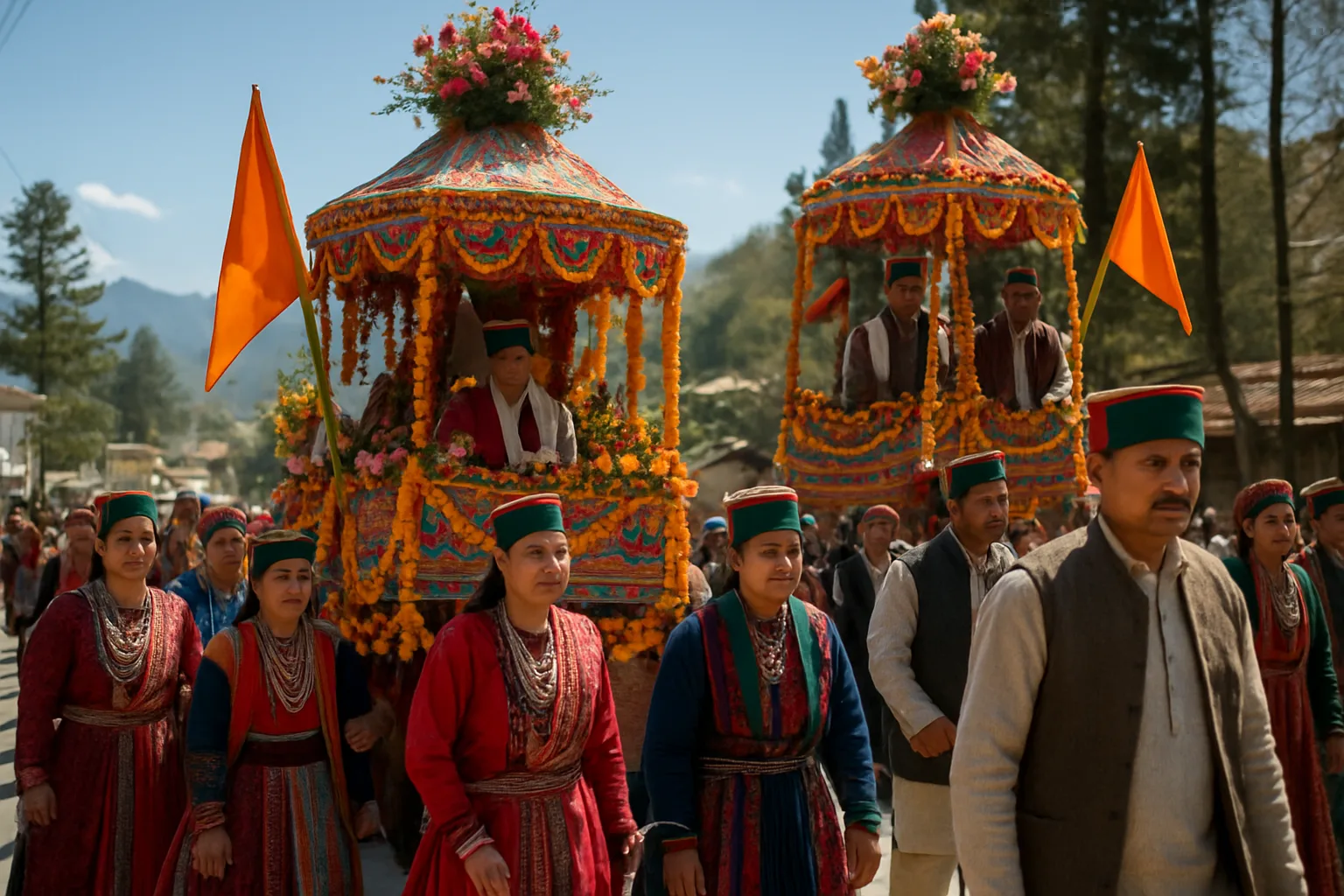
The Shoolini Mela, centered around the revered Shoolini Devi temple, is said to trace its roots to the earliest settlements. This goddess, believed to be an incarnation of Durga, was both protector and unifier. Her festival, held every June, drew people from across the hills. Ritual processions, temple offerings, and communal feasts offered a sense of stability and hope as the monsoon approached. The mela outgrew its religious core, evolving into a marketplace and a stage for folk performances, reflecting the dynamism of Solan’s social tapestry.
The Colonial Encounter: New Rhythms and Hybrid Celebrations
Solan’s festival calendar changed dramatically with the coming of the British in the mid-19th century. The town’s strategic location—on the route from Kalka to Shimla—meant an influx of colonial officials, railway engineers, and entrepreneurs. Among them was Sir Henry Edward Molesworth, the British administrator credited with modernizing the region. Under his watch, Solan saw the establishment of the Mohan Meakin brewery in 1855, which would bring new customs and a cosmopolitan flair to local festivities.
The British brought with them their own traditions—Christmas balls, May Day picnics, and even cricket tournaments became part of Solan’s social life. Accounts from the 1870s describe scenes where British and Indian families mingled during the annual Solan Flower Show. Yet, rather than erasing local customs, these new rituals found ways to coexist with—and even enrich—the age-old cycles of fairs and processions. The Shoolini Mela, for instance, expanded to include brass bands and modern amusements, while the brewery hosted public gatherings that blurred the lines between colonial and indigenous celebrations.
Unity in Diversity: Religious Pluralism and Shared Festivities
Solan’s festivals were never exclusive affairs. By the late 19th century, the town had grown into a vibrant mosaic of Hindus, Sikhs, and a small but influential Christian community. The Gurudwara in Solan Bazaar became a focal point for Sikh celebrations, especially during Guru Nanak Jayanti. Processions of devotees, their turbans resplendent, would wind through the narrow lanes, distributing sweet karah prasad to all, regardless of faith.
Diwali, Holi, and Lohri became occasions for the entire town—shopkeepers decorated their stalls, children painted their faces, and neighbors exchanged delicacies across religious lines. Even the British participated in some of these festivities, donning local attire and joining in the revelry. The spirit of communal harmony was not just an ideal but a lived reality, tested and reaffirmed with every festival.
War, Independence, and the Festivals of a New Identity
The turbulence of the 20th century—two World Wars, the Quit India movement, and eventual independence—left deep imprints on Solan’s festival landscape. During the Great War, the town’s annual melas became sites of fundraising and patriotic gatherings. Local leaders such as Lala Baldev Chand, a prominent freedom supporter, organized public readings and cultural programs during festivals, subtly nurturing anti-colonial sentiment under the guise of celebration.
Independence in 1947 brought both joy and uncertainty. Refugees from the Punjab poured into Solan, seeking sanctuary. Festivals like Baisakhi and Diwali became more than religious events—they turned into communal rituals of healing and solidarity. The old fairs now pulsed with new languages, foods, and traditions, as displaced families found common ground through shared celebration. The annual Shoolini Mela, once rooted in local legend, became a symbol of Solan’s resilience, absorbing the pain and hope of a town in transition.
Industrial Growth and the Transformation of Tradition
The decades following independence saw Solan evolve from a sleepy hill town into a bustling industrial hub, thanks in part to the pharmaceutical and horticulture industries. With urbanization came new challenges—migration, changing work patterns, and shifting social values. Yet, festivals remained the anchor that kept the community tethered to its roots.
By the 1970s, the Shoolini Mela attracted thousands, its processions broadcast on local radio. The Solan Fairgrounds teemed with rides, food stalls, and talent competitions. New festivals emerged, too—school sports days, cultural weeks at Solan’s burgeoning educational institutions, and even film screenings as part of the annual Solan Utsav. The participation of women and youth increased, reflecting broader social changes. Yet, the underlying spirit was unchanged: festivals were how Solan remembered itself, how it passed on memories, values, and belonging from one generation to the next.
Echoes in the Present: Festivals as Living Bridges
Today, as the sun sets behind the hills of Solan, the town readies itself for yet another Shoolini Mela. The streets fill with dancers in vibrant cholis, shopfronts glow with fairy lights, and the air is thick with the aroma of jalebis and roasted maize. The echoes of all those who came before—shepherds, freedom fighters, refugees, and schoolchildren—linger in every song and drumbeat.
Festivals in Solan have always been more than moments of joy. They are the living memory of the town, a continuous thread binding past and present. The resilience, camaraderie, and openness that once helped Solan weather war, migration, and change remain visible each time the community gathers in celebration. In an era of rapid modernization, these festivals remind Solan’s people of their shared history and the enduring power of coming together—under the same sky, around the same fire, year after year.
Previous: Folk Traditions and Cultural Life of Solan
Next: Architecture of Traditional Homes and Temples