
Series: History of Hamirpur, Himachal Pradesh, India
Phase 3: Mughal & Sikh Influence — Part 14 of 30
This article belongs to a historical series examining how expanding empires and regional powers reshaped life in the western Himalayan hills. As external influences pressed into the mountains, local rulers navigated diplomacy, resistance, and accommodation. This phase explores how wider political currents intersected with entrenched hill traditions, altering governance without entirely displacing older structures.
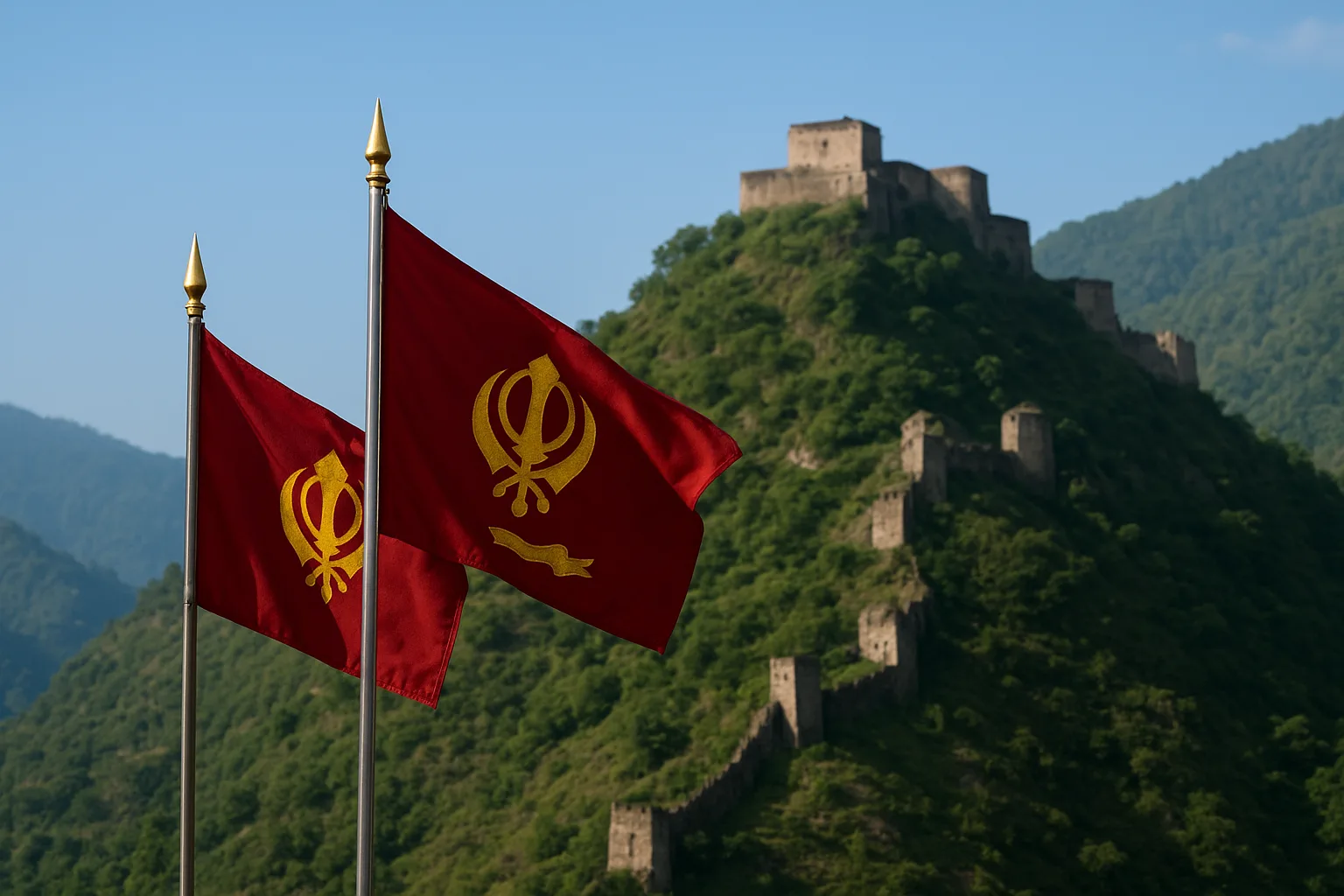
Thunder on the Hills: Hamirpur at the Dawn of Sikh Expansion
In the shadowy mornings of the early eighteenth century, the hills of Hamirpur awoke to the distant sound of hooves and the murmurs of change. The cool air carried not only the scents of pine and river mud, but also the echoes of distant conflicts and alliances being forged in the plains below. The people of this region—farmers, artisans, and hill chieftains—stood at the crossroads of tradition and transformation, their fates soon to be entwined with the expanding influence of the Sikh power radiating from the Punjab.
At this time, Hamirpur was a tapestry of small settlements, each with its own oral histories and local gods, governed by minor rajas under the broader sway of the Kangra kingdom. The region’s rugged terrain and deep valleys fostered a fiercely independent spirit among its inhabitants, but their relative isolation was about to be challenged by new forces rising in the northwestern subcontinent.
Hamirpur’s Historical Tapestry: Between the Mughal Decline and Sikh Ascent
The decline of Mughal authority in northern India during the late 1600s and early 1700s was felt acutely in the Himalayan foothills. Weakening central power meant the hill states, including Hamirpur’s principalities, were left to negotiate their own destinies. Oral traditions from the Hamirpur region recall tales of valiant local rulers and legendary battles against both foreign invaders and neighboring chieftains. While these stories, preserved in family gatherings and village festivals, carry deep cultural meaning, historical inference points to a period of uncertainty and shifting allegiances rather than unbroken heroism.
Early gazetteers and the Kangra Fort Chronicles describe the rise of Rajput hill chiefs and their tenuous relationships with both Mughal administrators and Sikh emissaries. It was a time of fragile truce and sudden violence, as the old order gave way to new contenders.
The Sikh Movement: Belief, Identity, and Political Power
The Sikh faith, born from the teachings of Guru Nanak in the late fifteenth century, had by the early 1700s evolved into both a spiritual movement and a formidable political force. The tenth Sikh Guru, Gobind Singh, invoked the spirit of martial resistance and reorganized the community into the Khalsa, or the pure. This new identity resonated with many in the hill states—especially those who found themselves caught between oppressive taxation by distant rulers and the desire for communal autonomy.
Documented encounters between the Sikh Gurus and the hill chieftains abound, though they must be read with care. While some chronicles detail alliances—particularly during Guru Gobind Singh’s confrontations with Mughal generals—others describe tension and even outright conflict. For Hamirpur, then a loosely defined area under the larger Kangra and Jaswan states, the Sikh presence was both a spiritual inspiration and a political disruptor.
Trade, Pilgrimage, and the Web of Regional Connections
Hamirpur’s location made it a natural waystation along the ancient trade routes linking the Punjab plains with the higher Himalayan valleys. These routes were arteries not just for commerce—grain, salt, wool, and metalware—but also for the movement of ideas and faiths. Pilgrims, merchants, and wandering saints brought stories of the Sikh Gurus, and news of the Khalsa’s victories and defeats traveled quickly among the local communities.
Over time, Sikh traders and settlers began to appear in Hamirpur’s markets and fairs. While the region’s dominant Rajput clans held tight to their ancestral customs, the influence of Sikh egalitarianism and spiritual discipline quietly grew—especially among the artisan castes and agriculturalists who sought social mobility in a world of rigid hierarchies. Regional gazetteers from the nineteenth century note the emergence of Sikh communities in several villages, often coexisting with pre-existing Hindu traditions.
Emergence of the Sikh Polity and the Hill States
By the late eighteenth century, the Sikh misls (confederacies) were consolidating their power in the Punjab. In 1790, Maharaja Ranjit Singh began uniting these factions, setting the stage for the Sikh Empire’s expansion into the hills. The hill states, including those governing Hamirpur, faced a new reality: negotiate, resist, or be subsumed.
Historical documentation, such as the Punjab Hill States Gazetteer, details a period of tense diplomacy. Some local rulers, eager to maintain their autonomy, forged alliances with the Sikhs, offering tribute or military support. Others resisted, seeking protection from the British or older Mughal authorities. The impact on Hamirpur was profound: new administrative practices, changing land tenures, and the introduction of Sikh military garrisons in strategic locations such as Nadaun and Sujanpur Tira.
While popular memory often romanticizes this era as one of resistance and valor, the reality was more complex. Shifting boundaries, intermarriage between Sikh and Rajput elites, and the blending of festivals and rituals all spoke to a society in flux.
Communities in Transition: Faith, Power, and Daily Life
The Sikh expansion ushered in changes that reached beyond politics. In places like Hamirpur, Sikh values of community service and equality resonated with marginalized groups. Oral traditions recall the establishment of langars (community kitchens) in hill settlements, providing food and solidarity during times of scarcity. Sikh martial traditions also influenced local defense arrangements, with the recruitment of hill youth into Sikh battalions—a legacy that would later feed into the region’s strong tradition of military service.
Yet, the process was neither uniform nor uncontested. Hindu temples continued to be central to village life, and many communities navigated a delicate balance between old and new identities. The intermingling of Sikh and Pahari customs is still visible today in local festivals, architecture, and even the dialects spoken in Hamirpur’s valleys.
Legacy of Sikh Influence: The Roots Beneath Modern Hamirpur
By the time the Sikh Empire’s authority waned in the mid-nineteenth century, Hamirpur had been irrevocably altered. The legacy of Sikh expansion lived on in the region’s ethos: resilience, adaptability, and a spirit of communal cooperation. The memories of this era—captured in folk songs, stone inscriptions, and the inherited pride of local families—continue to shape Hamirpur’s identity.
Today, traces of this layered past endure. Gurdwaras stand beside ancient temples, and the stories of alliances and rivalries between Sikh leaders and hill rajas are recounted in both oral history and public commemorations. The region’s cultural fabric, woven through centuries of encounter and adaptation, is a testament to the enduring impact of Sikh expansion on Hamirpur’s sense of self.
As we move forward in this series, the next chapter will explore how British colonial ambitions encountered the resilient hill societies of Hamirpur—setting the stage for another era of transformation and resistance.
Previous: Cultural Life in Hamirpur During the Mughal Period
Next: Transition from Sikh Influence to British Control