
Series: History of Solan, Himachal Pradesh, India
Phase 1: Ancient & Early Roots — Part 1 of 30
This article is part of a broader historical series exploring the earliest layers of human presence in the western Himalayas. Beginning with landscape, belief, and early patterns of movement and settlement, the series traces how communities adapted to mountainous environments long before formal states or written records emerged. These foundational centuries shaped cultural memory, local traditions, and relationships with the land that would endure through later periods of change.
Beneath the Pines: A Morning in Ancient Solan
Long before Solan’s markets bristled with vendors and its railway echoed with whistles, the hills wore a different silence. Imagine a misty morning thousands of years ago: the first rays of sun glint off dew-drenched grass, wild boar rustle at the edge of ancient pine forests, and the only human voices belong to a small tribe gathered beside a cold stream. In these Shivalik hills, Solan’s story begins—hidden beneath layers of earth and memory, waiting for the world to arrive.
The Shivalik Footprints: Life Before Civilization
Solan nestles in a region shaped by some of the oldest mountains on earth. The Shivalik range, whose name means “tresses of Shiva,” cradled early human communities long before written history. Archaeological finds across Himachal Pradesh—stone tools, pottery shards, and cave shelters—suggest that nomadic hunter-gatherers settled these hills as early as the Mesolithic era, perhaps 10,000 years ago. The wild bounty of pine nuts, wild berries, and game sustained these tribes as they roamed the shadowy forests and river valleys.
Tradition holds that the land was once traversed by early Tibeto-Burman tribes and proto-Austroasiatic people, their languages and rituals echoing faintly in local dialects and customs even today. In village legends, one hears hints of those first inhabitants: stories of forest spirits, sacred stones, and ancient migrations across the misty passes.
From Forests to Fields: The Dawn of Settlement
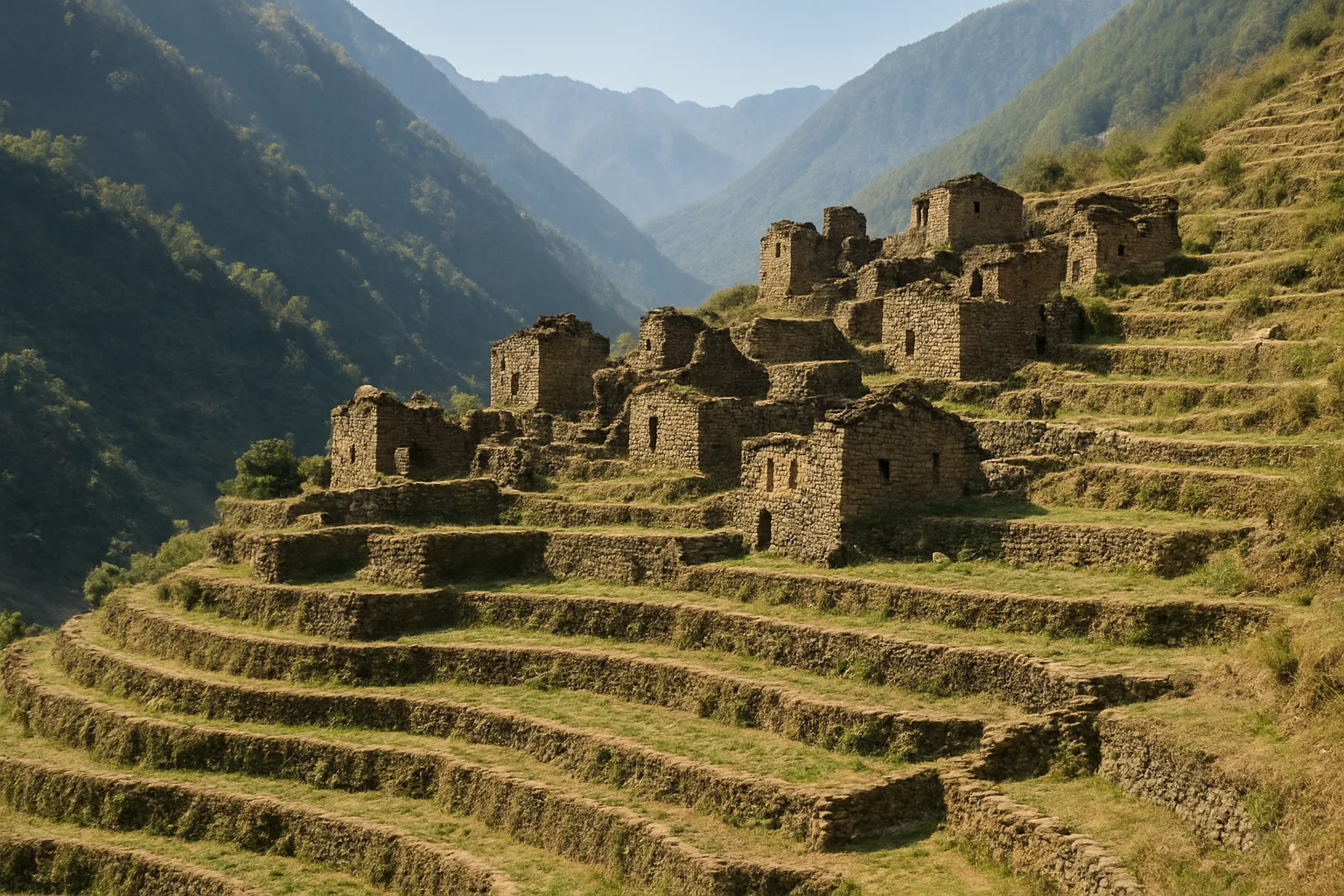
By the turn of the first millennium BCE, a quiet transformation was underway. Across the subcontinent, agriculture was taking root, and the hills of Solan were no exception. Early settlers carved terraces into the slopes, harnessing rainwater and coaxing barley, wheat, and millet from reluctant soil. Over generations, forests receded before cultivated fields. The rhythms of life changed: permanent hamlets replaced seasonal camps, and distinct clan identities began to form.
These early villagers left subtle marks. In some remote hamlets, ancient terraced fields still bear the pattern of their toil. Local festivals and folk songs, such as the ‘Jatara’ and ‘Shivratri’ celebrations, preserve echoes of fertility rites and sun worship, connecting today’s Solan to its earliest agricultural ancestors.
The Mauryan Shadow: Solan in the Age of Empires
The rise of the Mauryan Empire (c. 322–185 BCE) transformed the surrounding plains of North India, and its influence lapped at the foothills of Solan. Ashoka, the great Mauryan emperor, dispatched envoys and edicts far and wide, spreading Buddhist ideals and imperial administration. While Solan itself remained a remote outpost, the region’s strategic passes—like the ancient trade route running near present-day Sabathu and Kasauli—became conduits for merchants, monks, and messages.
Archaeological finds of Mauryan-era coins and inscriptions in nearby Sirmaur and Nalagarh suggest that Solan’s valleys were not as isolated as they seemed. Buddhist stupas, now lost to time, may once have dotted the hilltops, silent testaments to the spread of new ideas and faiths. The hills absorbed these influences quietly, blending Buddhist, Vedic, and animist traditions into a unique local tapestry.
Tribal Kingdoms and the Rise of Baghal
As the Mauryan star faded, the hills of Solan saw the rise of small tribal kingdoms. The region’s rugged terrain fostered independence: Rajput chieftains, descended from ancient Kshatriya lines, established their own dominions. The most enduring was the princely state of Baghal, whose dynasty traced its origins to the twelfth century CE, though local lore speaks of much older roots.
The rulers of Baghal fortified their hold from Arki, a hilltop stronghold whose walls still overlook the countryside. These early kings—like Rana Ajai Dev, credited with founding Baghal—brokered peace and war with their neighbors in Sirmaur, Bilaspur, and Kuthar. Their courts became centers of power, patronizing folk arts, temple building, and the codification of customary law. The landscape of Solan slowly changed: forts crowned the hills, temples rose amidst deodar groves, and new settlements clustered along vital routes.
Legend has it that these chieftains often mediated disputes among neighboring tribes and forged alliances through marriage and festival. The legacy of these early rulers endures in Solan’s social fabric, where clan identities and village councils still hold sway.
Faith and Folklore: The Birth of Solan Devi
Every place finds its spirit in myth. For Solan, that spirit is Solan Devi, the goddess who lends her name to the town and whose hilltop temple still draws pilgrims today. The story of Solan Devi blends history and legend: she is said to have arrived in the hills to protect her people, her blessings invoked before every harvest and major event.
The reverence for Solan Devi and other local deities—like Kali Mata and Shiva—reveals the deep intertwining of faith and land. Sacred groves, rock shrines, and annual fairs preserved ancient rituals. Even as Buddhism, Hinduism, and later Sikhism and Islam left their mark, the hills retained a distinctive, syncretic spirituality. The annual Solan fair, with its vibrant processions and folk performances, stands as a living link to these ancient beliefs.
Encounter With the World: Traders, Pilgrims, and Invaders
By the late medieval period, Solan was no longer a backwater. Its location—midway between the Punjab plains and the upper Himalayas—made it a crossroads for traders carrying salt, wool, and spices. Pilgrims trekked to the hill temples; soldiers and invaders occasionally swept through, seeking control of the strategic passes. The Mongol incursions and later the rise of Mughal influence in the region sent tremors even into these quiet hills, though Solan’s rulers deftly balanced autonomy with shifting allegiances.
Local chronicles and bardic poetry from this era recall episodes of heroism and treachery, echoing the larger currents shaping North India. The hills of Solan absorbed these shocks, adapting while fiercely guarding their traditions. By the dawn of the modern era, Solan stood poised between worlds: ancient yet alert to change, rooted yet receptive.
The Ancient Roots Beneath Modern Solan
Today, Solan’s bustling streets, colonial bungalows, and thriving markets might seem far removed from the world of nomads, tribal chieftains, and forest spirits. Yet beneath the city’s surface, those early stories still whisper. Every time a festival is celebrated or an old legend retold, the ancient roots of Solan push up through the cracks of modernity, reminding its people of who they are and where they came from.
These deep foundations—of resilience, adaptation, and spiritual connection to the land—continue to shape Solan’s identity. The story of its beginnings is not just a tale of the past, but a living force, lending the town its unique character amid the ever-changing pulse of Himachal Pradesh.
Next: Geography That Shaped Early Life in Solan