
Series: Learning AI
Phase 5: Large Language Models — Part 33 of 60
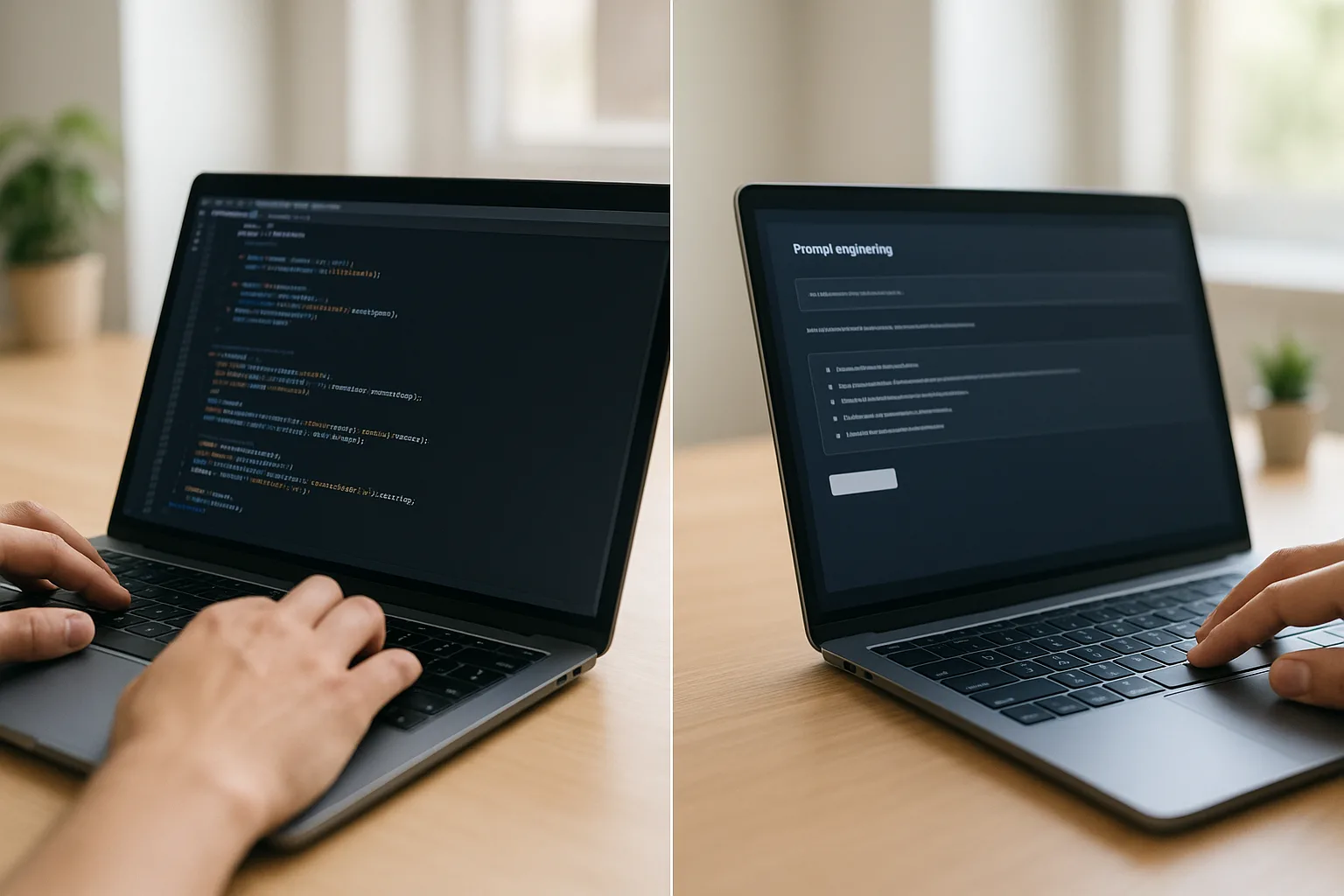
Understanding Fine-Tuning and Prompting in AI
If you’ve been following our “Learning AI” series, you’ve likely encountered two powerful strategies for working with large language models (LLMs): fine-tuning and prompting. Both methods help tailor AI behavior to your needs, but they serve different purposes and come with distinct advantages and limitations.
In this post, we’ll clarify the differences between fine-tuning and prompting, explore when to use each, and provide practical guidance so you can confidently choose the right approach for your AI projects.
What Is Fine-Tuning?
Fine-tuning means taking a pre-trained AI model and training it further on a specific dataset relevant to your task. This process adjusts the model’s internal parameters to make it better at understanding or generating content tailored to your needs.
For example, if you want a model to write legal documents, you might fine-tune it on a large collection of legal texts. The model “learns” the style, terminology, and typical structures of that domain, improving its performance on related tasks.
Key Characteristics of Fine-Tuning
- Data-Driven: Requires a sizable and high-quality dataset for the specialized task.
- Computational Cost: Needs time and resources to perform additional training.
- Customization: Creates a custom version of the model fine-tuned specifically for your use case.
- Deployment: Typically results in a new model instance you can deploy independently.
What Is Prompting?
Prompting is the process of crafting input instructions (prompts) that guide a pre-trained model’s behavior without changing its internal parameters. Instead of retraining, you “ask” the model to perform tasks by providing clear, context-rich prompts.
For example, to get the same legal document style, you might prompt the model with: “Write a contract clause about confidentiality.” The model uses its existing knowledge to respond appropriately.
Key Characteristics of Prompting
- No Additional Training: Uses the base model as-is, no extra computational cost.
- Flexibility: Easy to switch between different tasks by changing the prompt.
- Prompt Engineering: Success depends on how well you craft your prompts.
- Immediate Use: Ideal for rapid experimentation and diverse tasks.
When Should You Choose Fine-Tuning?
Fine-tuning shines when you need:
- Highly Specialized Tasks: Tasks requiring deep expertise or consistent style not captured well by general models.
- Improved Accuracy: When prompt-based outputs are too inconsistent or error-prone.
- Large Volumes: If you plan to generate many outputs, a fine-tuned model can be more efficient and cost-effective in the long run.
- Compliance and Control: You want tighter control over outputs for sensitive or regulated domains.
However, fine-tuning demands quality data and resources. If these aren’t available, it may not be the best starting point.
When Is Prompting the Better Choice?
Prompting is often the best option when:
- You’re Exploring: Testing different ideas and tasks quickly without investing in training.
- Need Versatility: One model must handle many different tasks or styles.
- Resource Constraints: Limited budget or computing power make training impractical.
- Rapid Deployment: You want immediate results or prototypes.
Prompting works especially well with the latest LLMs that have vast general knowledge and strong contextual understanding.
Myth-Busting: Common Misconceptions
- Myth: Fine-tuning always produces better results than prompting. Fact: Fine-tuning can improve performance, but well-crafted prompts often match or exceed fine-tuned outputs for many tasks.
- Myth: Prompting is only for beginners. Fact: Prompt engineering is a sophisticated skill and a key driver of success with LLMs.
- Myth: Fine-tuning requires coding expertise. Fact: Many platforms now offer user-friendly fine-tuning tools with minimal coding.
- Myth: Fine-tuning changes the model forever. Fact: Fine-tuned models are separate versions; the original stays intact.
Action Steps to Choose and Use Both Effectively
- Start by identifying your project goals: accuracy, speed, flexibility, domain specificity.
- Experiment with prompting first to explore your needs and understand the model’s capabilities.
- Invest in prompt engineering: test different phrasings, add examples, and use system instructions.
- If prompting doesn’t meet requirements, gather a quality dataset relevant to your task.
- Use available tools or platforms for fine-tuning to customize the model.
- Compare results from prompting and fine-tuning based on accuracy, cost, and deployment ease.
- Continuously iterate: refine prompts or retrain with more data as you learn.
Conclusion
Choosing between fine-tuning and prompting is a strategic decision that depends on your specific AI project needs. Prompting offers flexibility and speed, making it ideal for exploration and varied tasks. Fine-tuning provides deeper customization and improved accuracy for specialized applications. By understanding their strengths and limitations, you can leverage both approaches effectively and take your AI projects from beginner to mid-level with confidence.
In the next post, we’ll dive deeper into advanced prompt engineering techniques to help you craft prompts that consistently deliver excellent results. Stay tuned!
Previous: What Are Embeddings? Practical Uses and Examples
Next: Retrieval-Augmented Generation (RAG) Explained Simply