
Series: History of Lahaul & Spiti, Himachal Pradesh, India
Phase 2: Medieval Trans-Himalayan Rule — Part 10 of 30
This article forms part of a continuing series that follows the gradual emergence of organised power in the western Himalayas. As small communities gave way to clans, chieftainships, and hill states, patterns of rule, alliance, and conflict began to take shape. This phase examines how authority was negotiated through land, ritual, and warfare, laying the groundwork for regional kingdoms that would dominate the medieval landscape.
First Light in the High Valley
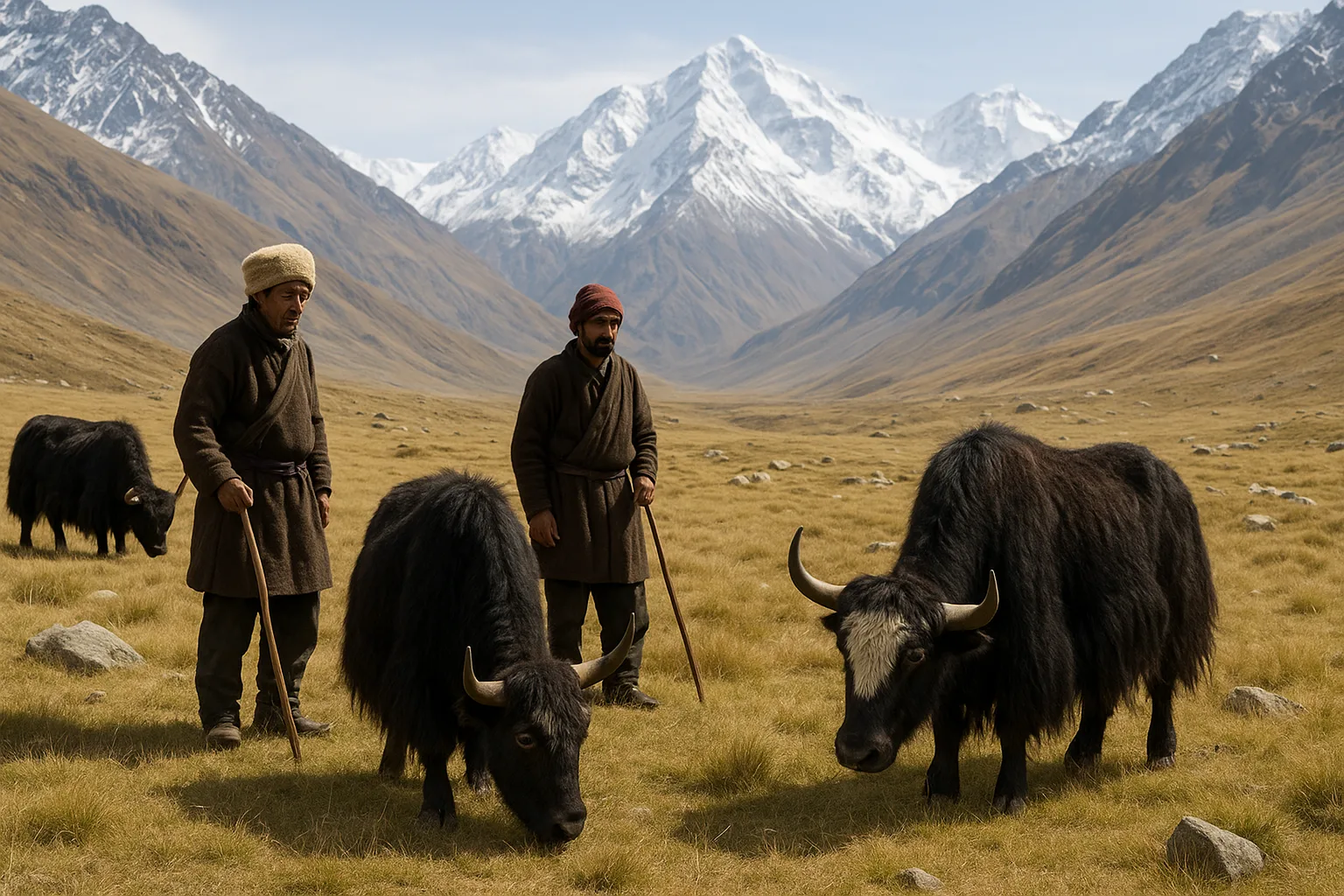
The first rays of sunlight skim the icy peaks above Lahaul, painting the river valleys gold and violet. In a medieval summer, the air is thin and sharp, the land a mosaic of stony fields, barley terraces, and scattered stone-walled hamlets. The clang of yak bells and the voices of herders drift across the slopes, echoing a way of life as old as the Himalaya themselves. Here, at over 3,000 meters elevation, survival is an act of ingenuity and perseverance—where agriculture and pastoralism have intertwined for centuries.
On the Edge of Empires: Lahaul-Spiti in Medieval Imagination
By the 10th and 11th centuries, Lahaul and Spiti stood at the confluence of worlds. Bounded by Ladakh, Zanskar, and Kullu, and watched over by the sentinels of the Greater Himalaya, these valleys were both remote and deeply connected. Ancient trade routes threaded through the region, linking Tibet to the Indian plains and providing not only goods but also a conduit for belief systems and new technologies. Early chronicles and the oral traditions of the region recall a land shaped by both myth and necessity—a borderland where the boundaries of kingdoms and the rhythm of seasons dictated life’s possibilities.
Fields Carved from Stone: The Agricultural Year
Medieval agriculture in Lahaul-Spiti was a seasonal gamble against frost and scarcity. The short growing season—barely four months in Spiti, a little longer in Lahaul—was dictated by the thawing of snow and the monsoon’s uncertain reach. Barley, buckwheat, and peas were the mainstays, chosen for their hardiness. Oral accounts describe how families labored together, breaking new ground at the river’s edge, hauling silt and manure by hand or yak, and turning the soil with wooden ploughs drawn by dzos (yak-cattle hybrids).
Water management was a communal art. Ingenious networks of channels (kulhs) diverted glacial melt to the highest possible fields, and the timing of irrigation was crucial—a task overseen by village elders, whose authority rested on both tradition and practical wisdom. The harvest was a time of both celebration and anxiety, for even a single untimely frost could imperil a year’s work.
Pastoralism: The Pulse of the Plateau
If agriculture was the anchor, pastoralism was the pulse. Oral traditions, passed down through families, speak of the Drokpa—herders whose seasonal migrations defined the shape of social life. Flocks of sheep and goats, herds of yak and dzo, and the iconic Tibetan mastiffs moved with the melting snows, grazing alpine meadows that belonged to no one and everyone. Nomadic and semi-nomadic groups maintained complex pacts with settled villagers: rights to summer pastures, obligations of tribute or labor, and the exchange of wool, meat, and dairy for grain.
This interplay of field and flock was not simply economic. In the belief systems of early Lahaul-Spiti, animals held ritual significance. Bones and horns adorned household shrines, and festivals marking the return of herders were laced with both spiritual and practical meaning. The rhythms of transhumance—the seasonal movement between low valleys and high pastures—shaped the calendar as surely as any ruler’s decree.
Communities and the Land: Early Settlements and Social Bonds
Archaeological traces and early chronicles suggest that medieval settlements clustered along rivers—the Chandrabhaga in Lahaul, the Spiti and Pin in Spiti. Villages like Keylong, Tabo, and Kibber emerged as centers of both agriculture and trade, their stone houses huddled for warmth and protection. The division of land, the sharing of water, and the rotation of labor were regulated by community councils, whose authority often exceeded that of distant hill chieftains. The oral memory of these councils persists in the region’s local lore, sometimes mythologized as the wisdom of ancestors, sometimes remembered in the names of fields and wells.
Religious practice was threaded through daily work. Before the rise of organized monastic Buddhism in the 11th century, the valleys’ spiritual life blended animist traditions with early Buddhist and Bon influences. Fields were blessed before sowing, yaks decorated at festival times, and mountain spirits appeased with offerings. The land itself was revered as both provider and unpredictable force, a belief that shaped not only ritual but the careful stewardship of scarce resources.
Trade, Tribute, and the Emerging Hill States
Despite their isolation, Lahaul and Spiti were never cut off from the world. Merchant caravans from Ladakh, Kinnaur, and the distant plains brought salt, wool, and precious turquoise, returning with barley and medicinal herbs. Early regional gazetteers note the importance of the Spiti and Baralacha passes—dangerous but vital arteries for commerce and diplomacy. The exchange of local produce for outside goods wove these valleys into the fabric of Himalayan politics.
As local clans consolidated power, the first outlines of hill states emerged—sometimes under the shadow of Tibetan kings, sometimes as tributaries to Kullu or Ladakh. Yet the authority of these rulers was always tempered by the realities of geography and the autonomy of village councils. The political boundaries of the time were porous, more often traversed by herders and traders than by soldiers.
Myth, Memory, and Historical Inference
In the stories told by elders, the founding of villages or the migration of a legendary yak herder often blurs the line between myth and memory. While some tales—such as the descent of Buddhist saints or the taming of mountain demons—belong to the realm of oral tradition, others find echoes in the records of Tibetan and Indian chroniclers. Modern historians, drawing on both, infer a society that was adaptive, communal, and deeply attuned to its unforgiving environment.
Documented history, where it exists, is fragmentary: scattered mentions in the Rgyal-rabs chronicles, reports by itinerant lamas, and later British gazetteers. Yet the evidence, woven from fields, trails, and the memories of people, paints a picture of resilience—a society that flourished on the edge of the possible.
Legacy in the Present Landscape
Today, the fields of Lahaul and Spiti still ripple with barley in the brief summer, and yak herders still trace ancient routes across the high meadows. Many stone irrigation channels, built by medieval hands, continue to feed the valleys. Communal decision-making, shaped by centuries of necessity, underpins festivals and resource sharing even now. The fusion of agriculture and pastoralism—born of hardship, faith, and ingenuity—remains the backbone of life between the mountains.
In the next part of this series, we will journey deeper into the religious and cultural transformations that swept these valleys with the rise of monastic Buddhism, and how ancient belief systems adapted to new spiritual influences.
Previous: Village Governance and Customary Law in Medieval Times
Next: Arrival and Spread of Tibetan Buddhism in Spiti