
Series: History of Kullu, Himachal Pradesh, India
Phase 5: Modern Era — Part 26 of 30
This article appears within a continuing historical series that follows the western Himalayas into the modern era. With the end of princely rule and the integration into independent India, long-standing social and political patterns were reconfigured. This phase examines how development, state formation, and memory interact with inherited landscapes, shaping contemporary life while carrying forward echoes of the past.
Monsoon Morning in the Valley: A Glimpse of Change
It is an early July morning in Kullu Town. The monsoon rain is gentle but persistent, washing over the steep hillsides and stone-paved lanes. The air shimmers with a mingled scent of incense from a roadside shrine and the sharp aroma of diesel from a passing bus. Beneath the market awnings, shopkeepers arrange apples and apricots in neat pyramids, while elders swap news in Kullvi, their voices rising above the rattle of auto-rickshaws. Step back a century—or even a few decades—and this scene would have been unrecognizable. The transformation of Kullu from a remote Himalayan settlement into a living, breathing urban center is a story woven from history, migration, faith, and the persistent tug of modernity.
Kullu’s Ancient Geography: A Valley of Crossroads
Long before the arrival of motorcars and mobile phones, Kullu’s geography shaped its destiny. Nestled between the greater Himalayas and the Pir Panjal range, the valley was both isolated and uniquely connected. Its fertile riverbanks, carved by the restless Beas, drew early agriculturalists and shepherding communities. Oral traditions trace these roots back to the time when the valley, known as ‘Kulantapitha’ in ancient Sanskrit texts, was believed to be the last habitable place on earth after mythic floods. Such legends, echoing in local epics and temple lore, infused the land with a sense of sacred remoteness.
Yet beyond myth, historical inference suggests that by the first millennium CE, Kullu had become a node along subtle trade and pilgrimage routes snaking through the western Himalayas. The town’s earliest documented settlements were clustered near river crossings and forest clearings, where travelers could rest and barter. Archaeological finds—pottery shards, temple ruins, and early coins—hint at an emerging culture that was both rooted and restless.
Communities and Early Settlements: From Pastoralists to Hill States
As the centuries turned, Kullu’s population grew more diverse. The earliest communities included the Kullvi Brahmins and Rajputs, whose oral genealogies and ritual roles remain central to the town’s social fabric. Alongside them were shepherd groups—Gaddis and Gujjars—who moved seasonally between high pastures and valley settlements. Each group brought distinct rituals, dialects, and clan stories, shaping the mosaic of early Kullu society.
Documented political history, as recorded in the Rajatarangini and later Himachal gazetteers, marks the gradual rise of local chieftains. By the 12th century, Kullu had established itself as a principality, its rulers tracing lineage to mythical king Virayasa. The town’s strategic position meant it saw both conflict and exchange with neighboring hill states—Lahaul, Mandi, and Kangra—which influenced its architecture, religious traditions, and trading patterns.
Belief Systems and the Pulse of Daily Life
Religion and ritual anchored the rhythms of Kullu’s early urban life. Every hamlet boasted its own wooden temple, with deities carried in processions that echoed the valley’s myths. The annual Dussehra festival, which remains a defining feature of the town, grew from these ancient roots, blending Hindu lore with local animist beliefs. Oral traditions recall how gods and goddesses were not distant abstractions but living presences, consulted on seasonal matters—from the sowing of crops to the settlement of disputes.
Over time, Buddhist influences filtered in from Ladakh and Tibet, while itinerant Sufi mystics left traces in local songs and place-names. This spiritual layering, captured in early British gazetteers and the travelogues of colonial administrators, set Kullu apart as a place where boundaries between traditions were fluid.
Trade, Movement, and the Early Marketplaces
While Kullu’s remoteness protected it from large armies, it did not preclude commerce. Historical inference, supported by records from the Mughal and Sikh periods, reveals that the valley was a waypoint for traders moving salt, wool, and precious stones. The Beas river, though often impassable in spring floods, served as both barrier and artery. Early markets—held on temple grounds and riverbanks—drew merchants from as far as Kashmir and the Punjab plains. These exchanges seeded the cosmopolitanism that would later define the town’s urban core.
As the British Raj extended its administrative reach into Himachal’s hill states in the 19th century, Kullu found itself at a new crossroads. Colonial surveys mapped the valley, introduced the first postal routes, and encouraged apple cultivation, which would transform local economies. The slow arrival of roads and telegraph lines, documented in the Punjab State Gazetteer, marked the start of Kullu’s urban awakening.
The Modern Town Emerges: Migration, Markets, and Urban Form
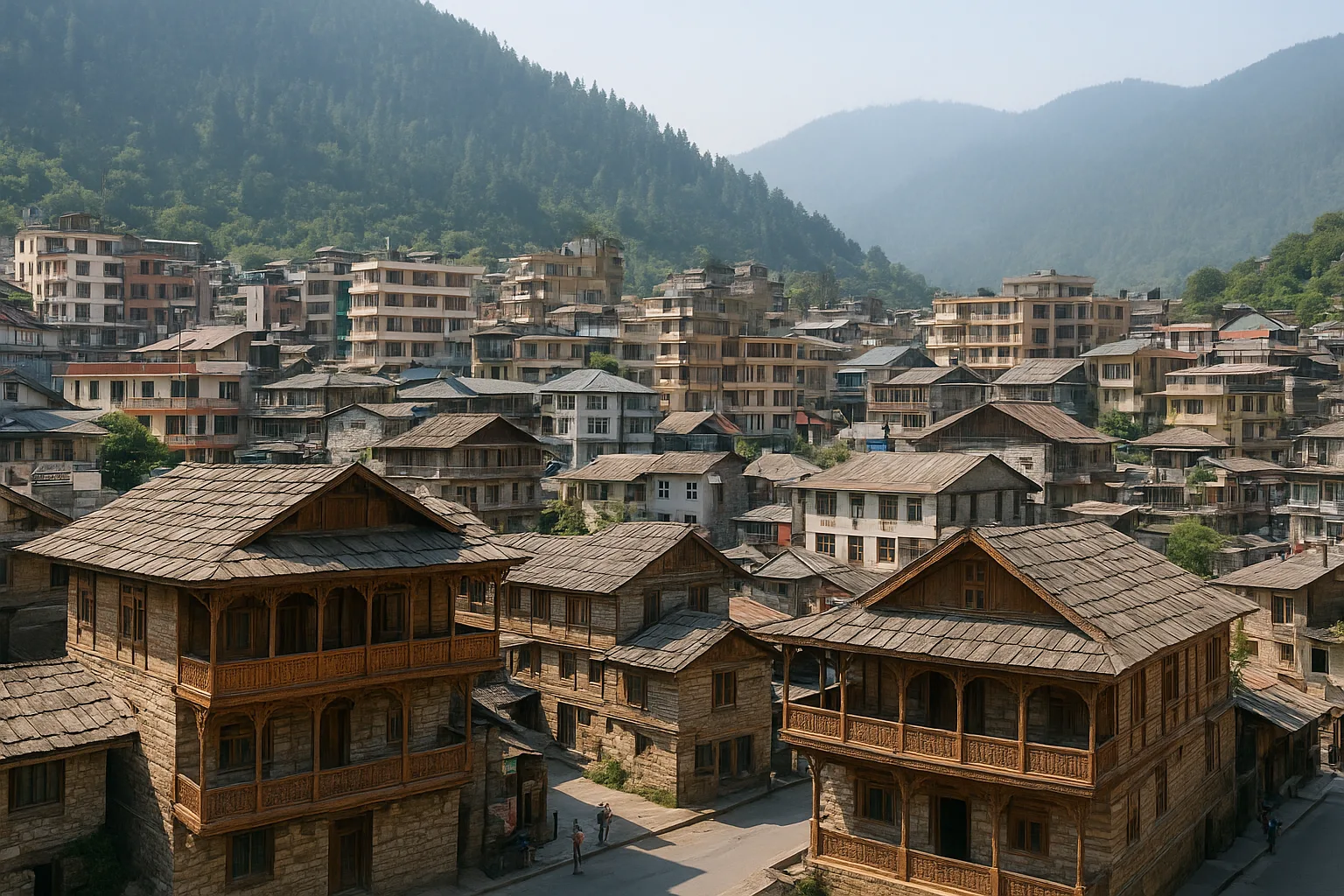
The 20th century saw a dramatic acceleration in change. Partition and the creation of Himachal Pradesh in 1948 brought fresh waves of migrants—Punjabi traders, government officials, and Tibetan refugees—each adding another layer to the town’s evolving identity. Oral histories recall the arrival of the first buses snaking up from Mandi, and the slow replacement of wooden houses with concrete blocks. New schools, hospitals, and government offices clustered around the old bazaar, drawing in young people from surrounding villages and altering traditional livelihoods.
By the 1980s, tourism had arrived in earnest. Trekking shops, guesthouses, and cafes began to dot the riverfront, catering to a cosmopolitan crowd drawn by Kullu’s blend of myth, scenery, and accessibility. The tension between tradition and modernity became palpable: temples and deodar forests nestled beside internet cafes and hotels. The annual Dussehra festival, once a local affair, drew visitors from across India and the world. Kullu’s urbanisation, while bringing prosperity, also sparked debates over land use, environmental change, and the preservation of intangible heritage.
Changing Lifestyles: Negotiating Past and Present
For the people of Kullu, these changes have been both exhilarating and unsettling. Extended families once bound by land and lineage now send their children to study in Delhi or Chandigarh. Traditional crafts—wool weaving, basketry, ritual music—compete with the allure of salaried jobs and digital connectivity. The old rhythms of village life persist in festivals and communal rituals, yet daily routines are shaped increasingly by the demands of the modern town.
Still, the memory of older ways persists. Stories are told of how the beas river’s flooding once dictated the settlement pattern, or how the arrival of the first electricity pole was marked by pujas and communal feasts. Local newspapers debate the future of Kullu’s historic bazaar even as new shopping complexes rise around it. The struggle to balance rapid urbanisation with the preservation of identity remains at the heart of Kullu’s lived experience.
Living Legacy: Kullu’s Urban Roots and Contemporary Life
Today, Kullu stands as both a testament to its ancient heritage and a work in progress. The town’s urban form, belief systems, and social networks are the products of centuries of migration, adaptation, and resilience. The lessons of Kullu’s transformation are visible in its architecture, its festivals, and the everyday negotiations of its people. The valley’s crossroads—once defined by geography and trade—are now marked by cultural exchange and civic debate, shaping how Kullu imagines its own future.
As we continue our journey through the modern era in this series, the next chapter will explore how environmental change and new technologies are reshaping not only Kullu’s landscape but its sense of self. The story of urbanisation here is far from finished—each monsoon, each festival, adds a new verse to an ancient song.
Previous: Apple Farming and Economic Change in Kullu
Next: Preserving Kullu’s Cultural Traditions Today