
Series: History of Kinnaur, Himachal Pradesh, India
Phase 2: Medieval Period — Part 9 of 30
This article forms part of a continuing series that follows the gradual emergence of organised power in the western Himalayas. As small communities gave way to clans, chieftainships, and hill states, patterns of rule, alliance, and conflict began to take shape. This phase examines how authority was negotiated through land, ritual, and warfare, laying the groundwork for regional kingdoms that would dominate the medieval landscape.
Against the Wind: First Light in Old Kinnaur
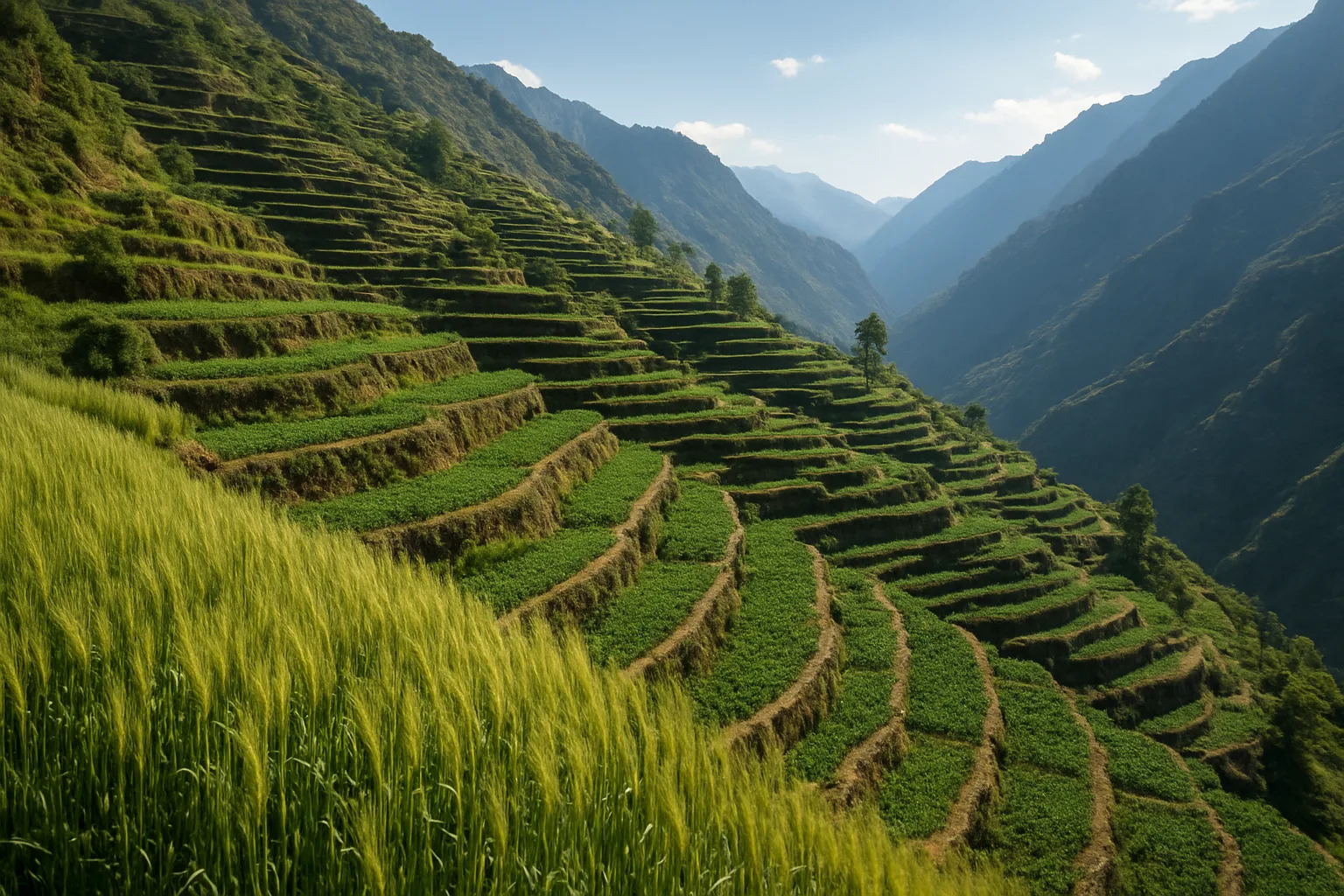
In the brittle dawn, a thin mist rises from the Sutlej valley, curling around stepped terraces that dare the icy wind. Centuries ago, long before the region’s hill states found their names in written records, these slopes of Kinnaur—caught between stark ridgelines and plunging gorges—were already alive with the quiet labor of survival. Each stone-hedged field, each channel of meltwater, tells a story as old as the mountains themselves.
By the early medieval period, Kinnaur’s villages stood as outposts of ingenuity. The land’s extremes—scorching sunlight, knife-sharp winters, and landslide-prone monsoons—demanded constant adaptation. Yet, here, communities carved not only a living but an identity, woven into the fabric of the Himalaya.
Roots in Myth and Memory: Oral Traditions and Early Settlement
Kinnaur’s oldest tales, shared by hearthlight or at the edges of ancient temples, speak of supernatural ancestors and divine interventions. The Kinnaura people recount legends of their descent from the Kinnauras of myth—semi-divine beings mentioned in early Sanskrit texts, said to inhabit the high ranges. Such stories, handed down through generations, blend myth and memory, serving both as spiritual touchstones and as subtle clues to early migration and settlement patterns.
Oral traditions recall how the first inhabitants followed the rivers—the Sutlej, Baspa, and Spiti—seeking pockets of arable land amid the Himalayan vastness. These stories, while embroidered with wonder, often echo real environmental challenges: flash floods, sudden frosts, and the slow, relentless advance of glacial ice. Over time, the knowledge and rituals embedded in these tales shaped the earliest forms of agriculture and land use in Kinnaur.
Factual Foundations: Historical Inference and Archaeological Glimpses
While the region before the tenth century remains largely undocumented, the pattern of terraced farming found across Kinnaur hints at remarkable continuity. Archaeological finds—such as ancient irrigation channels and remnants of early grain storage—suggest that by the early medieval era, settled agriculture was well established. Local gazetteers and chronicles from later centuries, like the Gazetteer of the Simla Hill States, trace lineages and village boundaries back to these formative times.
Historical inference, supported by the layout of villages and the persistence of certain crop varieties, points to a slow but steady evolution. Communities adapted barley, buckwheat, and millet to the short growing season, while hardy fruit trees like apricot and apple—possibly introduced via ancient trade—became staples. The very landscape, with its hand-built terraces and stone granaries, stands as living evidence of this ingenuity.
Belief Systems: Ritual, Environment, and Social Cohesion
In Kinnaur, faith and farming have always been intertwined. The region’s distinctive blend of Hinduism and Buddhism, layered over older animistic traditions, shaped both spiritual life and practical survival. Rituals to appease local deities—often associated with rivers, peaks, and trees—were not mere superstition but pragmatic acts, invoking divine favor for bountiful harvests and protection from floods or blight.
Each village maintained sacred groves and water sources, guarded by local spirits known as devtas. Seasonal festivals like Phulaich and Losar marked the agricultural calendar, binding communities together against the uncertainty of the climate. These beliefs, rooted in both oral lore and lived experience, provided cohesion and resilience in a land where survival depended on mutual aid.
Trade Routes and the Flow of Ideas
Kinnaur’s position along the trans-Himalayan trade routes shaped both its agriculture and society. By the medieval period, the region was a vital link between the Indian plains, Ladakh, and Tibet. Traders and pilgrims—laden with salt, wool, barley, and dried fruits—crossed the high passes, bringing not only goods but seeds, stories, and new technologies.
The influence of distant cultures is visible in the region’s crops and architecture. Certain apple and apricot varieties bear the mark of Central Asian origins. Intricate irrigation systems, reminiscent of both Tibetan and Indian models, allowed fields to flourish against the odds. The cross-pollination of techniques and beliefs, fostered by these ancient highways, made Kinnaur’s agricultural systems uniquely adaptive.
The Emergence of Hill States and Political Structure
As the medieval period progressed, Kinnaur’s loosely knit communities gradually coalesced into more defined hill states. Chronicles and regional records, such as those referencing the Bashahr state, note the emergence of local chieftains and ruling lineages by the twelfth century. These early polities provided a measure of order and defense, organizing irrigation, resolving disputes, and imposing tribute systems that shaped the rhythms of agricultural life.
Yet, even as these hill states took shape, power remained decentralized. Village councils and clan elders retained significant autonomy, and the old rituals—rooted in both land and legend—continued to govern the essential tasks of planting and harvest. The alliance between political authority and sacred tradition gave Kinnaur’s society its distinctive resilience, able to weather both natural disasters and the ambitions of distant empires.
Legacy: The Enduring Imprint of Ancient Adaptations
Today, the terraced fields and stone granaries of Kinnaur still echo the ingenuity of their medieval builders. Modern residents continue to honor the old festivals, tend the same hardy crops, and invoke the blessings of ancient deities before each harvest. The landscape itself, shaped by centuries of adaptation, stands as a living testament to the region’s capacity for survival.
Kinnaur’s story is not merely one of endurance, but of creativity and connection—where harsh conditions forged both a unique agricultural tradition and a vibrant communal identity. As we move forward in this series, the next chapter will uncover how shifting alliances, external influences, and internal transformations shaped Kinnaur’s society in the centuries that followed, setting the stage for new challenges and opportunities in the high Himalaya.
Previous: Life in Remote Himalayan Villages During Medieval Times
Next: Cultural Exchange Between Kinnaur and Tibet