
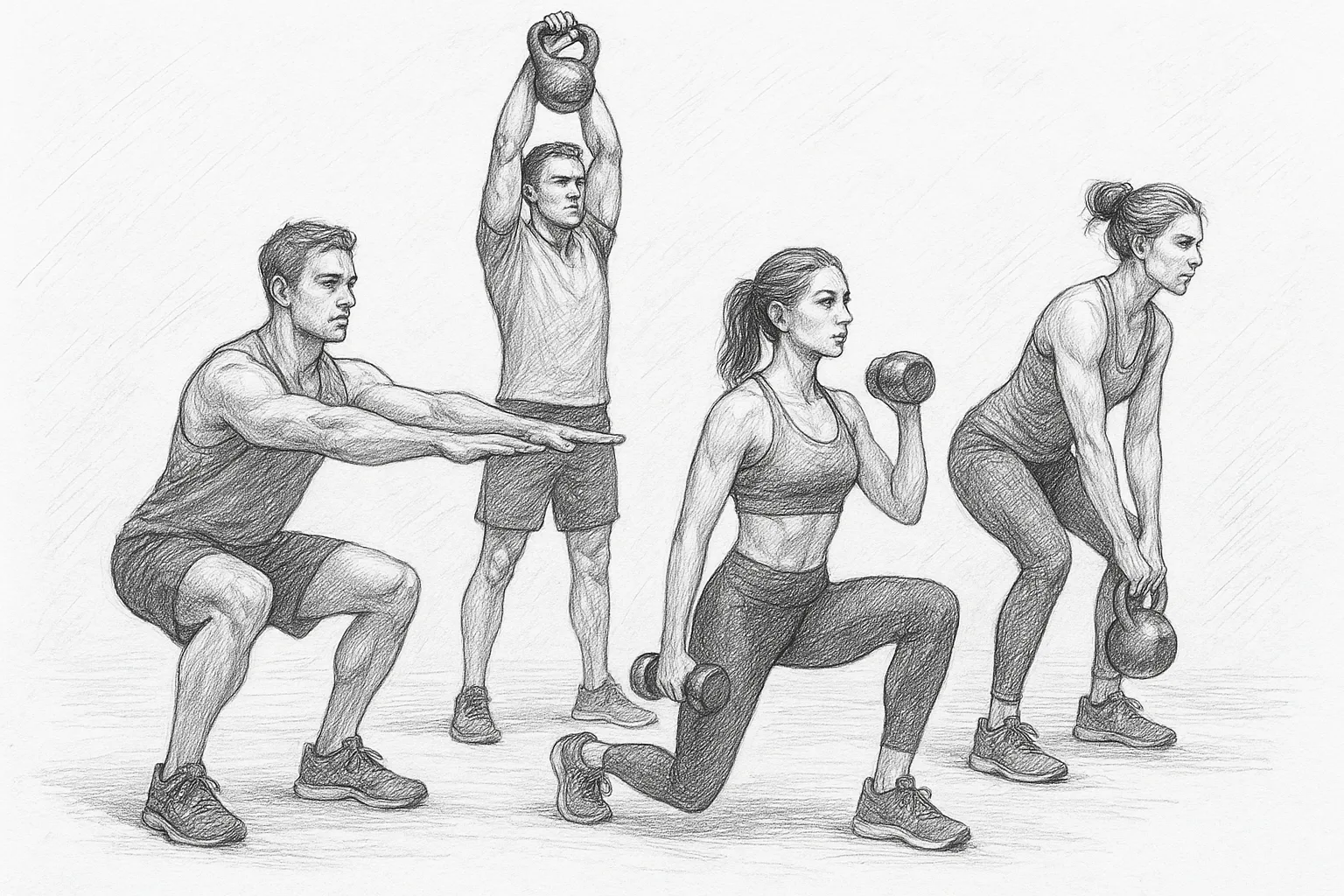
Functional fitness focuses on exercises that help you move better in your everyday life. Instead of just building muscle or endurance in isolation, these exercises mimic the natural movements you use daily — whether it’s bending, reaching, lifting, or walking. By practising functional fitness, you can improve your strength, balance, and flexibility in a way that makes daily tasks easier and safer.
What Is Functional Fitness?
Functional fitness exercises train your body to perform real-life activities with greater ease. They target multiple muscle groups and focus on core stability, coordination, and balance. This type of fitness helps reduce the risk of injury and supports independence as you age.
Simple Functional Fitness Exercises to Try
Here are some practical exercises you can do at home or in the gym to enhance your daily movement:
- Squats: Mimic sitting and standing. Stand with feet shoulder-width apart, lower your hips as if sitting back into a chair, then stand back up. Keep your chest up and knees over your toes.
- Step-Ups: Use a sturdy step or low bench. Step up with one foot, then bring the other foot up. Step down carefully. This strengthens legs and improves balance.
- Push-Ups: Strengthen your chest, shoulders, and arms. Start on your knees or toes, keeping your body straight, lower yourself towards the floor, then push back up.
- Plank: Builds core strength. Rest on your forearms and toes, keeping your body in a straight line. Hold for 20-30 seconds, increasing time as you get stronger.
- Deadlifts with Light Weights or Household Items: Practice lifting with good form by hinging at the hips and keeping your back straight. This helps with lifting heavy objects safely.
- Overhead Reaches: Stretch and strengthen shoulders by raising your arms overhead and reaching up tall, then lowering slowly.
- Walking Lunges: Step forward into a lunge position, then bring the back foot forward to meet the front and repeat. This improves leg strength and balance.
Step-by-Step Tips for Building Functional Fitness Habits
- Start Small: Begin with short sessions, such as 10-15 minutes, two to three times a week. Consistency is key.
- Focus on Form: Proper technique reduces risk of injury. Use mirrors or ask a friend to check your posture.
- Use Everyday Objects: Don’t worry about fancy equipment. Use water bottles, a sturdy chair, or stairs for resistance and balance exercises.
- Warm Up and Cool Down: Gentle stretches and light cardio before and after exercise help prepare your muscles and reduce stiffness.
- Mix It Up: Combine strength, balance, and flexibility exercises to keep your routine engaging and comprehensive.
- Listen to Your Body: It’s normal to feel some muscle soreness, but stop if you experience sharp pain or discomfort.
- Set Realistic Goals: Aim for gradual progress rather than perfection. Celebrate small improvements.
Common Myths About Functional Fitness
- Myth: Functional fitness is only for athletes. Actually, it’s designed for all ages and fitness levels to improve everyday movement.
- Myth: You need fancy equipment to get results. Many functional exercises use just your body weight or household items.
- Myth: Functional fitness takes too much time. Even brief, regular sessions can make a big difference over time.
- Myth: Functional fitness is only about strength. It also improves balance, coordination, and flexibility.
- Myth: It’s risky if you’re older or have health issues. With appropriate modifications and professional advice, it can be safe and beneficial.
Why Functional Fitness Matters for Daily Life
Functional fitness helps you carry out everyday tasks like carrying groceries, climbing stairs, or getting up from a chair with greater ease and confidence. It supports good posture, reduces the chance of falls, and promotes independence as you age. Developing these skills can also boost your energy levels and mood, contributing positively to your overall wellbeing.
“The best exercise is the one that fits into your life and helps you move better every day.”
Anonymous
Getting Started Safely
Before starting any new exercise routine, especially if you have health concerns or have been inactive, it’s a good idea to chat with a healthcare professional or a qualified fitness instructor. They can help tailor exercises to your needs and ensure you’re moving safely.
Remember, the goal of functional fitness is to make your day-to-day life easier and more enjoyable. Progress at your own pace and enjoy the benefits of improving your strength, balance, and mobility.
This article provides general educational information only and is not a substitute for professional medical advice. Always consult a qualified healthcare professional for personal guidance.
Ready to move better? Start with one or two exercises today and build from there. Your body will thank you for the care and attention you give it!