
Series: Finance for Kids
Phase 5: Banking, Cards & Digital Money — Part 52 of 166
Understanding ATMs and Cards
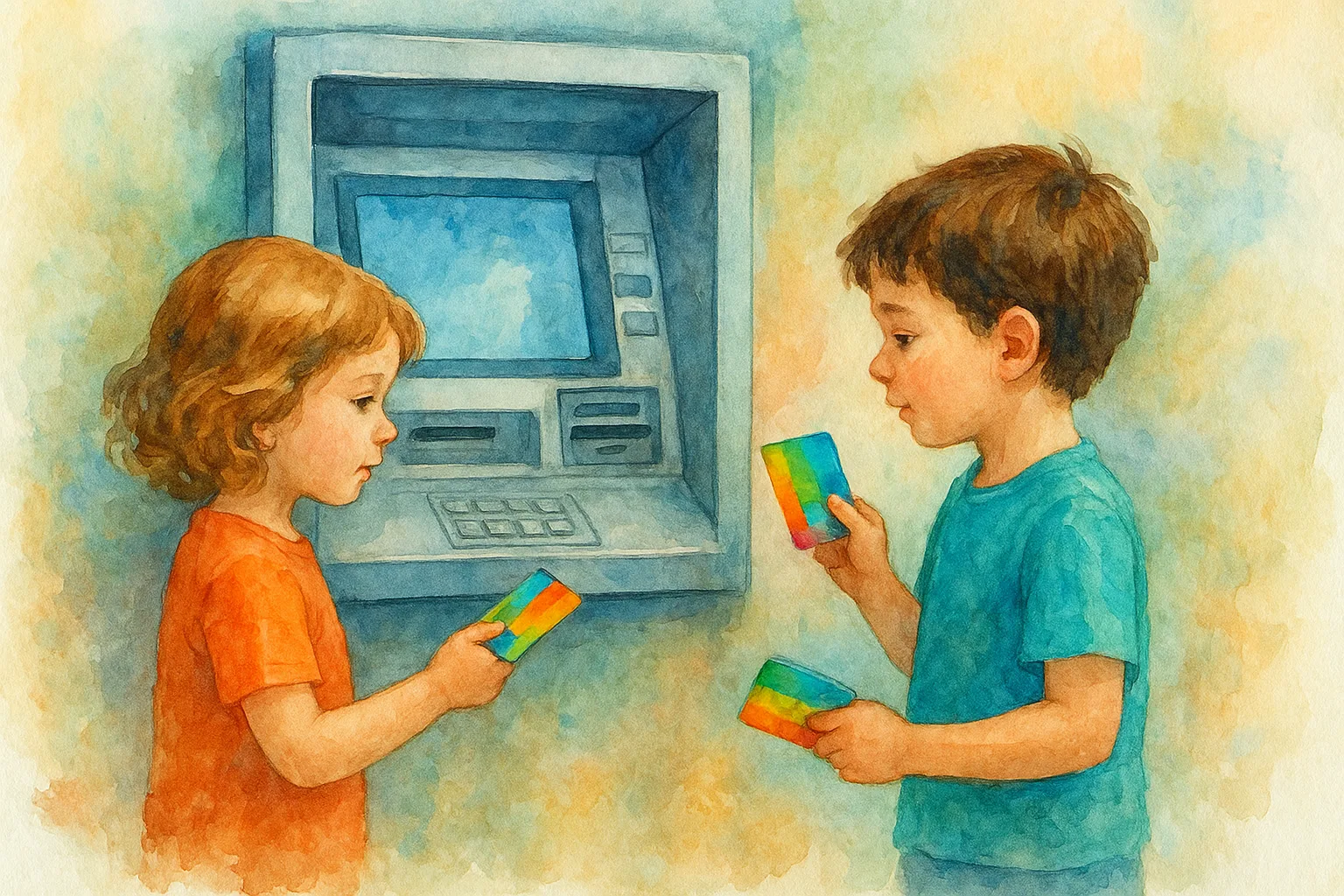
Teaching kids about money is an important part of their education, and understanding how ATMs (Automated Teller Machines) and cards work is a great place to start. These tools are common in our daily lives, and explaining them can help children become more responsible with money.
What is an ATM?
An ATM is a machine that allows people to withdraw cash, check their bank balance, and perform other banking tasks without needing to go into a bank. It’s like having a mini bank right on the street!
How Does an ATM Work?
To help your child understand how an ATM works, you can follow these steps:
- Find an ATM: Take your child to a nearby ATM. Show them the machine and explain that it is designed to help people access their money.
- Insert the Card: Explain that the card (like a debit or credit card) is used to connect to the bank account. When they insert the card, it tells the ATM who they are.
- Enter the PIN: Discuss the importance of the Personal Identification Number (PIN). It’s a secret code that keeps their money safe. Teach them to never share their PIN.
- Select the Action: Show them how to choose what they want to do, like withdrawing cash or checking their balance. This helps them see how the ATM responds to their choices.
- Receive Cash: If they choose to withdraw money, show them how the machine gives cash. Explain that this money comes from their bank account.
- Take the Receipt: Discuss the importance of taking the receipt. It shows what they did and helps them keep track of their money.
Understanding Cards
Now that your child knows about ATMs, it’s important to explain how cards work. Cards can be used to pay for things instead of using cash.
Types of Cards
- Debit Cards: These cards allow users to spend money directly from their bank accounts.
- Credit Cards: Users can borrow money up to a certain limit to make purchases, but they need to pay it back later.
- Prepaid Cards: These cards are filled with a specific amount of money. Once the money is spent, the card can’t be used until it is reloaded.
How to Use a Card
Here’s a quick guide to help kids understand how to use cards:
- Find a Card: Show your child a debit or prepaid card. Talk about the information on it, like the card number and expiry date.
- Make a Purchase: Explain that they can use the card to buy things at stores or online. Show them how to swipe or tap the card at the register.
- Check the Balance: Teach them that it’s important to know how much money is on their card. This helps avoid overspending.
- Understand Fees: Discuss possible fees that can come with cards, like ATM withdrawal fees or overdraft charges. It’s important to know how to avoid these.
Fun Myths About ATMs and Cards
When teaching kids, it’s also fun to clear up some common myths:
- Myth 1: ATMs are magic machines!
- Truth: ATMs are machines that need a bank account to give out money.
- Myth 2: Cards are free money!
- Truth: Cards are a way to access money, but it must be paid back or is taken directly from their account.
- Myth 3: You can use any ATM without charges.
- Truth: Some ATMs charge fees, especially if they are not owned by your bank.
Conclusion
By teaching children how ATMs and cards work, you help them gain confidence in handling money. Use real-life examples, practice together, and address any questions they might have. With your support, they will learn to manage their finances responsibly.
This article provides general educational information only and is not financial advice. Always seek guidance from a qualified professional for personal financial decisions.
Previous: What Is a Savings Account? A Child-Friendly Guide
Next: Introducing the Idea of Digital Money to Children