
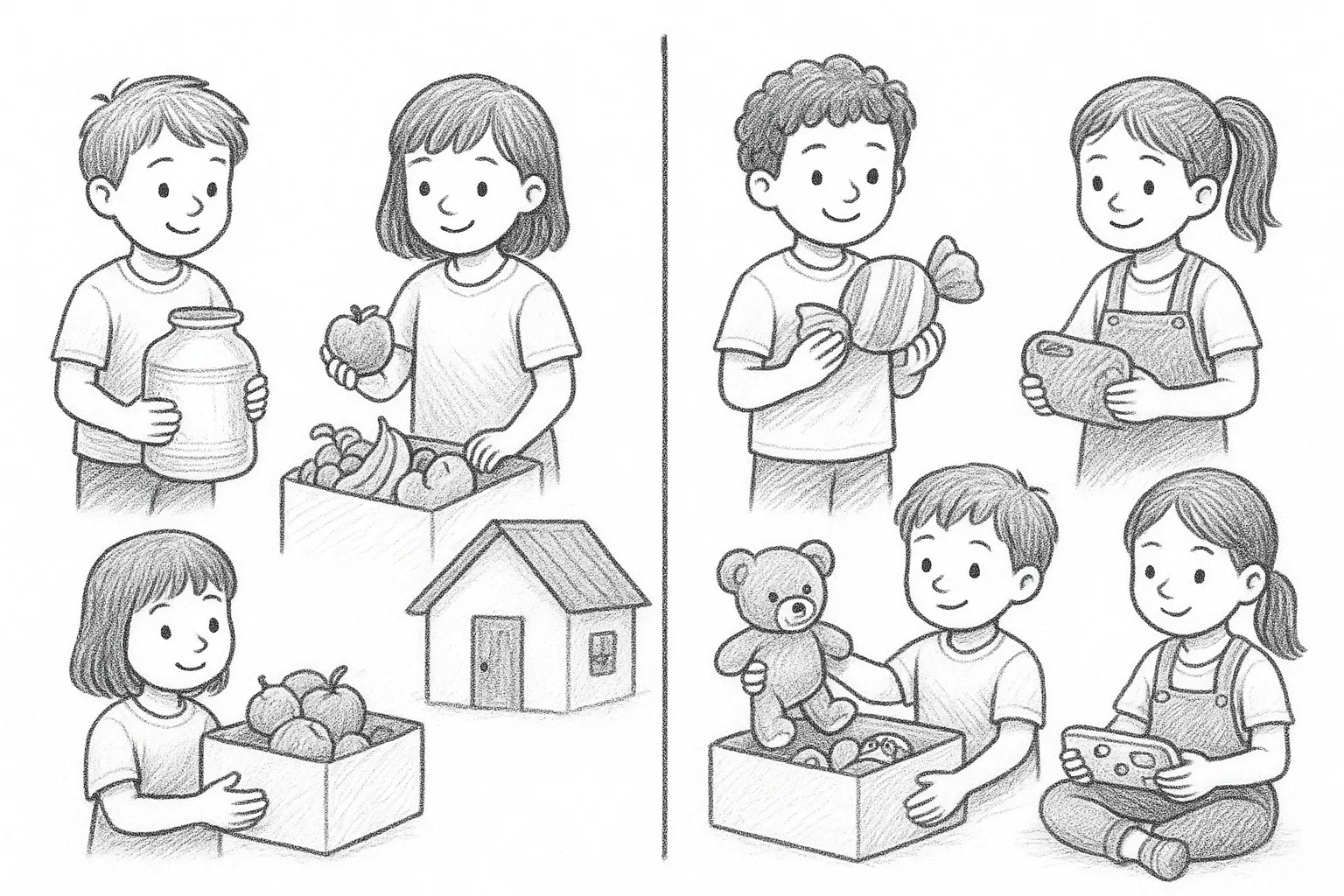
Helping children understand the difference between needs and wants is an important step in teaching them about money. Knowing what is essential and what is a nice-to-have helps kids make better choices as they grow. This guide offers simple explanations, practical examples, and easy tips for parents and educators to use when talking about money with children.
What Are Needs and Wants?
Needs are things we must have to live and be healthy. These include food, water, clothes for warmth, a safe place to live, and medicine when we are ill. Without these, our health and safety could be at risk.
Wants are things we would like to have but can live without. Toys, sweets, new gadgets, or fancy clothes fall into this group. They make life more fun or comfortable but are not essential for survival.
Simple Everyday Examples
- Food: Eating apples and bread are needs because they keep us healthy. Ice cream is a want because it is a treat.
- Clothes: Wearing a warm coat in winter is a need. Choosing a colourful hat just because it looks nice is a want.
- Housing: Having a home to sleep in is a need. Having a big garden or a swimming pool is a want.
Why Is It Important to Know the Difference?
When children learn to tell needs from wants, they start to understand how to make choices about money. It helps them see why some things should come first when deciding what to buy or save for. This skill supports good habits like planning and patience.
For example, if a child wants a new toy but needs new school shoes, understanding the difference can help them wait for the toy until after the shoes are bought.
Step-by-Step Tips for Teaching Kids
- Talk about daily choices: Point out what your family needs and what you want. For instance, “We need to buy milk, but we want chocolate biscuits.”
- Use pictures or drawings: Create two boxes labelled “Needs” and “Wants” and sort pictures of items together. This makes the idea visual and fun.
- Discuss feelings: Explain that wants can make us happy but needs keep us safe and healthy. This helps children understand why needs come first.
- Set simple budgets: Give children a small amount of money to spend, then help them decide how much to use for needs and how much for wants.
- Encourage saving: Teach kids to save some money for needs or future wants. Saving helps them plan ahead.
- Use stories or books: Find children’s books about money that explain needs and wants in fun ways.
- Be patient: Children may confuse needs and wants at first. Gently repeat the ideas over time.
Common Myths About Needs and Wants
- Myth: Wants are bad or wrong.
Truth: Wants are normal and part of life. It’s about balance, not avoiding them all. - Myth: Needs and wants are the same for everyone.
Truth: Needs can vary. For example, glasses might be a need for some people but not others. - Myth: Kids can’t understand money concepts.
Truth: Children can learn about money and decisions when explained simply and with examples.
“Teaching children about needs and wants helps them grow into thoughtful and responsible adults.”
Financial Education Expert
Remember, talking about money doesn’t have to be complicated. Use everyday moments—like shopping, mealtimes, or play—to help children see the difference between what they really need and what they simply want.
By practising this early on, you’re helping build a foundation for good money habits that will last a lifetime.
This article provides general educational information only and is not financial advice. Always seek guidance from a qualified professional for personal financial decisions.
Thank you for taking the time to help children understand money in a simple and caring way. Little steps today can make a big difference tomorrow.
Previous: Teaching Kids What Money Is and How It Works
Next: Helping Kids Understand Where Money Comes From