
Series: History of Chamba, Himachal Pradesh, India
Phase 4: British Period — Part 18 of 30
This article is part of a wider series tracing the transformation of the western Himalayas under colonial influence. As British authority extended into the hills, existing political systems were restructured through treaties, administration, and new forms of governance. This phase considers how colonial rule reshaped society, economy, and space while leaving lasting imprints on local identity.
Morning Mist in the Ravi Valley
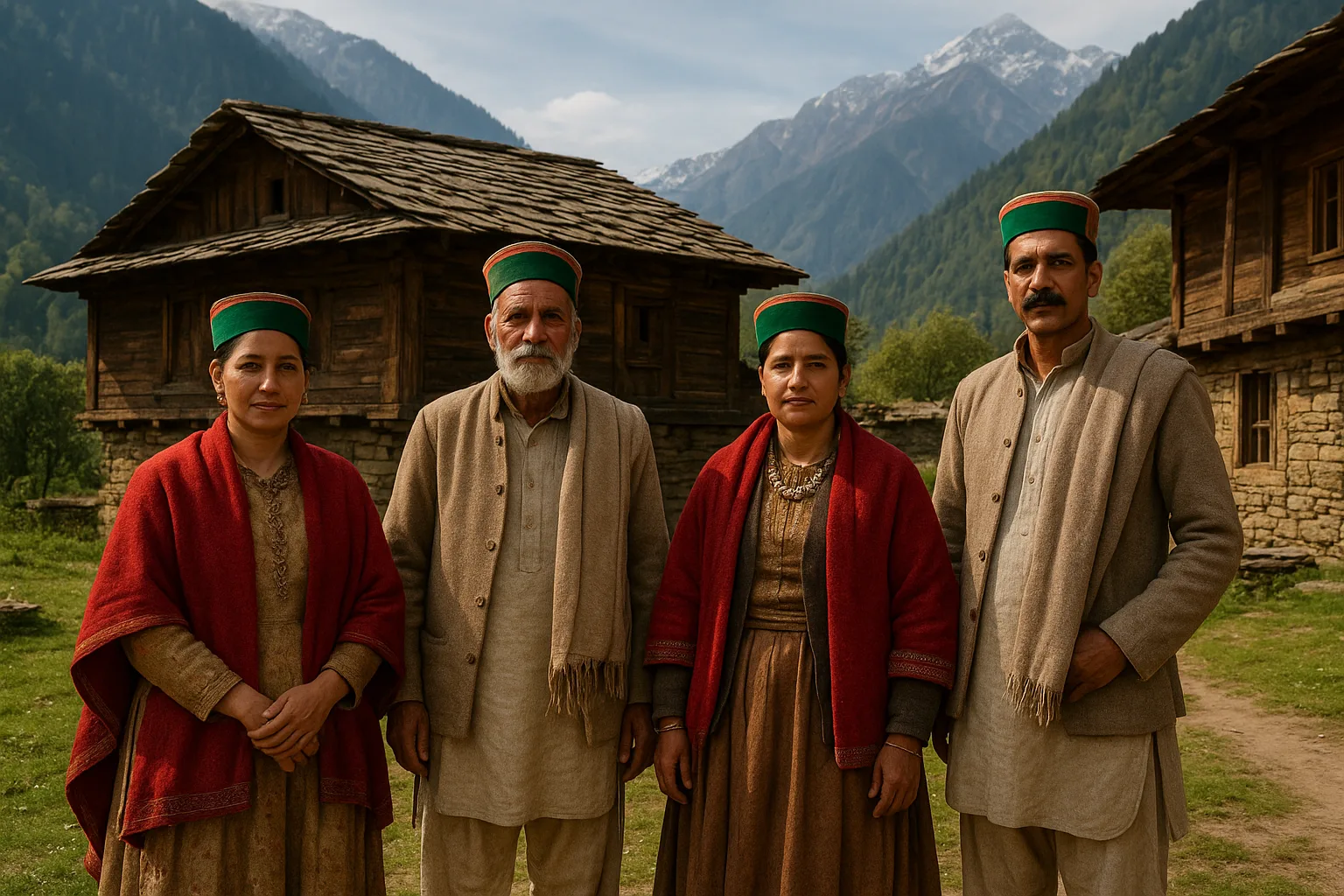
The year is 1895. As dawn breaks over the Ravi valley, a soft mist drifts between terraced fields and slate-roofed hamlets. The cries of crows echo off the stone walls of Chamba town, mingling with the rhythmic clang of a blacksmith’s hammer. For the common people of Chamba—farmers, artisans, traders, and shepherds—each day begins with routines shaped by centuries of tradition, yet increasingly marked by the presence of British authority.
Chamba, nestled in the northwestern Himalayas, had long been the heart of a Rajput hill state. By the late 19th century, it stood at a crossroads: ancient customs intertwined with the new realities of colonial rule. The British, while officially recognizing the Raja’s authority, quietly steered the state’s policies and economy, their influence trickling down to the smallest village.
The Social Mosaic: Castes, Communities, and Tradition
Chamba’s social fabric was intricate, woven with threads of caste, community, and faith. Oral traditions, still recounted in remote hamlets, trace the roots of the region’s earliest settlers—predominantly Gaddis, Brahmins, Rajputs, and artisanal castes. Local legends speak of migrations from the plains and neighboring hills, though these blend myth with kernels of memory.
By the colonial era, the population was a layered mosaic. The Rajput elite, bound by kinship to the ruling family, maintained their privileges under both the Raja and the British. Brahmin priests tended to temples like the ancient Lakshmi Narayan complex, their authority reaffirmed by both religious custom and royal patronage. Meanwhile, Gaddi shepherds—semi-nomadic, sturdy, independent—followed seasonal routes along the mountain slopes, living in stone huts with their flocks.
Artisans and laborers, including potters, blacksmiths, weavers, and carpenters, formed the backbone of town and village life. Their guilds and customs, passed down through generations, were governed by both caste and the practical needs of a hill environment.
Home and Hearth: Daily Rhythms Amid Change
For most families, life revolved around the hearth and the field. Women rose before sunrise, tending to fires, collecting water from mountain springs, and preparing coarse millet rotis. Children were dispatched to gather fuelwood or graze livestock, while men readied oxen for ploughing or set out to distant markets.
Under British influence, taxation became more systematic. Revenue officials, often accompanied by state retainers, arrived to survey fields and assess grain stores, recording their findings in ledgers written in Persian or, increasingly, in English. For many villagers, these visits were a source of anxiety: a reminder that even their remote world was no longer beyond the reach of distant powers.
Despite hardship, seasonal festivals offered respite. The Minjar fair, with its processions and market stalls, drew crowds from every corner of the valley. Oral ballads recounted legendary kings and local deities—reminders of a heritage deeper than any single ruler or empire.
Faith, Ritual, and the Sacred Landscape
Chamba’s landscape was studded with shrines, temples, and sacred groves. Belief systems here were a living tapestry: Hindu worship mingled with animist practices and local deities known as gram devtas. The annual pilgrimage to the Bharmour Chaurasi temple, said in legend to have been founded by 84 yogis, continued undisturbed even as British surveyors mapped the region.
Rituals marked life’s milestones—birth, marriage, harvest, death. Priests and village elders presided, invoking protection from both disease and disaster. Local chronicles, such as the Chamba State Gazetteer, detail the endurance of these customs, noting how they provided stability amid political turbulence. Yet, new influences seeped in: Christian missionaries opened schools and clinics, sometimes provoking suspicion, sometimes quiet curiosity.
Markets, Trade, and the Mountain Economy
Though hemmed in by mountains, Chamba was never isolated. Ancient trade routes threaded through the passes, linking the region to Kashmir, Punjab, and Tibet. Salt, wool, and ghee flowed in; fine Chamba rumal embroidery and medicinal herbs traveled out. The British encouraged cash crops—potatoes, tea, and opium—transforming the valley’s rhythms and fostering new dependencies.
Local bazaars bustled with activity. Merchants haggled over prices, and itinerant traders brought news from the wider world: famines in the plains, wars in distant lands, decrees from Shimla. For the common people, these markets were more than economic centers—they were hubs of gossip, alliance, and adaptation.
Education, Justice, and the Shadow of Empire
Before colonial intervention, knowledge was transmitted through oral lore and temple schools. With the British came mission schools and government-funded patshalas, teaching arithmetic, geography, and the new language of administration. For some, these schools offered hope of mobility; for others, they signaled a threat to ancestral ways.
The colonial legal system—layered atop customary law—brought both confusion and opportunity. Village disputes were now sometimes settled in distant courts, their verdicts mediated by unfamiliar codes. The Chamba State Gazetteer records moments of tension: petitions by villagers, protests against forced labor, appeals to the Raja and his British advisors.
Resilience and Memory: The Living Legacy
By the early 20th century, the daily life of Chamba’s common people had been reshaped, but not erased, by colonial rule. Fields were still tilled using wooden ploughs; prayers still rose from ancient temples. Yet the vocabulary of power had shifted—taxes, laws, and aspirations bore the imprint of a distant empire.
Today, echoes of this era linger in Chamba’s festivals, in its village councils, and in the architecture of its schools and markets. The resilience of its people—preserving tradition while adapting to change—remains a defining feature of the region. As we move forward in this series, the next chapter will explore how the colonial encounter further transformed Chamba’s art, architecture, and public spaces, leaving traces still visible to the attentive eye.
Previous: Administration and Reforms Under the British
Next: Chamba and the Indian Freedom Movement