
Series: Bilaspur Himachal History
Phase 2: Medieval Period — Part 7 of 29
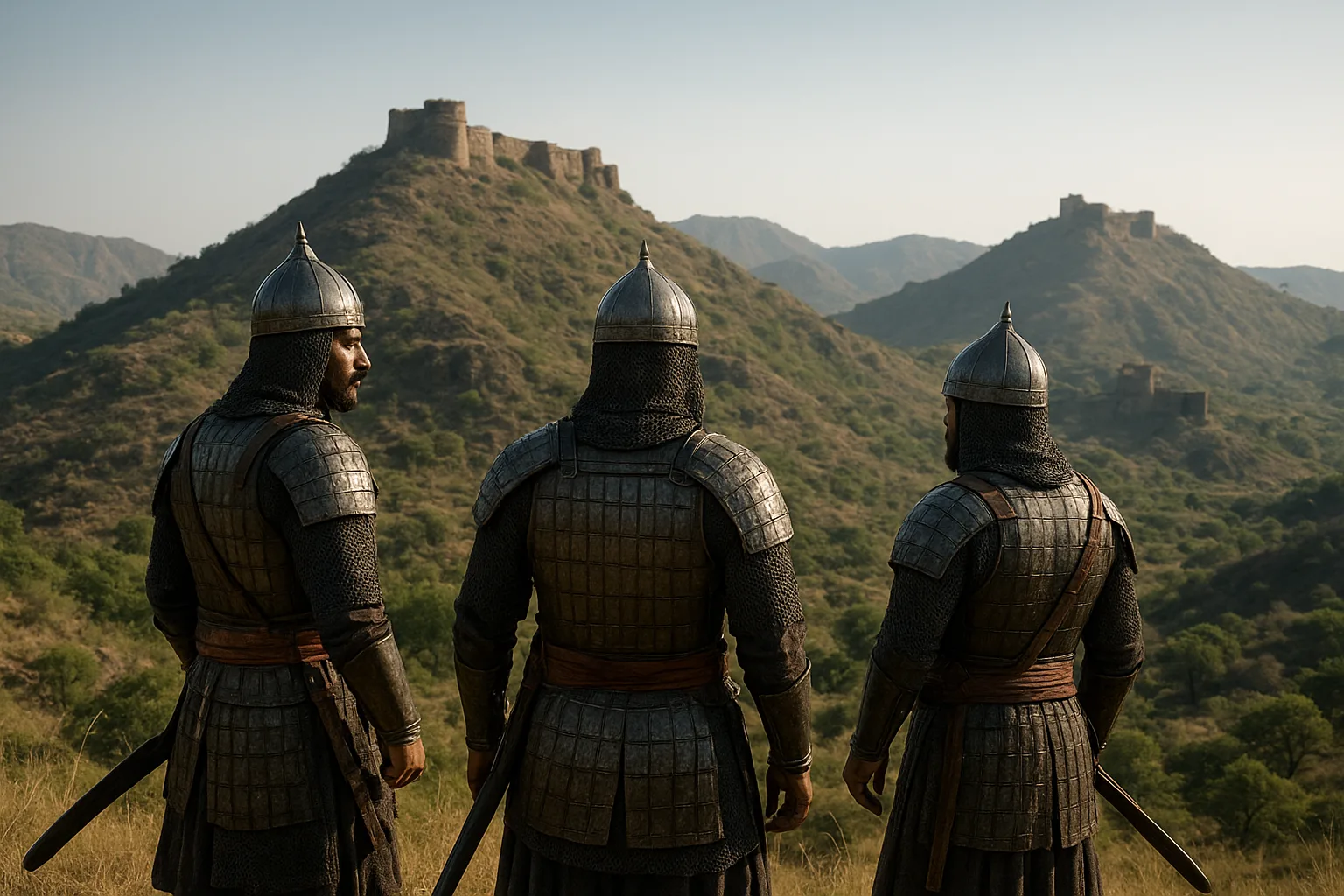
The Himalayan dawn broke cold and blue, casting long shadows across the ramparts of Kot Kehloor. Inside the ancient stone walls, a young ruler—barely sixteen—stood in ceremonial armor, preparing to receive emissaries from rival hill states. The air was sharp with tension and the scent of pine, as the fate of Bilaspur’s Rajput dynasty—descended from valor and legend—once again hung in the balance. This was not a kingdom untouched by war or intrigue. Instead, Bilaspur’s story is a tapestry of resilience, ambition, and the enduring legacy of its Rajput kings.
Origins: The Birth of Bilaspur’s Rajput Dynasty
The roots of Bilaspur’s royal line trace back to the 7th century CE, when Raja Bir Chand, a scion of the Chandel Rajputs, is said to have carved out a principality in the lower Himalayas. This was an era when the powerful Chandelas of central India, famed for their temples at Khajuraho, sent sons and brothers northward to seek new lands. The hills of Kehloor provided a natural fortress—steep ridges, thick forests, and rivers that could swallow armies. Bir Chand’s arrival marked the beginning of a dynasty that would rule the region for over a millennium.
Bilaspur, then known as Kehloor, was more than a strategic outpost. It became a cultural center, where Rajput customs mingled with local Pahari traditions. Early chronicles and bardic tales recall courts filled with poets and warriors, and rulers whose legitimacy rested as much on their defense of dharma as on their skill with sword and spear. Through marriage alliances, the Chandelas of Bilaspur wove themselves into the political fabric of the western Himalayas, forging relationships with the rulers of Kangra, Mandi, and Chamba.
Warfare and Feuds: The Hill States in Conflict
Life in the Himalayan foothills was rarely peaceful. By the 12th and 13th centuries, the Rajput kings of Bilaspur found themselves surrounded by ambitious neighbors. The region’s fractured geography bred fierce independence, with each valley and ridge claiming its own raja. Disputes over grazing rights, water sources, and trade routes frequently erupted into skirmishes. Castles and forts dotted the landscape, standing as both symbols of power and reminders of perpetual conflict.
The most formidable rivals came from the neighboring princely states: Kahlur (the old name for Bilaspur), Suket, and Mandi. Chronicles speak of recurring wars—sometimes over border villages, sometimes in defense of honor. The Rajputs’ code demanded both courage and cunning. Alliances could shift overnight, sealed by marriage or broken by betrayal. The kings of Bilaspur learned to navigate these treacherous waters, balancing displays of force with calculated diplomacy.
The Arrival of the Mughals: Submission and Survival
By the late 16th century, the shadow of the Mughal Empire loomed over the hills. Akbar’s expansionist campaigns reached the very edges of Rajputana and the western Himalayas. The rajas of Bilaspur, like their counterparts in Kangra and Chamba, faced a stark choice: resist and risk annihilation, or submit and preserve their autonomy in exchange for tribute.
Historical accounts suggest that Raja Kalyan Chand, who ruled Bilaspur during Akbar’s reign, opted for a pragmatic path. He sent envoys to the Mughal court, acknowledging imperial suzerainty while retaining real control over his lands. Mughal chroniclers mention the exchange of gifts, elephants, and ceremonial robes—a delicate dance of deference and independence. Yet, beneath the surface, the Rajput kings retained their authority, governing their people according to ancient customs and laws.
“The hills are hard to conquer, and their rajas harder still. They bend, but do not break.”
—Tuzuk-i-Jahangiri, on the hill states
Internal Strife: Succession, Rebellion, and Palace Intrigue
If external threats kept Bilaspur’s rulers vigilant, internal divisions often proved just as dangerous. The process of royal succession was rarely straightforward. Brothers, cousins, and rival claimants vied for the throne, sometimes plunging the kingdom into civil war. The court at Kot Kehloor became a stage for intrigue—alliances forged in whispers, betrayals plotted in shadowed halls.
One of the most dramatic episodes occurred in the early 18th century, when Raja Dip Chand’s untimely death left the throne contested. His sons, supported by rival factions of nobles, fought a bloody succession dispute. The conflict weakened Bilaspur, prompting opportunistic raids by neighboring states. Yet, the dynasty survived, its resilience forged in the crucible of adversity. The experience left an indelible mark on the kingdom’s political culture—one where caution, adaptability, and a keen sense of timing became as vital as martial prowess.
Rajput Identity and the Fabric of Hill Society
Throughout these centuries, the Rajput rulers of Bilaspur did more than wage war. They patronized temples, supported artisans, and codified local customs. Even as they adopted elements of Mughal court culture—Persianate titles, silk robes, and new styles of architecture—they remained fiercely proud of their Rajput heritage. Festivals, rituals, and oral traditions reinforced a sense of continuity, linking each generation to the glories of the past.
The relationship between ruler and subject was complex. The Rajputs of Bilaspur derived legitimacy from their supposed descent from legendary warriors, but their authority was always negotiated—sometimes with powerful Brahmin priests, sometimes with influential local clans. The landscape itself shaped society: villages clustered around forts, terraced fields carved from mountainsides, and trade routes threading through narrow passes. This was a world where power was measured not just in armies, but in the ability to navigate the terrain—both literal and political.
The British Encounter: Rajput Rule at a Crossroads
By the dawn of the 19th century, a new force arrived in the hills. The British East India Company, expanding its influence after the decline of the Mughal Empire, turned its attention to the princely states of the western Himalayas. In 1815, after the Anglo-Gorkha War, the British established suzerainty over Bilaspur, formalizing the raja’s position as a subordinate ally.
Unlike the violence that marked some British annexations, the transition in Bilaspur was negotiated. The rajas retained their palaces and ceremonial privileges, but the realities of power had shifted. British administrators demanded tribute, imposed new taxes, and slowly eroded the autonomy of the old order. Yet, even under colonial rule, the Rajput kings of Bilaspur remained symbols of local pride—a living link to a storied past.
Legacy: The Rajput Spirit in Modern Bilaspur
Today, echoes of Bilaspur’s Rajput heritage endure in its festivals, architecture, and collective memory. The ruins of Kot Kehloor still stand sentinel above the Sutlej, while local legends recall the deeds of warrior kings and wise queens. The complex politics and shifting alliances of the medieval period shaped not only the fate of a dynasty, but the very identity of the region itself.
Modern Bilaspur, now a district of Himachal Pradesh, continues to draw from this deep well of history. The values of resilience, adaptability, and community—honed over centuries of struggle—remain central to its character. In a rapidly changing world, the legacy of the Rajput kings endures, reminding Bilaspuris of both the glories and the lessons of their remarkable past.
Previous: Kot Kahlur: The Lost Capital That Once Ruled Bilaspur
Next: Temples, Gods, and Faith: Religious Life in Medieval Bilaspur