
Series: Bilaspur Himachal History
Phase 2: Medieval Period — Part 6 of 29
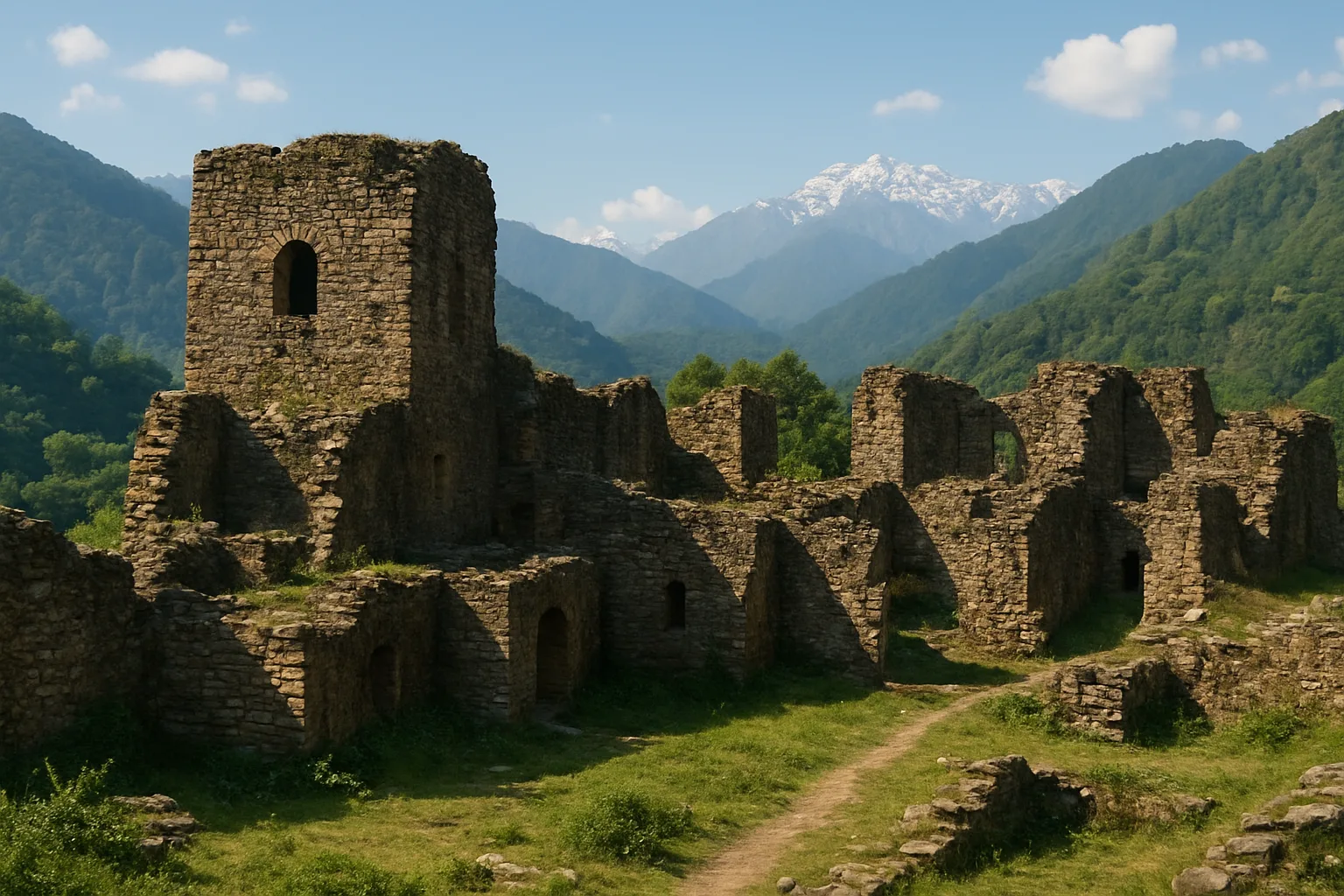
Night had fallen over the Sutlej Valley, but the torches of Kot Kahlur flickered defiantly along the fortress walls. From these ramparts, the rajas once surveyed the hills—masters of a kingdom that would shape the fate of Bilaspur for centuries. Today, little more than timeworn stones whisper of Kot Kahlur’s rule, yet its story continues to reverberate through the land and memory of Himachal Pradesh.
The Rise of a Hill Stronghold
Kot Kahlur’s origins are entangled in the shifting alliances and rivalries of medieval North India. Sometime in the late 7th or early 8th century CE, Raja Bir Chand—scion of the legendary Chandel dynasty—sought a new seat of power. The lowland plains were increasingly vulnerable to raids and political tremors, so Bir Chand turned his gaze north, towards the steep hills where danger could be met with stone and strategy.
On a rocky outcrop above the Sutlej, he ordered the construction of Kahlur Fort, known to locals as Kot Kahlur. Its walls, hewn from the earth’s bones, quickly became the nucleus of a new capital. Here, the Chandel rulers—later known as the Kahluria dynasty—would preside over a kingdom that stretched from the riverbanks to the snow-capped ridges.
Dynasty in the Hills: The Chandel Rulers
The Chandel rulers of Kot Kahlur blended martial prowess with astute diplomacy. Bir Chand’s descendants, including the formidable Raja Kahal Chand, expanded their reach through both conquest and alliances with neighboring hill states. The early medieval period was an era of shifting borders, as hill rajas negotiated both with each other and with the encroaching powers from the plains.
By the 11th century, Kot Kahlur had become a major center of administration and culture. Its rajas—most notably Bijai Chand and Megh Chand—were renowned for their patronage of temples and learning. Manuscript traditions flourished, and religious festivals attracted pilgrims from afar. The fort itself was both residence and refuge, its granaries and water tanks designed to withstand sieges that occasionally thundered up the valley.
Rivalries, Raids, and Resilience
Kot Kahlur’s strategic location drew both opportunity and peril. The kingdom’s wealth and position made it a tempting target for invaders. Ghaznavid and later Mughal incursions into the wider region forced the rajas to fortify their hold and maintain a delicate balance with powerful neighbors like Kangra and Mandi.
In the 15th century, the state weathered one of its greatest crises when Sultan Sikandar Lodi’s emissaries demanded tribute. Rather than submit, Raja Ram Chand marshaled his forces and braced for conflict. According to local lore, the fort withstood weeks of siege, its defenders fueled by a legendary resolve. The tales of these moments—half fact, half legend—still echo in Bilaspur’s oral tradition.
Kot Kahlur’s Golden Age
The late 16th and early 17th centuries marked a high point for Kot Kahlur. Raja Kesar Chand (r. c. 1600–1636) presided over a flourishing court, commissioning stone temples and encouraging trade. The capital bustled with artisans, scholars, and merchants whose caravans wound down to the plains and up toward the passes of the Himalaya.
The fort itself grew, its ramparts rising higher and its gates reinforced. Festivals in Kot Kahlur drew not only local villagers but also envoys from distant kingdoms. The Sutlej shimmered below, a lifeline for commerce and culture. It was during this era that the state began to be known more widely as Bilaspur, named for the settlements that grew around the capital’s shadow.
Transition and Decline: The Move from Kot Kahlur
By the early 18th century, the political landscape of North India was changing rapidly. The Mughal Empire’s decline unleashed waves of instability, with Sikh confederacies and Gorkha forces making forays into the hills. For the rulers of Kot Kahlur, the once impregnable fortress now felt exposed and remote compared to the shifting centers of power and commerce.
It was Raja Dip Chand (r. 1701–1741) who made the fateful decision to move the seat of government from Kot Kahlur to a new town on the banks of the Sutlej—modern Bilaspur. The reasons were practical: better access to trade, proximity to new roads, and a more central position in the increasingly complex web of regional politics. Kot Kahlur, once the heart of the kingdom, faded into the background, its halls gradually abandoned to silence and stone.
The Final Days of the Fortress
Though the fort remained occupied in some form for decades, its significance diminished. By the 19th century, during the British Raj, Kot Kahlur was little more than a memory—visited by occasional travelers and recorded in the gazetteers of colonial administrators. Its walls, battered by monsoon and neglect, began to crumble. Yet for local communities, the fortress remained a symbol: a reminder of autonomy, resilience, and the ancient power of the hills.
“The stones of Kot Kahlur are not silent; they murmur the names of kings, the clash of swords, the laughter of festivals. To the attentive ear, they are alive with history.”
Bilaspuri Oral Tradition
Kot Kahlur in Memory and Myth
Even as nature reclaimed the fortress, Kot Kahlur’s legacy lived on in the stories and rituals of the region. Local bards recounted the exploits of the Chandels, spinning tales of heroism and sacrifice. Festivals once held within the fort’s walls migrated to village temples, their songs carrying echoes of the old capital.
In the 20th century, historians and archaeologists began to take renewed interest in the ruins. The site, though difficult to access, became a destination for those seeking to touch the tangible past of Bilaspur. The local government made efforts to preserve what remained, recognizing the fort as a heritage site that connected modern Himachal to its medieval roots.
The Enduring Legacy of Kot Kahlur
Kot Kahlur’s story is not merely one of decline but of transformation. The values forged within its walls—resilience, adaptability, and a deep respect for the land—continue to shape the people of Bilaspur. The move from fortress to riverside town mirrored the broader shifts in Indian history, as kingdoms adapted to new realities and found ways to preserve their identity amid upheaval.
Today, the stones of Kot Kahlur watch over the valley, silent witnesses to centuries of change. Pilgrims, historians, and villagers climb its slopes, seeking a connection to the world their ancestors built. The stories of its rajas and their fabled stronghold are not just echoes—they are foundations, supporting the living culture of Bilaspur and reminding all who visit that history is never truly lost.
As Bilaspur grows and evolves, the memory of Kot Kahlur endures—woven into the region’s sense of self, a testament to the power of place and the endurance of legacy. The lost capital’s stones may be weathered, but its spirit remains, quietly guiding the present and future of Himachal’s heartland.
Previous: The Birth of Kahlur State: How Bilaspur Became a Kingdom
Next: Rajput Kings of Bilaspur: Power, Warfare, and Hill Politics