
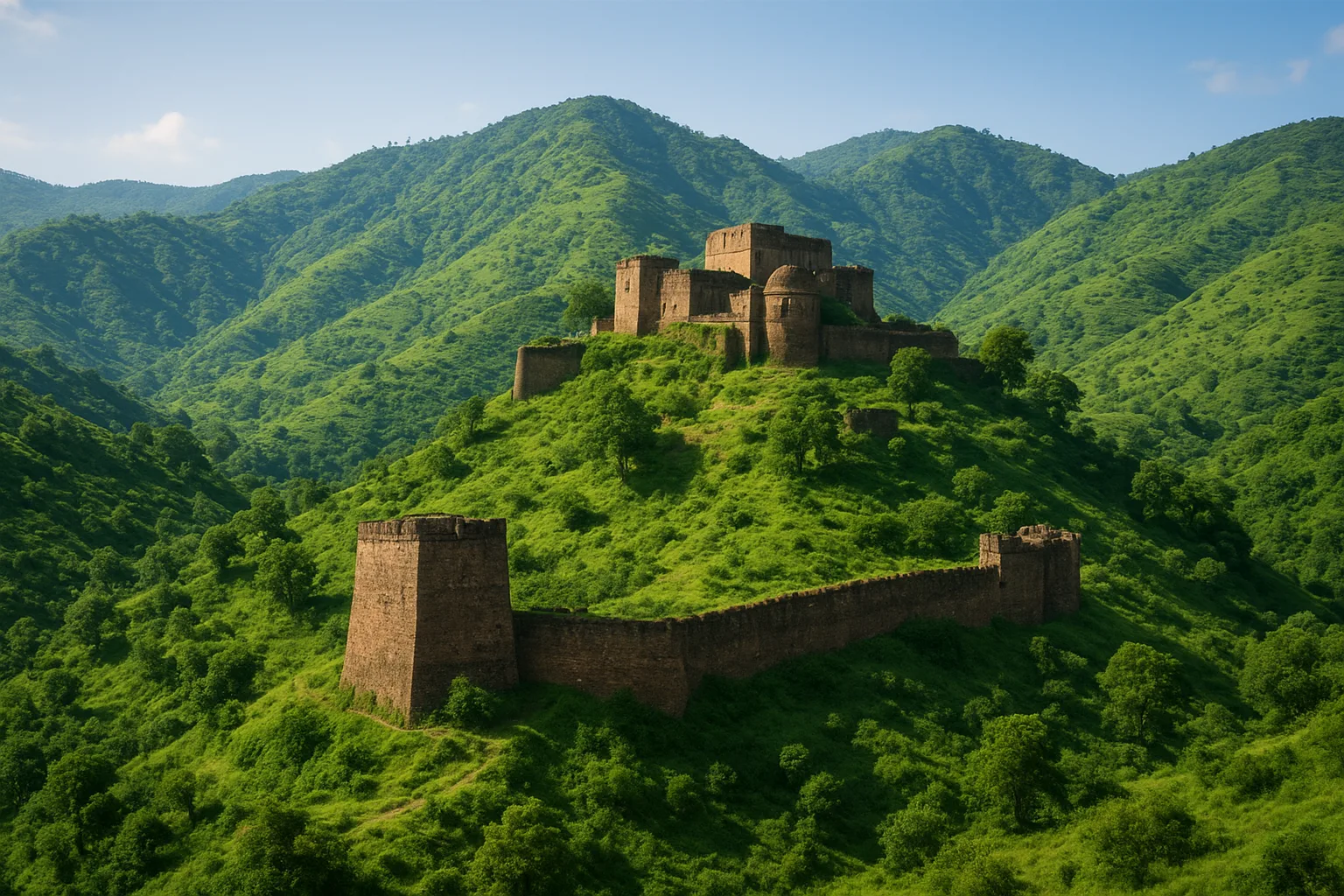
Series: Bilaspur Himachal History
Phase 5: Modern Era — Part 29 of 29
The Night the Palace Lights Went Out
On a humid April evening in 1954, the royal palace of Bilaspur glowed softly along the banks of the Sutlej. Below, courtiers and townsfolk gathered, whispering of a future that would arrive by morning. Just beyond the horizon, the great Bhakra Dam loomed—its reservoir rising, inch by inch, swallowing centuries of memory. When the sun rose, the palace would be gone, and with it, the heart of a kingdom.
Beneath the surface of Gobind Sagar Lake, entire neighborhoods, temples, and bustling bazaars would vanish. Yet, amidst this watery upheaval, a new Bilaspur would emerge—scarred but determined, forced to reinvent itself on higher ground. This was not just a tale of loss, but a testament to resilience.
After the Kingdom: From Princely State to Indian Union
The seeds of this transformation were sown in 1948, when Raja Anand Chand, the last ruler of Bilaspur, acceded his state to the newly independent Republic of India. For centuries, the Chandel dynasty had presided over this fertile valley, tracing its lineage to legendary warriors and saints. The transfer was bittersweet; the age of maharajas was over, and Bilaspur found itself at a crossroads.
In the early years, Bilaspur became a “C” class state, governed by a chief commissioner appointed from Delhi. The local population grappled with new administrative systems, land reforms, and the shifting tides of national politics. The old fortresses and temples—once the pride of rulers—became symbols of a rapidly fading order.
Bhakra Dam: Submergence and Sacrifice
The defining event of modern Bilaspur, however, arrived with the Bhakra-Nangal Project—the ambitious hydroelectric and irrigation scheme that would change the face of northern India. Engineers and laborers poured into the region, dynamiting cliffs, diverting rivers, and erecting what Jawaharlal Nehru famously called the “temple of modern India.”
For Bilaspur’s people, the price was steep. Over 100 villages, including the historic Bilaspur town itself, were slated for submergence. Families received government compensation, but the trauma of displacement ran deep. Oral histories recall the rush to salvage idols from submerged temples, the tearful migrations up the hills, and the final, haunting sight of rooftops slipping beneath the waves.
Yet, the dam also brought promise: reliable electricity, jobs, and the promise of prosperity. The Gobind Sagar, named for Guru Gobind Singh, soon teemed with fish and ferries, its shores attracting new settlers and traders. By the late 1950s, the displaced communities had begun to rebuild—laying the foundations for New Bilaspur on safer, higher terrain.
Rebuilding on the Hills: A New Urban Identity
The relocation of Bilaspur was more than a logistical feat; it was an act of collective will. As bulldozers cleared land above the rising reservoir, planners mapped out straight avenues and civic squares—a stark contrast to the winding lanes of the old hill town. Schools, hospitals, and administrative offices rose in quick succession, funded by state and central programs determined to ease the transition.
Community leaders, many of them former palace officials or landed gentry, worked alongside refugees to establish new temples, revive festivals, and preserve oral traditions. The annual Nalwari fair, once held on the riverbank, was reborn atop the hills—a vibrant reminder that culture could survive, even if geography had shifted.
As the decades passed, New Bilaspur grew into a regional hub. Its streets bustled with government employees, engineers, shopkeepers, and students from neighboring valleys. The trauma of submergence faded, replaced by a pragmatic optimism. The town’s identity transformed—from feudal seat to modern municipality, from a lost capital to a place of possibility.
Echoes of Heritage: What Was Saved and What Was Lost
The physical reminders of old Bilaspur are faint, yet potent. On the shores of Gobind Sagar, temple spires rise from the water each autumn as the reservoir recedes—ghostly silhouettes that draw pilgrims and locals, eager to pay respects to ancestors and gods. The ruins of the old palace, submerged for most of the year, are sometimes visible during droughts, sparking bittersweet recollections among the elderly.
Some artifacts survived the flood: intricately carved doors, manuscripts, and family heirlooms, now housed in the new town’s small but proud museum. The oral tradition, too, endures—elders recounting stories of kings and queens, monsoon festivals, and market days that once animated the valley floor.
Yet, much was lost forever. The intimate geography of the old town—the sacred ghats, the shaded courtyards, the legendary mango groves—exists now only in memory. For younger generations, these stories are their only inheritance from a world beneath the waves.
Bilaspur Today: The River Flows On
In the present, Bilaspur stands as both a gateway and a guardian of Himachal’s southern frontier. Its strategic location on National Highway 205 brings a steady flow of travelers—tourists bound for Manali, pilgrims visiting Naina Devi, and traders linking the hills to the plains. The town’s spirit is unmistakably modern, yet its sense of community is rooted in the shared memory of displacement and renewal.
Engineering colleges, small industries, and bustling markets now dot the landscape. The Bhakra Dam, once a source of sorrow, is celebrated for its technological marvels. Gobind Sagar, too, has become a center for fishing, water sports, and festivals—its shimmering surface a daily reminder of both loss and resilience.
Bilaspur’s people have learned to adapt, to honor their past while embracing the future. From the submerged stones of their ancestors’ temples, they have built a new town, and a new identity—one shaped by the river, but never defined by it alone.
Reflections: Memory and Modernity
The story of modern Bilaspur is one of survival, adaptation, and hope. The wounds of submergence run deep, but the community’s response—rooted in cooperation, ingenuity, and pride—has made the town stronger. Today, as children play in the shadow of government buildings and elders gather to reminisce along the lake, Bilaspur stands as a living testament to the power of memory and the necessity of reinvention.
Even as the world changes, the river flows on—reminding Bilaspur that history is both anchor and current, forever shaping the journey ahead.
Previous: Saving Bilaspur’s History in a Rapidly Changing District