
Series: Bilaspur Himachal History
Phase 5: Modern Era — Part 25 of 29
The River’s Reckoning
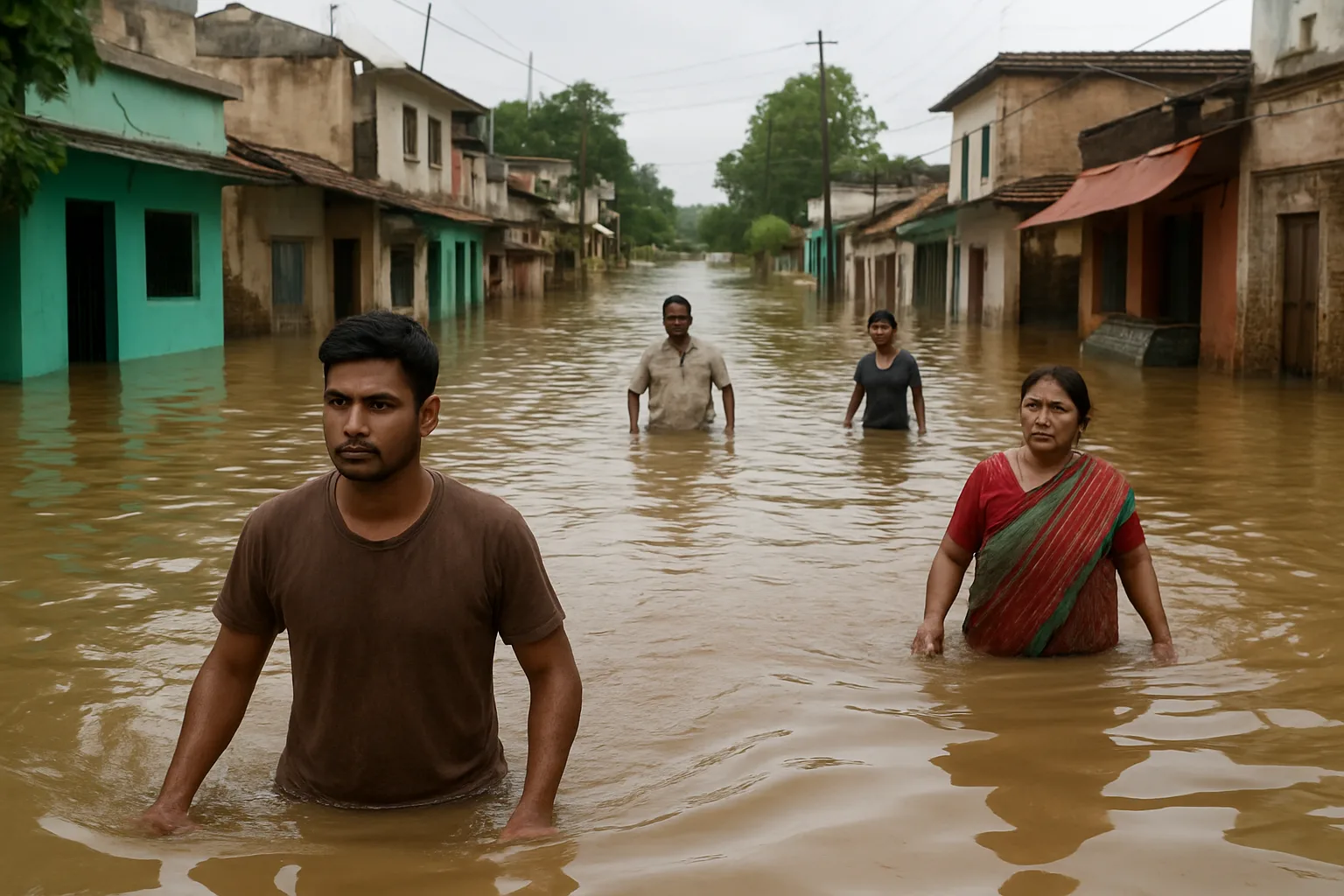
It was 1954 when the Sutlej surged, not with the wrath of a monsoon, but the promise—and peril—of modern India. In the valley that once cradled the ancient Bilaspur town, boats ferried villagers through the rising waters, past the domes and shrines sinking beneath the new Govind Sagar Lake. Old men stood on the hills, watching the water climb stone by stone, memory by memory. At the heart of this drama was not just a dam, but the future itself.
Building the Bhakra: Power, Displacement, and Hope
For centuries, Bilaspur’s hills echoed with stories of Rajput rulers and princely intrigue. That changed when the Bhakra-Nangal project rose from the Sutlej’s gorge. India’s first Prime Minister, Jawaharlal Nehru, hailed it as a “temple of modern India”—a symbol of self-reliance. But for Bilaspur’s people, the cost was deeply personal. The old town, with its bazaars, temples, and palaces, disappeared beneath the new reservoir.
Thousands lost their homes. The Raja of Bilaspur, Anand Chand, himself became a symbol of the shifting times. Once a princely ruler, he watched his capital vanish, and with it, the feudal order that had defined the hills for generations. For the newly independent nation, the dam promised electricity, irrigation, and progress. For Bilaspur, it demanded resilience—and reinvention.
Replanting a City: The Rise of New Bilaspur
Displaced families watched as the government surveyed the high banks of the Sutlej, selecting a new home atop the hills. New Bilaspur emerged in the 1950s, a planned town with wide avenues, government offices, and neighborhoods named for the villages now underwater. The scars of displacement lingered, but so did a stubborn hope. The new city became a laboratory for adaptation: people learned to balance ancestral memories with the routines of a modern town.
The railway, which once skirted the old city, became a lifeline for workers and materials during the dam’s construction. Schools, hospitals, and markets grew up amidst the dust and promise. The old Bilaspur, with its winding lanes and ancient havelis, lived on in stories—while the new city looked to the horizons Nehru had envisioned.
The Making of Modern Citizens: Education and Identity
One quiet revolution unfolded in Bilaspur’s classrooms. The 1960s and 70s saw the founding of new schools and colleges, driven by the government’s push for literacy. For the first time, girls from farming families attended secondary schools. Teachers from across Himachal Pradesh arrived, carrying books and new ideas. The city’s youth began to dream beyond the boundaries of their parents’ fields and shops.
Yet, the sense of identity remained complex. Was Bilaspur a city of refugees, or pioneers? The local dialect mingled with Hindi and Punjabi in the playgrounds and markets. Each year, families gathered on the lakeshore, pointing to the water where their ancestral homes once stood. Over time, the shared experience of loss and renewal knit the city’s diverse newcomers into a single community—one both proud and pragmatic.
Economic Shifts: From Subsistence to Service
With the dam came not only new landscapes, but new livelihoods. The reservoir supported fishing cooperatives, while the influx of workers fueled tea stalls, tailoring shops, and small businesses. Bilaspur’s proximity to the Punjab border turned it into a transit hub, connecting the hills to wider markets.
In the 1980s and 90s, as Himachal Pradesh’s roads improved, Bilaspur’s economy diversified. Government jobs, once reserved for the privileged, became attainable for the children of displaced farmers. Small-scale industry—brick kilns, flour mills, and workshops—sprang up along the town’s periphery. The city’s bazaar bustled with traders from Una and Hamirpur, selling everything from saffron to transistor radios.
The annual Nalwari fair, an age-old cattle market, reinvented itself as a showcase for modern Himachali culture—part tradition, part spectacle. Here, the past and future mingled in music, wrestling, and commerce.
Political Awakening: From Princely State to Democratic Power
Bilaspur’s journey mirrored India’s own transformation. After the princely state’s integration into Himachal Pradesh in 1954, the city became a crucible of local democracy. The first municipal elections saw spirited debates in tea shops and the bazaar, as new leaders emerged from the shadows of the old feudal elite.
Figures like Dr. Y.S. Parmar, Himachal’s first Chief Minister, championed Bilaspur’s development, ensuring its voice was heard in Simla and Delhi. Women and youth began to contest panchayat elections. The city’s experience of loss—of land, of status—was gradually transformed into a determination to shape its own destiny. By the 1990s, Bilaspur had become a bellwether in state politics, its voters courted by parties and politicians alike.
Bilaspur Today: Memory, Mobility, and Meaning
As the 21st century dawned, Bilaspur’s skyline shimmered with new hotels and cell towers. The city’s youth commuted to engineering colleges and call centers in Chandigarh and beyond. Yet, on festival nights, families still gathered at the edge of Govind Sagar, lighting diyas for ancestors lost to the waters.
Modern Bilaspur is a place of paradox: shaped by trauma, yet fiercely optimistic; rooted in tradition, yet open to the world. The city’s identity is etched not only in its concrete and glass, but in the stories its people tell—of endurance, ambition, and the stubborn hope that the future can be remade, even when the past is submerged.
The dam’s shadow lingers, a reminder of costs paid and promises kept. But Bilaspur’s true legacy may be its ability to transform adversity into opportunity—a lesson as relevant today as it was when the river first began to rise.
Previous: Bhakra Dam: The Project That Redrew Bilaspur’s Map
Next: How the Bhakra Dam Changed Bilaspur’s Society Forever