
Series: Bilaspur Himachal History
Phase 4: British & Post-Independence — Part 16 of 29
Partition’s Shadow: The Tumult of 1947 in Bilaspur
Nightfall on the Sutlej: Anxieties of a Kingdom
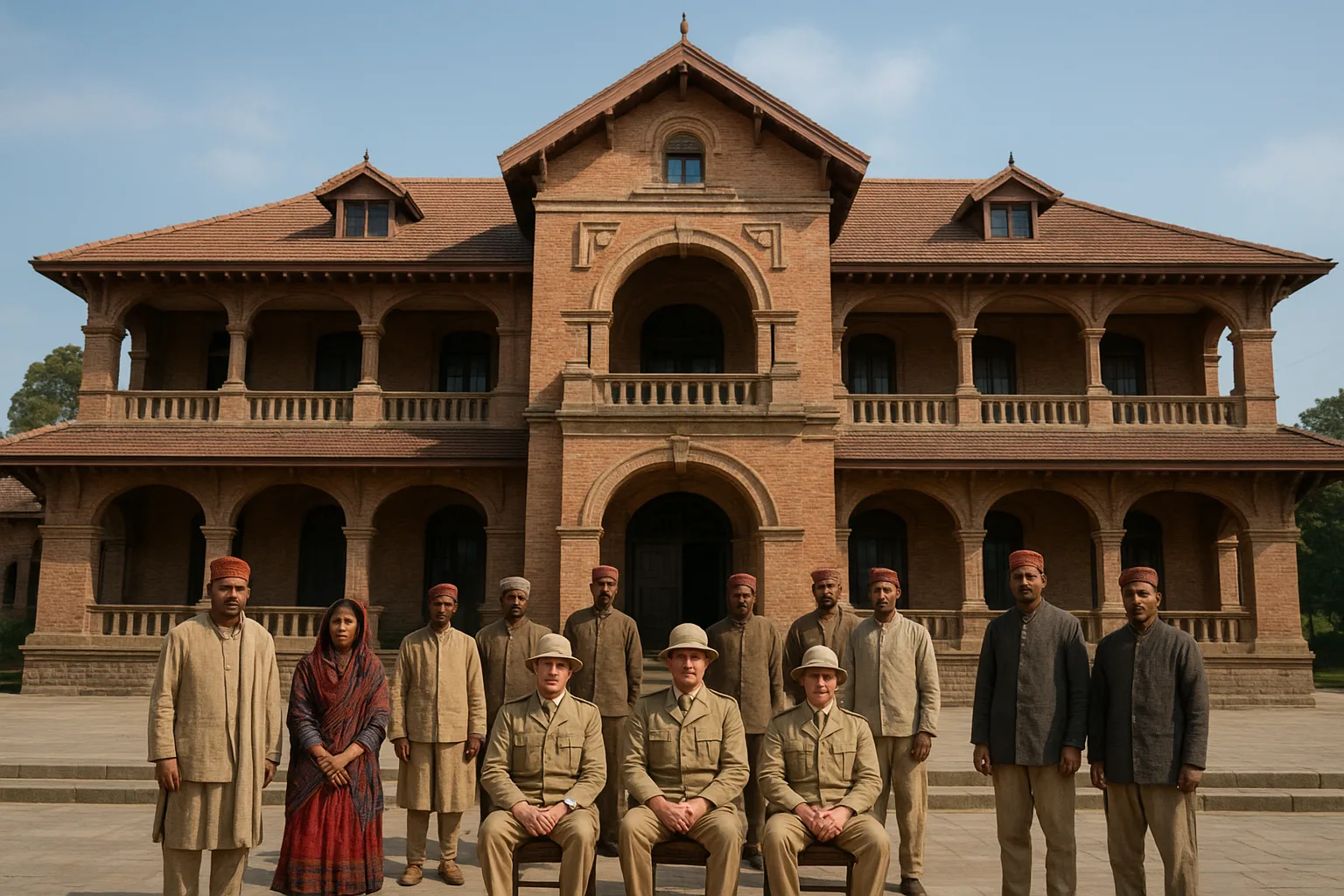
On a humid August night in 1947, lanterns flickered against the stone walls of the Bilaspur palace. Maharaja Anand Chand sat beneath the intricately carved wooden ceiling, his brows knotted in contemplation. Outside, the Sutlej River bore witness to a world in flux. The news of India’s partition and the end of the British Raj had reached Bilaspur’s hills, but with it came a cloud of uncertainty. Would the princely state survive the coming storm, or be swept away by forces beyond its control?
The End of Empire: Bilaspur Faces a Choice
For over a century, Bilaspur had maneuvered skillfully between the shifting tides of imperial power. The British, since the 19th century, had recognized Bilaspur’s rulers as local sovereigns, but always within the tightening embrace of colonial authority. With Britain’s abrupt withdrawal in August 1947, nearly 600 princely states—Bilaspur among them—stood at a crossroads. Lord Mountbatten’s deadline loomed: join India, accede to Pakistan, or risk isolation and chaos.
Maharaja Anand Chand was no stranger to negotiation. Educated, thoughtful, and pragmatic, he had seen firsthand the devastation the Second World War and recent famines had wrought on his people. Yet now the stakes were higher than ever. With communal violence erupting across the Punjab plains, Bilaspur’s future was suddenly entwined with the fate of millions.
Negotiations and Uncertainty: The Accession Debate
Throughout the summer of 1947, the palace in Bilaspur became a hive of activity. Advisors, courtiers, and British political agents debated late into the night. Should Bilaspur attempt to remain independent, as some larger states like Hyderabad and Kashmir initially wished? Or should it sign the Instrument of Accession and join the new Dominion of India?
Many among the town’s merchant class, who had longstanding trade links with Shimla and Punjab, urged union with India. Others, especially in the royal court, feared a loss of autonomy and the eclipse of centuries-old traditions. The Maharaja’s own family archives, rich with records of treaties and tributes, weighed heavily in every conversation.
Yet the realities of geography and politics could not be ignored. Bilaspur, hemmed in by the towering Himalayas and the surging Sutlej, was far too small to stand alone. The violence of partition, visible in the flow of refugees and grim tales arriving daily, convinced many that stability lay in joining the Indian Union.
August 15, 1947: The Dawn of a New Era
As the tricolor unfurled across the subcontinent, Bilaspur’s fate was sealed. On August 15, 1947, Maharaja Anand Chand formally signed the Instrument of Accession. The act was both ceremonial and gut-wrenching. For the first time since its founding, Bilaspur would answer not to a king alone, but to a national government far away in Delhi.
The town awoke to a mixture of relief and trepidation. Temples rang with bells, and prayers were offered for peace. Yet in the bazaars, rumors swirled. Would the old land tenures survive? What would become of the royal household’s privileges? For the people of Bilaspur, the independence of India was both a liberation and a leap into the unknown.
The Human Toll: Refugees and Upheaval
Partition’s wounds did not spare Bilaspur. The state’s proximity to Punjab and its position along ancient trade routes meant that Bilaspur became both a haven and a crossroads for those fleeing the violence. By late 1947, groups of Sikh and Hindu refugees, forced from their homes in what had become Pakistan, arrived in Bilaspur seeking shelter.
The Maharaja’s administration, with the help of emerging Indian authorities, established refugee camps near the town’s outskirts. Grain was rationed, and makeshift schools opened to serve children uprooted by the chaos. The town’s social fabric stretched, but did not break. Families took in strangers; the gurdwaras and temples swelled with new faces and anxious prayers. The trauma of loss was palpable, but so too was a sense of shared destiny.
From Princely State to Indian Union: Bilaspur’s Merger
The first months of independence brought further change. In early 1948, the Indian government, now led by Prime Minister Jawaharlal Nehru, launched a process to integrate the princely states more fully into the republic. For Bilaspur, this meant the end of its royal autonomy. On October 12, 1948, the princely state of Bilaspur was officially merged into the Indian Union as a “C” category state—a transitional arrangement that would last until the reorganization of states in 1954.
This transition was not without anxiety. The administrative machinery of the new state—courts, police, schools—needed to be harmonized with national systems. The Maharaja was given a privy purse and ceremonial privileges, but his political authority was effectively dissolved. The old Durbar Hall, once the site of royal decrees, now hosted new forms of governance: public meetings, bureaucratic briefings, and the first stirrings of local democracy.
Building a New Identity: The Era of Bhakra and Beyond
The years after independence saw Bilaspur thrust into the national spotlight for a different reason: the construction of the Bhakra Dam. In the early 1950s, survey teams and engineers arrived in droves, drawn by the promise of harnessing the Sutlej to power modern India. The dam would change not only the landscape but also the lives of thousands of Bilaspur’s residents, many of whom were displaced by the rising waters of the new reservoir.
For the people of Bilaspur, this sacrifice was deeply personal. Ancient temples, villages, and even parts of the town itself were submerged. Families relocated to higher ground or to new settlements, carrying with them memories of a kingdom that had, in living memory, stood independent. Yet the sense of loss was accompanied by a cautious optimism: Bilaspur would now become a vital link in India’s march toward modernization, its name forever associated with the “temple of resurgent India.”
A Legacy of Adaptation: Bilaspur in the Republic
By 1954, Bilaspur’s administrative identity changed once more, as it was merged into the newly formed state of Himachal Pradesh. The royal past receded into memory, but traditions—both regal and popular—continued to shape local identity. Festivals honoring the old kings still drew crowds; tales of the Maharajas’ wisdom and the palace intrigues of yesteryear lingered in the stories grandparents told their grandchildren.
The scars of partition and displacement faded slowly. Yet the resilience that Bilaspur demonstrated in those tumultuous years became a touchstone for future generations. The town rebuilt itself, blending its heritage with the necessities and opportunities of the modern republic.
Reflections: The Past in the Present
Today, as travelers cross the Bhakra Dam or wander Bilaspur’s bustling markets, echoes of 1947 are never far away. The palace, now a relic, stands watch over a town that has survived upheaval, migration, and transformation. The descendants of refugees and royal retainers alike share the same streets, their destinies entwined by the choices made in those fateful months after independence.
Bilaspur’s history during partition and its aftermath is not just a tale of loss, but one of profound adaptation. The decisions of Maharaja Anand Chand and the courage of ordinary citizens—facing an uncertain future together—continue to shape the spirit of Bilaspur. In its rivers and hills, in its stories and silences, the legacy of 1947 endures, reminding all who pass through that history is never truly past; it lives on in the resilience and diversity of the present.
Previous: The Gorkha Invasions That Shook Bilaspur Forever
Next: Life Inside a Princely State: Bilaspur Under the British Crown