
Series: Bilaspur Himachal History
Phase 3: Mughal, Sikh & Gorkha Period — Part 15 of 29
Shadows at the Door: Bilaspur and the Coming of the Gorkhas
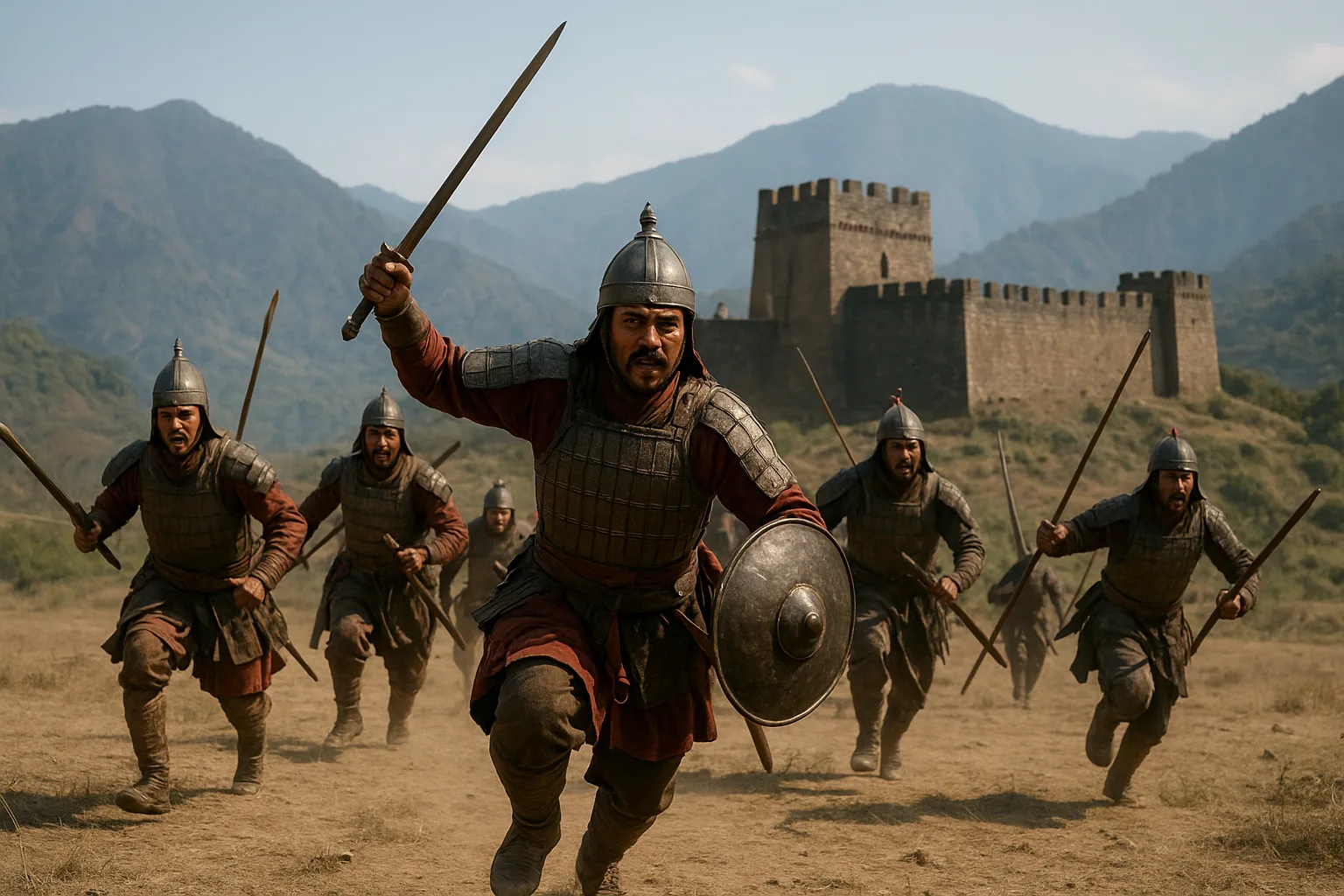
Nightfall, spring of 1804: the banks of the Sutlej shimmered with torchlight, and tension hung thick as dew in the air. Raja Mahan Chand of Bilaspur paced the stone ramparts of his modest fort, eyes fixed on the dense forests beyond. Rumors had traveled faster than the river’s current—columns of Gorkha soldiers were moving steadily west from the Nepalese hills, carving a path through the lower Himalayas. For generations, Bilaspur’s rulers had negotiated, fought, and sometimes paid their way through the ambitions of empires. But this night, the future felt suddenly uncertain, as the distant echo of war drums announced a new threat approaching the heart of Himachal.
Unquiet Borders: Bilaspur Before the Gorkhas
To understand the gravity of those anxious spring nights, we must look earlier into Bilaspur’s story—a principality born in the 7th century, enduring centuries of upheaval at the crossroads of Himalayan trade and conflict. By the late 18th century, Bilaspur’s territory stretched across rugged hills, thick forests, and mountain passes, its people shaped by the rhythms of the Sutlej and the edicts of their rajas. Yet the region was far from isolated.
The Mughal era had left its mark, with Bilaspur’s rulers—known as “Chandel Rajputs”—paying tribute but maintaining a measure of autonomy amid the shifting alliances of the hill states. As the power of Delhi waned, new players emerged. The Sikh misls under Ranjit Singh eyed the region, as did the Marathas. But it was from the east that the most dramatic challenge would soon arrive.
The Gorkha Advance: A Kingdom on the Move
In the late 18th and early 19th centuries, the Gorkha kingdom of Nepal, led by the ambitious Prithvi Narayan Shah and his successors, sought to expand its reach. Their disciplined troops—renowned for their khukuris and mountain warfare—swept through Kumaon, Garhwal, and Sirmour. The local hill rajas, long divided by rivalry and custom, were ill-prepared for this sudden and coordinated onslaught.
By 1803, the Gorkhas had reached the doorstep of Kangra, subduing small principalities along the way. The news was grim: the ancient fortresses of Nalagarh and Dhameri (Nurpur) had fallen. Raja Sansar Chand of Kangra, famed for his patronage of art and devotion to his fortress, found himself besieged. Word spread quickly to Bilaspur. The Gorkhas were not only conquerors—they demanded submission, tribute, and the right to garrison troops. Resistance meant devastation.
Bilaspur’s Dilemma: Diplomacy or Defiance?
Within the stone halls of Kahlur (the old name for Bilaspur), Raja Mahan Chand faced choices with no clear answers. His ancestors had survived Mughal campaigns and internal strife by walking a tightrope—sometimes defiant, sometimes pragmatic. Now, envoys from the Gorkhas arrived, bearing gifts and implicit threats. Accept suzerainty, pay tribute, and preserve your throne—or face the fate of Kangra and Sirmour.
The raja’s court debated fiercely. Some nobles urged resistance, citing the rugged terrain and the loyalty of Bilaspur’s warriors. Others, recalling the devastation inflicted elsewhere, advocated accommodation—at least until a more favorable opportunity arose. The old city’s bazaars buzzed with rumor and fear. Would Bilaspur become a pawn in yet another imperial game?
The Gorkha Occupation: Years of Uncertainty
By 1805, Bilaspur, like many neighboring states, had little choice but to accept Gorkha overlordship. The Gorkhas did not always rule directly; instead, they installed garrisons and extracted tribute, while allowing local rulers to retain nominal authority. It was a tense arrangement. Taxes increased. Local grievances, once settled in village assemblies, were now subject to the unpredictable demands of the occupiers.
Yet the Gorkhas also brought a measure of order—harsh, but effective. Banditry declined, and the roads between Bilaspur and Shimla grew safer for travelers and merchants. The Gorkha commanders, practical in their administration, allowed village festivals and temple rituals to continue, knowing that outright repression would invite rebellion. But the fear of sudden violence lingered. Stories spread of families fleeing into the forests, of young men pressed into service as porters or soldiers for the Gorkha cause.
Ripples in the Valley: Impact on Bilaspur’s People
For ordinary people, the Gorkha years were marked by both hardship and adaptation. Farmers labored under heavier levies. The ancient temples of Bilaspur, including the revered Naina Devi shrine, continued to draw pilgrims, but the mood was subdued. Some families sent their sons north, seeking safety or opportunity in the territories ruled by the Sikhs. Others remained, holding to the belief that change, like the Sutlej’s floods, was part of the land’s destiny.
Despite the pressures, Bilaspur’s sense of community endured. The traditions of the Baisakhi fair, the rhythms of the harvest, the evening gatherings along the river—all persisted. If anything, adversity deepened local bonds. The old oral histories, sung by wandering minstrels, now added new verses about the Gorkha years: tales of courage, loss, and the hope of eventual deliverance.
The British Intervention: Changing Fortunes
By 1814, the era of Gorkha expansion collided with the ambitions of another empire: the British East India Company. Alarmed by Gorkha incursions into their protectorates, the British launched the Anglo-Gorkha War (1814–1816). For Bilaspur, these events brought both peril and promise. Raja Mahan Chand saw a chance to regain his autonomy. Secret envoys passed between hill rajas and British officers stationed at the frontier posts.
The British, seeking allies, promised to restore the old rulers if they joined the campaign against the Gorkhas. Bilaspur’s men volunteered as scouts and guides, their knowledge of the forests and ravines proving invaluable. The Gorkhas, outnumbered and stretched thin, began to withdraw. By the Treaty of Sugauli in 1816, the Gorkhas ceded their western conquests. Bilaspur, battered but unbroken, emerged once more as a princely state—now under indirect British watch, but free from Gorkha domination.
Legacy of the Gorkha Years: Lessons and Memories
The Gorkha occupation lasted barely a decade, but its impact lingered for generations. It marked the last time Bilaspur would face conquest by a Himalayan power. The sense of vulnerability remained, shaping local attitudes toward outsiders and authority. The rajas, chastened by their near-obliteration, sought closer ties with the British, hoping to avoid future storms. The people, meanwhile, wove the memory of the Gorkha years into song, story, and ritual—remembering both suffering and resilience.
Today, the hills and rivers of Bilaspur carry echoes of those turbulent times. The old fort walls still stand above the Sutlej, silent witnesses to a night when danger crept through the forests. Villages recall ancestors who defied or endured the occupiers. And in the festivals and fairs, there lingers a quiet pride—a sense that, whatever the world brings, Bilaspur’s spirit endures, shaped by the shadows and sunlight of its remarkable past.
Previous: When Sikh Power Reached Bilaspur’s Borders
Next: How British Rule Changed Bilaspur After the Gorkha Wars