
Series: Bilaspur Himachal History
Phase 1: Ancient & Early History — Part 4 of 29
The early morning mist clings to the riverbanks of the Satluj, shrouding the ancient hills in mystery. Before the echoes of royal processions or the clang of temple bells, it was here, in the wild heart of Bilaspur, that the first human stories were etched—not in stone, but in the memory of the land itself. Generations before kings and written chronicles, tribal communities navigated these forests and valleys, shaping the destiny of a region whose legacy still pulses beneath the modern town.
The First Footprints: Life Along the Satluj
As the last Ice Age receded, the lower Himalayas beckoned to hunter-gatherers. Archaeological clues—stone tools unearthed near Ghumarwin and the foothills—point to early settlements, perhaps as far back as 2000 BCE. These nomadic groups, ancestors of today’s Gaddi, Gujjar, and Koli communities, learned to read the river’s moods and the secrets of the dense sal forests. Their world was one of shifting seasons and sacred groves, where every hill and stream had a spirit and every path a purpose.
Tribal Societies: The Original Inhabitants
Long before Bilaspur acquired its present name, the hills were home to a tapestry of tribes. Oral traditions—preserved in song and story—tell of the Kols, an indigenous people whose roots run deep across the Shivalik range. According to legend, their leader, Kol Raja, ruled not with a crown but with the respect earned from his people, mediating disputes and guiding migrations.
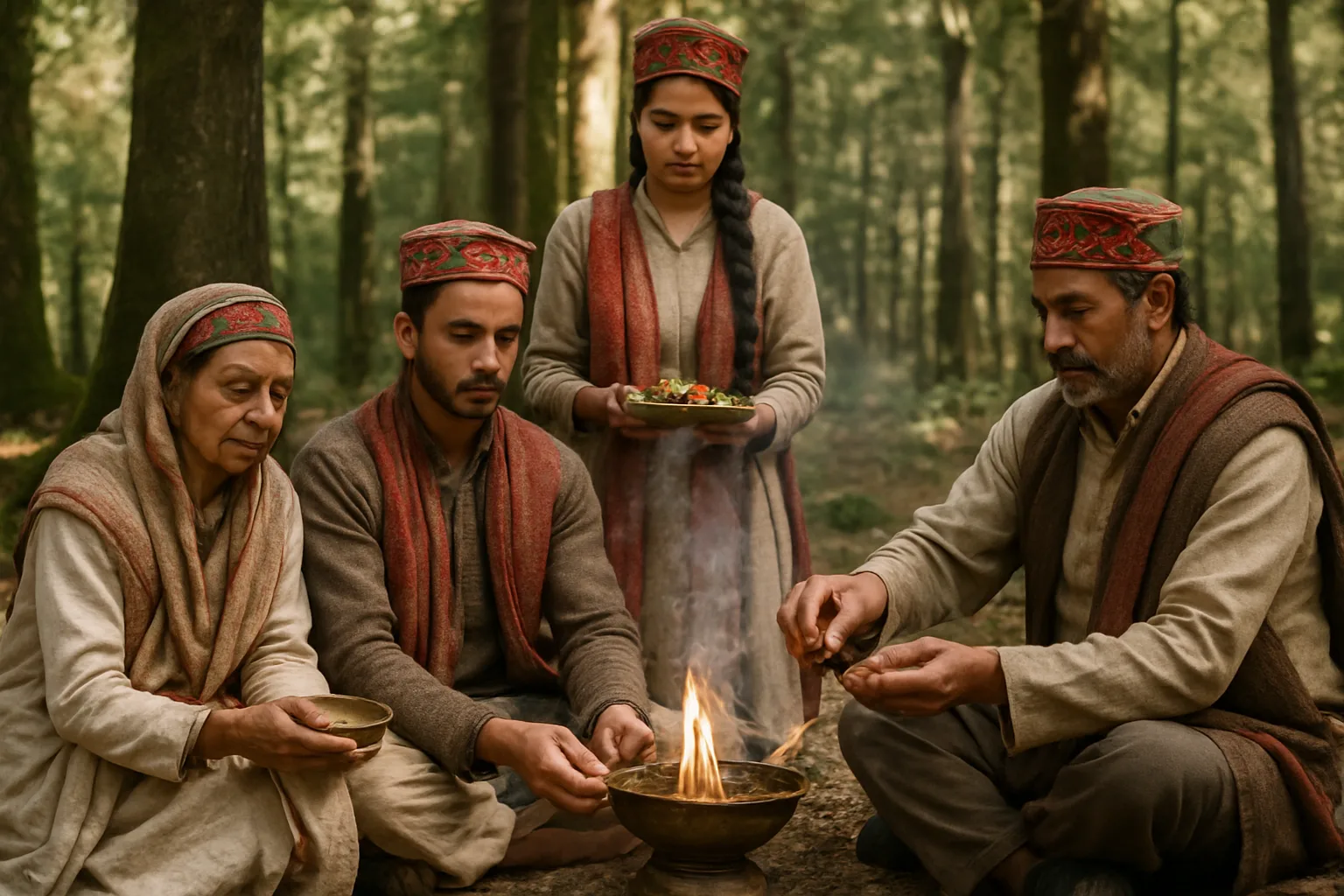
Their society was kinship-based, with elders holding authority and communal rituals marking the passage of time. It was a world where the line between the spiritual and the everyday was blurred: the harvest moon was celebrated with dance, and each spring, offerings were made to appease the river goddess, believed to protect the community from floods.
Between Forest and River: The Rhythm of Tribal Life
Daily life for these early Bilaspuris revolved around the Satluj and its tributaries. Fishing, foraging, and rudimentary agriculture provided sustenance. The forests teemed with game—deer, wild boar, and the occasional leopard. It was a delicate balance: too much hunting threatened their survival, so taboos and customs evolved to regulate the use of nature’s gifts.
- Women gathered wild fruits and medicinal herbs, passing down botanical knowledge through generations.
- Children learned to recognize bird calls and animal tracks before they could recite their own names.
- Community hunts were communal affairs, followed by feasting and storytelling around the fire.
Some of these ancient practices, such as collective land stewardship and animist rituals, would echo through Bilaspur’s later history, influencing even the rituals of its future Rajput rulers.
Encounters and Exchanges: Early Contacts with Outsiders
The hills of Bilaspur were never entirely isolated. By the first millennium BCE, slow but steady trade routes wove through the lower Himalayas, connecting tribal settlements with distant valleys. Salt, beads, and grains passed from hand to hand. Occasionally, travelers brought tales of distant kingdoms—Magadha to the east, Gandhara to the northwest—and the shadow of the Mauryan Empire fell lightly across the region.
Yet, the tribes of Bilaspur maintained their autonomy. When emissaries from more centralized states arrived, they found not a king’s court but scattered villages, each fiercely independent. Over time, however, elements of Vedic culture—ritual fire altars, new gods and goddesses—began to thread their way into tribal beliefs, blending with older animist traditions.
Tribal Leaders: The Memory Keepers
Among the early figures who stand out in local memory are the pradhans—elected or hereditary chiefs who guided their people through flood, drought, and inter-tribal disputes. In the hills near present-day Swarghat, stories linger of Rani Bhuri Devi, a matriarch who, according to legend, led her clan during a time of famine, organizing food sharing and negotiating peace with rival groups. Her wisdom became the subject of folk songs still sung at harvest festivals.
Such leaders were not merely political heads but also custodians of oral history. They ensured that tales of migration, war, and reconciliation survived, told and retold by the riverside or under the vast Himalayan sky—a living chronicle long before written records.
The First Shrines: Sacred Spaces of the Tribes
Long before grand temples adorned the Bilaspur skyline, the tribes marked sacred spaces with stone cairns and carved wooden totems. These shrines, often set beneath ancient trees or by bubbling springs, were places of worship and negotiation, where the boundaries between rival clans could be dissolved through shared rituals.
“To the people of these hills, the forest was not just a resource; it was a living ancestor, demanding respect and reverence.”
– Field notes, British anthropologist, 19th century
Some of these pre-historic shrines still survive, their origins obscured by time but their spiritual significance undiminished. Later rulers would build temples on these same sites, seeking legitimacy by linking their reign to the sacred geography established by the earliest inhabitants.
From Tribes to Chiefdoms: The Dawn of Political Change
Between 500 BCE and 100 CE, as population grew and resources became contested, the social fabric of Bilaspur began to shift. Inter-tribal alliances and rivalries gave rise to more organized chiefdoms, laying the groundwork for the region’s first proto-kingdoms. Oral genealogies describe a gradual transition: charismatic tribal leaders began to assert hereditary claims, and local assemblies gave way to centralized authority.
This was not a sudden transformation but a slow evolution, marked by both conflict and cooperation. The land that had once echoed only with the footsteps of small bands now witnessed the stirrings of state formation—a process that would culminate centuries later in the rise of the Bilaspur princely state, as explored in the upcoming parts of this series.
Enduring Legacies: Tribal Roots in Modern Bilaspur
The tribal roots of Bilaspur are not relics of a vanished past. Even today, echoes of ancient customs resonate in local festivals, place names, and communal values. The descendants of those early inhabitants—Gaddis, Gujjars, Kols—still call the hills home, their traditions woven into the broader tapestry of Bilaspur’s culture.
In a rapidly changing world, remembering these tribal beginnings offers more than nostalgia; it grounds the community in a shared heritage of resilience, adaptation, and respect for the land. The story of Bilaspur’s earliest people is a reminder that every dynasty, city, and modern identity is built upon the dreams and struggles of those who came before.
Previous: Mahabharata Legends Linked to Bilaspur You’ve Never Heard
Next: The Birth of Kahlur State: How Bilaspur Became a Kingdom