
Series: History of Kangra, Himachal Pradesh, India
Phase 5: Modern Era — Part 30 of 30
This article appears within a continuing historical series that follows the western Himalayas into the modern era. With the end of princely rule and the integration into independent India, long-standing social and political patterns were reconfigured. This phase examines how development, state formation, and memory interact with inherited landscapes, shaping contemporary life while carrying forward echoes of the past.
The Valley at Dawn: Kangra’s Living Landscape
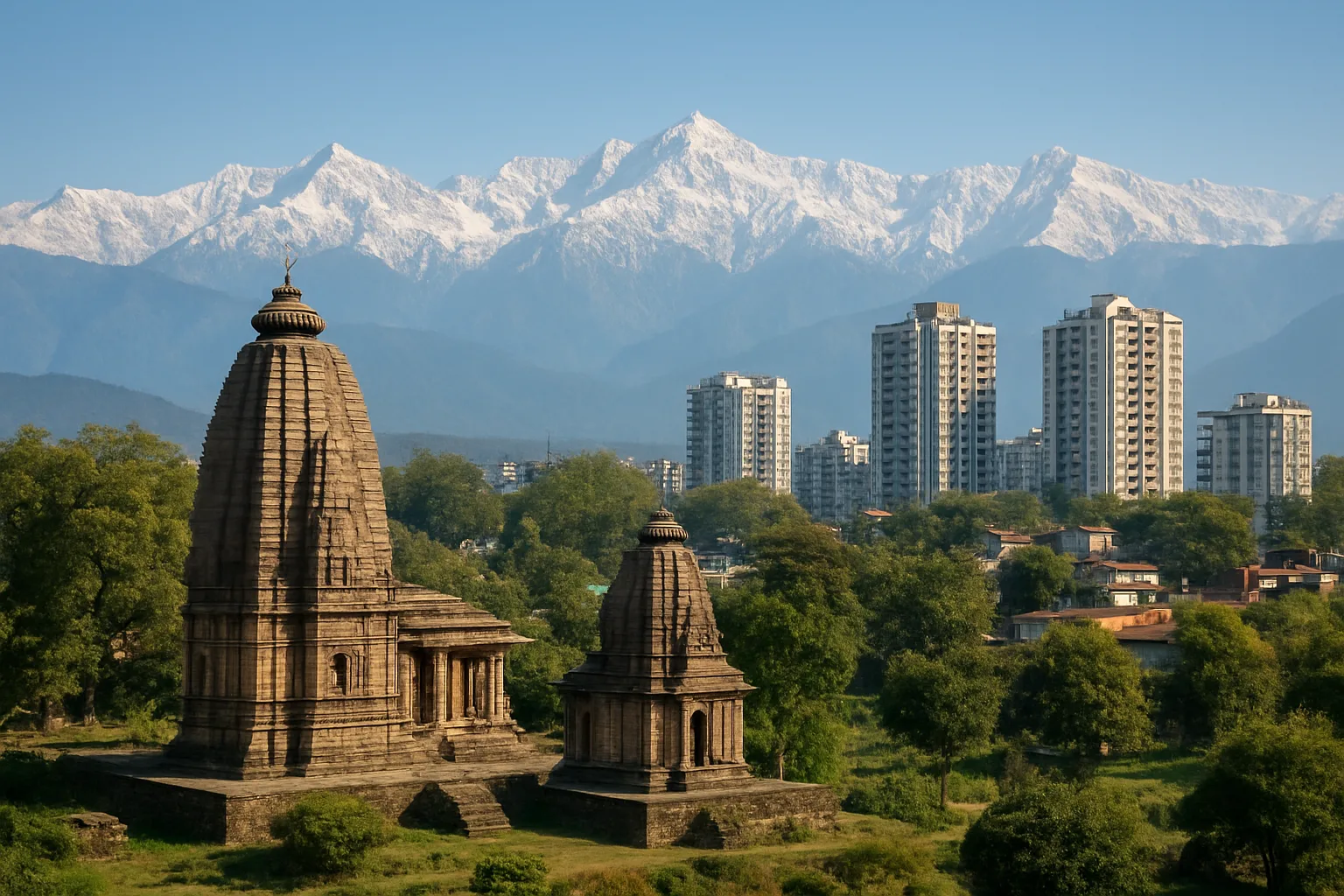
A gentle mist rises over the Beas River as the morning sun touches Kangra’s fertile plains. Here, the Dhauladhar ranges stand like guardians, their snowy crests catching the light. In the valley below, fields and orchards stretch toward ancient temple spires, and life stirs in villages whose names echo centuries of continuity. Kangra’s landscape is not just picturesque; it is saturated with the accumulated weight of history, tradition, and the quiet pulse of change. As Himachal Pradesh looks toward the future, few places bear such a profound sense of place—and promise—as Kangra.
Anchored in Antiquity: Origins and Interwoven Traditions
Early references to the region—known variously as Trigarta in ancient texts and Kangra in later chronicles—trace its prominence back over two millennia. The valley’s strategic location attracted diverse communities. Some oral traditions speak of sage Vashishta and the sage Parashar traversing these hills, stories echoed in local song but not strictly verifiable. More concrete are the accounts from the Mahabharata and regional Rajatarangini, which reference Trigarta and its warrior clans.
By the time the Greeks under Alexander peered into the Punjab plains, Kangra’s hill fortresses already marked the boundaries of local power. Archaeological remains, such as those at Masrur and the ancient Kangra Fort, confirm a settlement pattern both defensive and cosmopolitan. Tibetan chronicles and early Chinese pilgrims passing through the region would, in later centuries, remark on Kangra’s unique blend of Hindu and Buddhist influences—an early sign of its cultural pluralism.
Trade, Power, and Emerging Hill States
Positioned at the crossroads of Himalayan passes and the north Indian plains, Kangra long served as a conduit for trade and ideas. Caravans bearing salt, wool, and grain wound their way through the valley, linking Tibet, Ladakh, and the Ganga basin. The network of trade routes, documented in colonial gazetteers and Persian chronicles, helped Kangra’s towns thrive and fostered a mosaic of faiths and customs. Merchants, artisans, and pilgrims contributed to a lively cultural exchange, while the region’s rulers—first the Katoch Rajputs, later the rising hill states—competed for control of fortresses and revenues.
With the fragmentation of larger kingdoms after the decline of the Mauryas and Guptas, Kangra’s own polity began asserting its autonomy. The Katoch dynasty, steeped in legend but grounded in inscriptions and fort records, emerged as a formidable power. Their hold over the valley and highlands, though challenged by periodic invasions, endured for centuries—a testament to both martial resilience and diplomatic skill.
Belief Systems and Artistic Flourishing
The spiritual map of Kangra is as complex as its political history. Early Shaiva and Vaishnava shrines, some carved from living rock, stand alongside Buddhist monasteries whose ruins still surface in the valley. By the early medieval era, Kangra had become a pilgrimage hub, with the temple at Jawalaji and the shrines of Bajreshwari Mata drawing devotees from across northern India. Oral traditions credit the founding of these sites to legendary figures, while stone inscriptions and copper plates give us glimpses of the historical patrons who sustained them.
Artistic innovation flourished under royal and popular patronage. The celebrated Kangra miniature painting tradition, which would mature under Mughal influence in the 18th century, drew on older styles and local mythologies. These paintings, often depicting episodes from the Bhagavata Purana or the loves of Krishna, encapsulate the valley’s syncretic spirit—a visual dialogue between the sacred and the worldly.
Conquest, Colonialism, and Resilience
Kangra’s fortifications withstood wave after wave of invaders. Mahmud of Ghazni breached the fabled Kangra Fort in 1009, and Mughal emperors later coveted its riches. Yet, even as the valley changed hands, local identity persisted. The British, who annexed Kangra in the mid-19th century, documented its administrative divisions, landholding patterns, and social hierarchies in exhaustive gazetteers. These texts reveal a society negotiating the pressures of colonial modernity while retaining deep-rooted traditions.
Natural disasters, too, reshaped Kangra’s destiny. The devastating earthquake of 1905, which flattened much of the valley, became a defining trauma—one still recalled in local memory. Yet, the rebuilding that followed also marked Kangra’s embrace of new architectural forms, educational institutions, and civic life, setting the stage for its role in the modern state of Himachal Pradesh.
Modern Kangra: Aspirations and Continuities
Today, Kangra occupies a central place in Himachal Pradesh’s imagination and planning. The valley is a magnet for pilgrims, trekkers, and those drawn by its artistic legacy. Tea estates, first sown by the British, pattern the hillsides, while new educational centers and health facilities draw people from across the region. The voices of Kangra’s past—whether chronicled by colonial administrators, echoed in folk ballads, or inscribed on temple walls—continue to shape debates about heritage, development, and identity.
Migration and urbanization are changing the valley’s rhythms, yet traditional festivals, crafts, and languages persist. Kangra’s people, inheritors of a layered past, engage with the challenges of modernization on their own terms. The contested terrain between conservation and progress, between local autonomy and regional integration, remains as relevant as ever.
Looking Ahead: Kangra’s Legacy and the Path Forward
The story of Kangra is not merely one of survival, but of adaptation and vision. Its communities draw strength from ancient roots while navigating the uncertainties of a rapidly changing world. As Himachal Pradesh contemplates its future—balancing tourism, environmental stewardship, and cultural preservation—Kangra stands as both an anchor and a compass.
The valley’s forts, temples, and living traditions invite not just admiration, but reflection on the enduring interplay between place, memory, and aspiration. Kangra’s journey, traced across centuries, offers vital lessons as the region shapes its own tomorrow. In the next part of this series, we will explore how contemporary voices—artists, activists, and entrepreneurs—are reimagining Kangra’s identity for future generations.
Previous: Oral Histories from Kangra Villages