
Series: History of Kullu, Himachal Pradesh, India
Phase 5: Modern Era — Part 27 of 30
This article appears within a continuing historical series that follows the western Himalayas into the modern era. With the end of princely rule and the integration into independent India, long-standing social and political patterns were reconfigured. This phase examines how development, state formation, and memory interact with inherited landscapes, shaping contemporary life while carrying forward echoes of the past.
Early Morning in the Valley: A Living Tapestry
The first light breaks over the Beas River, illuminating terraced fields and wood-carved balconies. In a quiet Kullu hamlet, women gather at the village temple, their woolen shawls bright against the mist. In the hush, a low chant rises—ancient, communal, and utterly contemporary. This scene, repeated for generations, is not a relic but living tradition, woven into the fabric of daily life. Here in Kullu, the past is not distant; it pulses through every story, festival, and ritual.
Historical Anchors: Kullu’s Place in the Himalayan Mosaic
Long before the arrival of British surveyors or the compilation of the first regional gazetteers, Kullu’s valleys were crisscrossed by travelers, traders, and storytellers. Historical records, such as those referenced in the Imperial Gazetteer of India, situate Kullu as both a crossroads and a sanctuary—where highland passes linked Ladakh, Tibet, and the Punjab plains, and where geography shaped identity. The earliest documented polities here emerged as local chieftaincies, each entwined with clan memory and sacred geography.
Yet, much of Kullu’s heritage cannot be traced solely through written chronicles. Oral traditions, retold across winter nights or embroidered into festival songs, offer a parallel record—one where the boundaries between history and mythology sometimes blur, yet remain treasured by the community.
Oral Traditions and Mythic Foundations
Kullu’s oral traditions are as old as its hills. The valley’s own origin myth speaks of Manu, the progenitor of humankind, who is said to have found sanctuary here after the great flood. Such stories, passed down through jagars (ritual recitations) and lok kathas (folk tales), do not claim the precision of written annals. Instead, they offer a spiritual map—connecting every river, peak, and grove to episodes from the Mahabharata, Ramayana, or local deities’ exploits.
Communities such as the Rajputs, Brahmins, and tribal groups like the Kanets and Gaddis have long preserved these oral legacies. Each home is a living archive, where elders recount migration stories, the founding of villages, and the miraculous deeds of local gods. These stories are more than entertainment: they establish kinship, instruct children, and reaffirm collective memory.
Historical Inference: Trade, Settlement, and State Formation
Beyond myth and memory, Kullu’s political history can be inferred from archaeological remains and early records. By the early medieval period, the valley supported thriving settlements, evidenced by temple inscriptions and stone sculptures. These sites reveal a society shaped by both Himalayan isolation and the pull of distant markets.
Trade routes threaded through the Kullu valley, bringing Tibetan wool, Ladakhi salt, and Kashmiri crafts. The exchange of goods was matched by the mingling of ideas—Buddhism, Shaivism, and later Vaishnavism all left their imprint here. The rise of the Kullu rajas, documented in chronicles like the Kullu Darpan, marked the valley’s emergence as a recognized hill state. Their courts became patrons of the arts, commissioning woodwork, miniatures, and the iconic phulkari textiles that still adorn festival processions.
Belief Systems, Ritual, and Community Festivals
While political borders shifted, Kullu’s spiritual landscape remained remarkably resilient. Local deities—or devtas—are not abstract icons but living presences, believed to intervene in daily affairs. Each village has its own patron, and their annual journeys to the valley’s central Dussehra festival transform Kullu into a swirling pageant of devotion and negotiation.
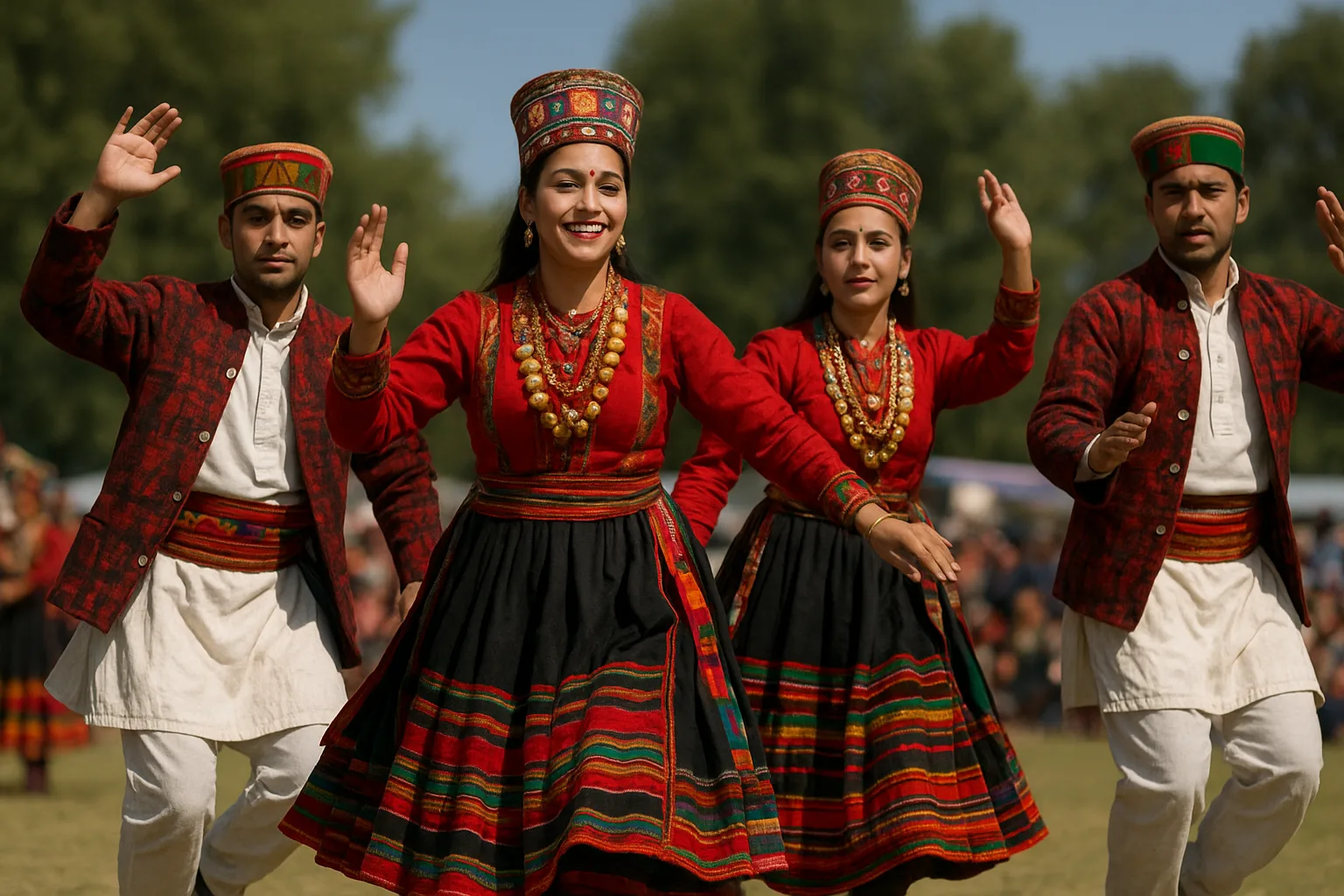
These rituals, combining Vedic chants with indigenous practice, reflect deep continuity. The nati dance, recognized today as one of the world’s largest folk dances, is more than spectacle; it is a collective act of remembrance, binding neighbors and generations together. Ceremonies marking the agricultural cycle, marriages, and funerals are infused with echoes of the past, even as they adapt to changing times.
Modern Challenges and the Work of Preservation
Today, Kullu stands at a crossroads. The influx of tourism, the spread of formal education, and the lure of urban migration all tug at the valley’s cultural fabric. Yet, in village after village, efforts to preserve tradition are both conscious and creative.
Community elders serve as custodians of oral history, teaching younger generations not just stories, but the art of storytelling itself. Local organizations document folk songs, revive endangered dialects, and sponsor festivals that celebrate both continuity and innovation. Educational workshops in schools introduce children to traditional crafts, while regional museums house relics and manuscripts that might otherwise be forgotten.
Some traditions have found new expression—nati videos circulate on social media, while artisans adapt designs for modern markets. The core remains unchanged: a sense of place, a reverence for the land, and an enduring belief in the power of memory.
Kullu’s Cultural Continuity: Roots and Renewal
As dusk falls over the pine ridges and the valley fills with the sound of temple bells, it is clear that Kullu’s traditions are neither static nor vanishing. They are living, evolving—shaped by the wisdom of elders, the curiosity of youth, and the challenges of a changing world. The stories told tonight will be retold tomorrow, their meaning renewed with each telling.
Kullu’s journey, from mythic origins to a modern crossroads, is far from over. In the next part of our series, we will trace how Kullu’s unique identity has adapted to new challenges—exploring the intersection of tradition and modernity in the lives of its people today.
Previous: Urbanisation and Changing Lifestyles in Kullu Town
Next: Oral Histories and Folklore of the Kullu Valley