
Series: History of Kinnaur, Himachal Pradesh, India
Phase 5: Modern Era — Part 26 of 30
This article appears within a continuing historical series that follows the western Himalayas into the modern era. With the end of princely rule and the integration into independent India, long-standing social and political patterns were reconfigured. This phase examines how development, state formation, and memory interact with inherited landscapes, shaping contemporary life while carrying forward echoes of the past.
Arrival at the Edge: Morning Light in Kalpa
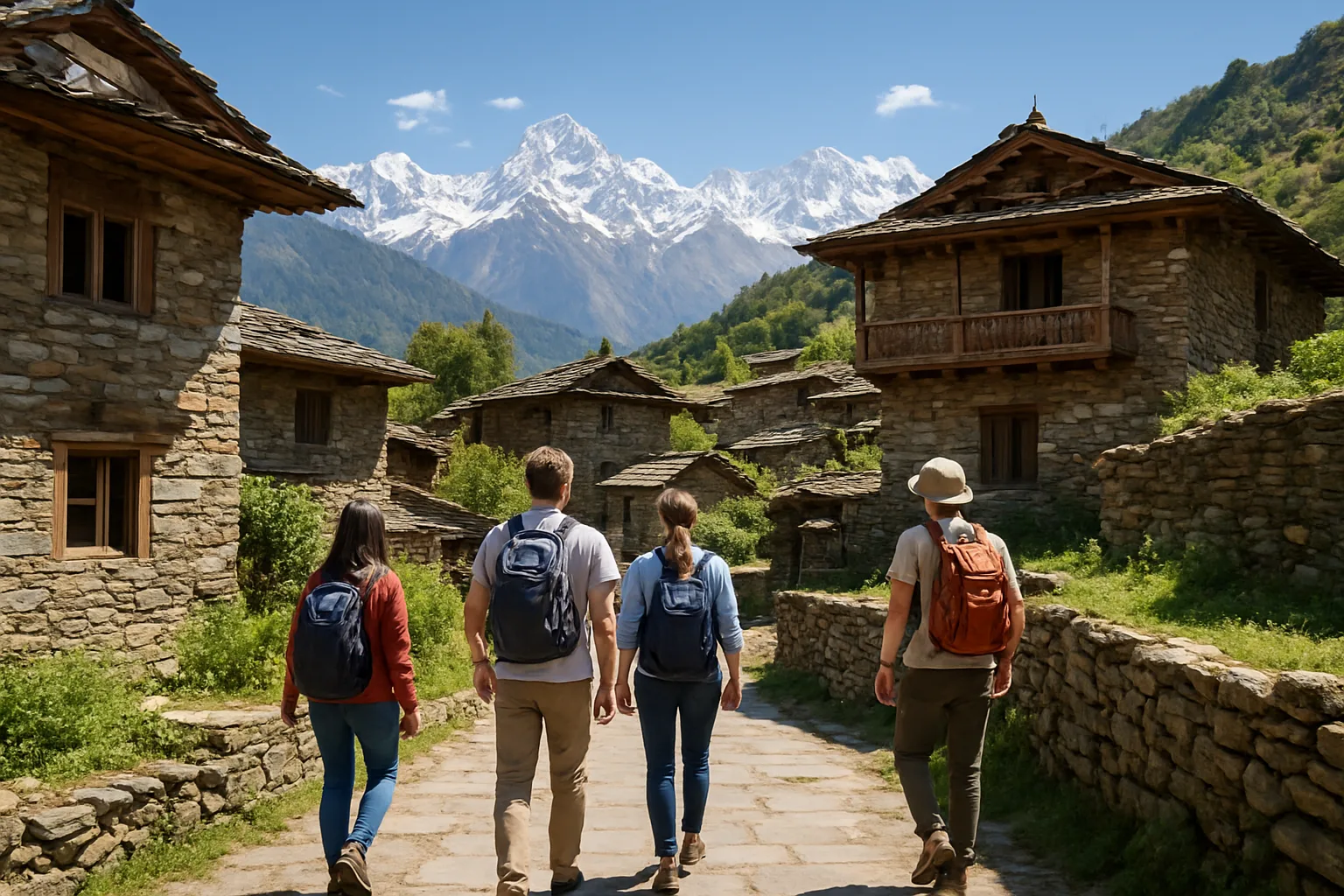
The first rays of sun spill over the snowy crown of Kinner Kailash, casting long shadows across the rooftops of Kalpa. The air is thin, sharp, fragrant with pine and apple blossom. Villagers move quietly along winding lanes, their woolen shawls pulled close. In the hushed dawn, the only intrusion comes from the distant rumble of a jeep—one of the early taxis bringing visitors up from the Sutlej Valley below. For centuries, few outsiders braved these winding Himalayan roads. Today, Kinnaur’s ancient silence is interrupted daily by the thrum of tourism and the promise—and peril—of cultural exposure.
Kinnaur’s Place on the Map: A Crossroads of Legend and Geography
To understand modern Kinnaur’s encounter with tourism, we must anchor ourselves in the region’s long arc of history. Nestled between Tibet and the Indian plains, Kinnaur’s formidable topography long insulated its people. Yet this was never a land fully apart: oral traditions recall the area as the mythical Kinnaradesha, realm of the semi-divine Kinnars—celestial musicians who, according to legend, inhabited these peaks. Such myths, retold by generations, are woven into Kinnaur’s landscape, but they are not the whole story.
Historical inference, drawing on regional chronicles and the Himachal Pradesh Gazetteer, positions Kinnaur as a vital node along the ancient Hindustan-Tibet trade route. For centuries, caravans laden with wool, salt, and turquoise crossed these heights, bringing with them not only goods but ideas, languages, and belief systems. The communities that settled here—predominantly Kinnauras, but also Bhotias and Rajputs—absorbed and adapted these influences, creating a culture at once distinctive and permeable.
Before the Visitors: Life in the Valleys
Life in pre-modern Kinnaur revolved around the rhythms of agriculture and transhumance. Villages clustered around terraced fields of barley, buckwheat, and later, apples. Oral histories, still recited at winter gatherings, recall an existence shaped by the mountain gods—deities like Maheshwar, Narayan, and the local goddess Chitkul Mata—whose blessings were sought through elaborate rituals and masked dances. Buddhism, too, flowed in from the north, mingling with animist and Hindu traditions to form a syncretic religious tapestry unique to these valleys.
Political history, as documented in colonial-era reports and local records, shows Kinnaur organized into a patchwork of small hill states—Bushahr chief among them. The rulers of Bushahr, with their capital at Kamru and later Sarahan, administered the region through a network of village headmen and religious authorities. Isolation did not mean stagnation. Trade, festive gatherings, and even sporadic visits by British surveyors ensured Kinnaur was never sealed off, but its core identity remained largely intact through the first half of the twentieth century.
The Opening Up: Roads, Dams, and the First Tourists
The post-independence decades brought seismic change. The construction of the Hindustan-Tibet Road, completed in the 1960s, ended Kinnaur’s physical isolation. Soon after, the Sutlej Valley saw the rise of hydropower projects—most notably the massive Nathpa Jhakri dam—bringing engineers, laborers, and eventually, curious travelers. The earliest tourists were trekkers and mountaineers, drawn by the mystique of Kinner Kailash and the fabled Sangla Valley. Their journals from the 1970s and 80s describe villages where polyandry was still practiced, and sacred groves were fiercely protected from outsiders’ gaze.
Yet the infrastructure that made tourism possible also altered the landscape and the social fabric. Villagers found new work as porters, guides, and hoteliers. Young people, exposed to the outside world, began to adopt new fashions and aspirations. The annual arrival of apple traders and tourists brought prosperity, but also questions: How much of the old could survive amid the new?
Traditions on Display: Festivals, Rituals, and the Tourist Gaze
As Kinnaur became a destination, its traditions moved from the private to the public sphere. Once, the Phulaich flower festival or the masked Buchen dances were intimate affairs, tying village communities to their ancestors and gods. Today, these rituals are often performed for camera-wielding visitors, sometimes on altered schedules to match the tourist season. Local musicians now play for hotel guests as well as for the village gods.
This exposure brings both pride and unease. On the one hand, the world’s fascination with Kinnauri culture has helped preserve endangered crafts, such as the intricate silver jewelry or the wood carving seen in Kalpa’s temples. On the other, elders worry that traditions lose meaning when removed from their original context. Stories circulate of outsiders misinterpreting sacred customs or seeking “authenticity” in ways that flatten the region’s complex history. The community debates how to balance welcome with the need for cultural boundaries.
The Dilemmas of Modernity: Identity, Economy, and the Environment
Tourism’s impact is felt in every corner of Kinnaur today. Apple orchards—once a symbol of economic transformation—now draw migrant labor from across India, changing the demographic landscape. New roads and communication networks bring prosperity but also environmental strain: landslides, water scarcity, and the loss of ancient forests are common topics at village councils. The lure of urban jobs pulls young Kinnauris away, while those who remain must navigate the expectations of visitors and the demands of tradition.
Yet, some of the most remarkable adaptations are seen in the villages themselves. Local entrepreneurs run homestays that showcase Kinnauri food and architecture. Women’s collectives revive weaving and woolwork for a global market. Schools teach both Hindi and the Kinnauri language, ensuring children learn old stories alongside new skills. The region’s Buddhist monasteries and Hindu temples—once wary of outside attention—now serve as bridges, guiding visitors to a deeper understanding of Kinnaur’s living heritage.
Roots and Renewal: The Past in the Present
As the sun sets behind the peaks, the lanes of Kalpa fill with both the old and the new: shepherds herding goats home, children playing cricket in the shadow of ancient temples, and travelers sharing stories over tea. The legacy of centuries—of myth, trade, faith, and resilience—remains palpable, even as the world presses in. Kinnaur’s encounter with tourism is not a simple story of loss or gain, but an ongoing negotiation between past and present, inside and outside, preservation and change.
In the next chapter of this series, we will follow Kinnaur’s journey into the twenty-first century, exploring how digital connectivity, migration, and new forms of activism are shaping the region’s future. The story of Kinnaur’s people—rooted in their mountains, yet open to the world—continues to unfold with every visitor who arrives, and every tradition that endures.
Previous: Apple Orchards and Economic Change in Kinnaur
Next: Environmental Challenges in a Fragile Himalayan Region