
Series: History of Kangra, Himachal Pradesh, India
Phase 5: Modern Era — Part 27 of 30
This article appears within a continuing historical series that follows the western Himalayas into the modern era. With the end of princely rule and the integration into independent India, long-standing social and political patterns were reconfigured. This phase examines how development, state formation, and memory interact with inherited landscapes, shaping contemporary life while carrying forward echoes of the past.
Twilight Over the Valley: A Shifting Tapestry
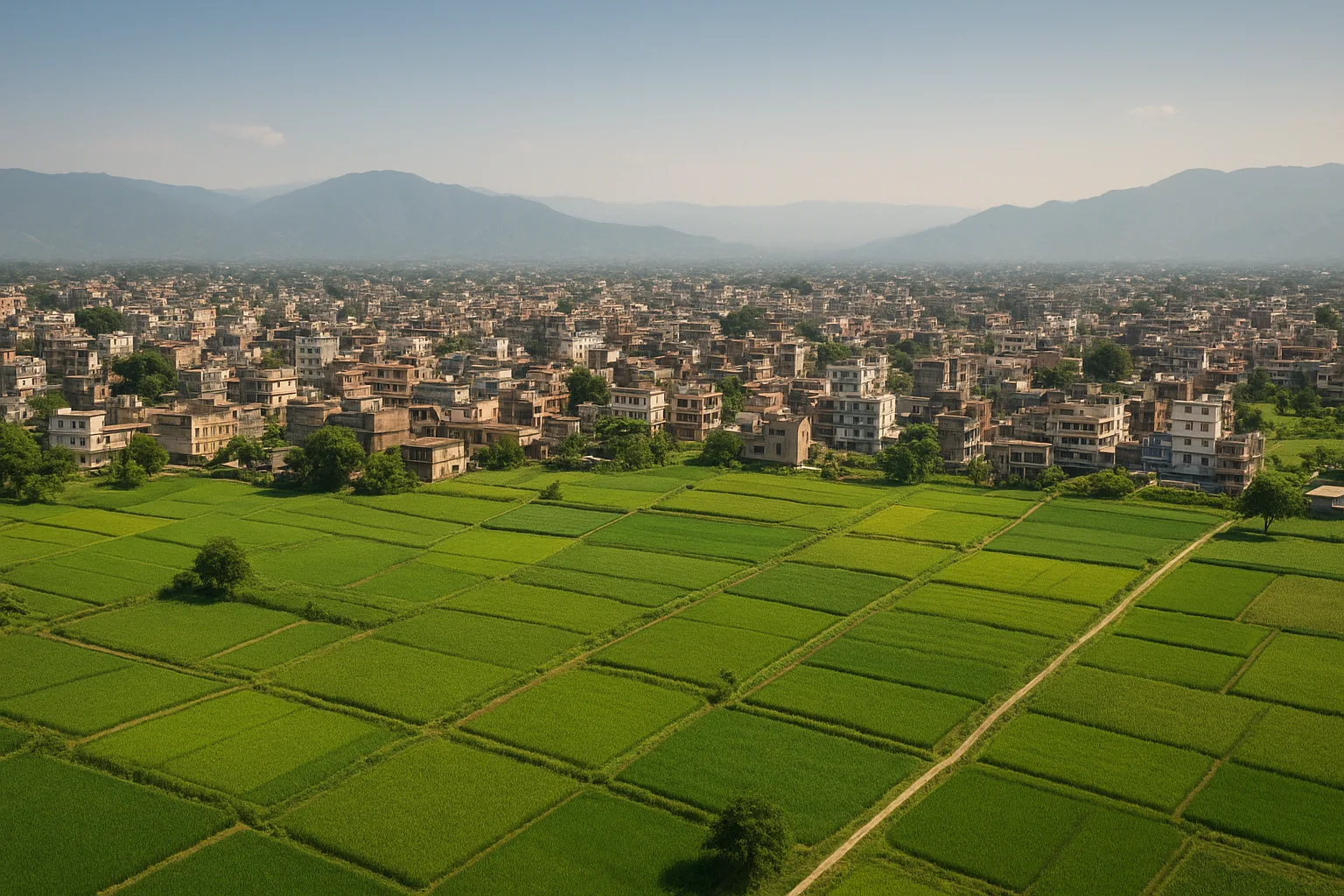
The sun slips behind the Dhauladhar range, casting long shadows across the Kangra Valley. On a muggy June evening, the hum of scooters and the distant clang of construction merge with the ancient soundscape of temple bells and the gentle flow of the Baner River. For centuries, these hills watched over scattered hamlets and the imposing Kangra Fort; today, they survey a landscape rapidly reshaped by new ambitions and anxieties. Modern Kangra is a place where the past is never far away, even as urbanisation presses in, testing the valley’s resilience and identity.
Early Footprints in the Valley
Long before the word ‘urban’ took root in the Himalayan lexicon, Kangra’s story began with clusters of early settlements. Archaeological surveys suggest that the valley has been inhabited since the early centuries BCE, likely by Indo-Aryan communities and indigenous groups whose names are lost to time. Oral traditions, still cherished among Kangra’s elders, speak of sage Vashishtha and the Pandavas seeking refuge here—echoes of the Mahabharata woven into the valley’s sense of self. While such tales belong to the realm of mythology, their enduring presence reflects how the landscape itself is a repository of memory.
Documented history, however, emerges more clearly with the rise of the Trigarta kingdom. The earliest references in early Sanskrit texts and regional chronicles position Kangra as a strategic hill state by at least the first millennium CE. This was a world of fortified settlements, bustling riverine villages, and networks of traders and artisans connected to the wider Indo-Gangetic plains.
Trade Routes and the Birth of Towns
Kangra’s location was never accidental. The valley sits astride old trade corridors—routes that once ferried salt, wool, and grains between Tibet, Punjab, and the plains of North India. These arteries of commerce encouraged the rise of market towns like Nagrota and Palampur, whose wooden shops and cobbled lanes still evoke a time when barter and pilgrimage shaped local rhythms. The Kangra Gazetteer of 1883, a British-era chronicle, observed that “the valley’s towns, though small, are vital centers wherein hill and plain meet.”
Yet, despite their importance, Kangra’s towns remained modest in scale. Steep hillsides and the ever-present threat of earthquakes discouraged dense construction; the landscape itself dictated a dispersed pattern of habitation. This physical reality, combined with the region’s strong village traditions and clan-based social structures, meant that urbanisation was always tempered by the persistence of rural life.
Belief Systems and Community Life
The spiritual geography of Kangra is as complex as its physical terrain. Hinduism, Buddhism, and later Sikhism each left their imprint, shaping not just the valley’s temples and monasteries but also its approach to communal living. The great Devi temples—such as Jwala Ji and Brajeshwari—became not only centers of worship but also economic and social hubs, drawing devotees from far and wide. Pilgrimage routes often gave rise to seasonal markets and temporary settlements, blurring the boundaries between rural and urban, sacred and profane.
Oral traditions, passed down through generations, recall the valley’s legendary hospitality. In times of invasion and upheaval—whether during the Mughal sieges or the turbulent years of Gorkha and Sikh rule—villages would band together, offering shelter and support. This ethos of collective resilience would shape later responses to the pressures of modern urbanisation, as families and neighbourhoods faced new challenges together.
The Colonial Encounter: Towns in Transition
The 19th century brought seismic change. The British, drawn by the valley’s strategic location and temperate climate, introduced administrative reforms and new townships. Dharamsala was established as a cantonment in 1849, soon becoming the summer seat of the Punjab government. The arrival of the narrow-gauge railway in the early 20th century stitched Kangra more tightly to the colonial economy, accelerating the movement of goods and people.
But urban growth, even then, was uneven. The devastating earthquake of 1905 leveled much of old Kangra town, killing thousands and forcing survivors to rebuild from the rubble. British officials, chronicling the aftermath, noted how “the spirit of the people was undiminished, but the task of reconstructing their lives was immense.” The disaster, a recurring motif in Kangra’s history, underscored the fragility of its urban aspirations in the face of nature’s power.
Independence and Urban Aspirations
After 1947, as Himachal Pradesh emerged on the map of independent India, Kangra’s urban landscape began to shift in earnest. Land reforms, improved roadways, and the proliferation of educational institutions spurred migration from hill villages to growing towns. New administrative centers, government offices, and markets sprang up to serve a changing population. The influx of Tibetan refugees in the 1960s, following the Dalai Lama’s arrival in Dharamsala, added new layers of diversity and complexity to Kangra’s urban fabric.
Yet, even as towns like Dharamsala and Palampur expanded, the valley’s deep-rooted attachment to ancestral land persisted. Urbanisation here was rarely a wholesale abandonment of village life. Instead, families often maintained ties to both town and countryside—sending children to city schools while tending ancestral fields, participating in urban economies without severing rural connections.
Modern Challenges: Balancing Growth and Heritage
Today, Kangra’s urbanisation is both a promise and a predicament. Rapid construction, inadequate infrastructure, and the pressures of tourism have strained traditional patterns of living. Hill slopes bristle with new apartments; rivers bear the scars of pollution and encroachment. The valley’s once-clear boundaries between town and countryside blur with each passing year.
Community leaders and planners grapple with dilemmas familiar to hill regions across the Himalayas: how to accommodate growth without sacrificing ecological balance, how to preserve the valley’s cultural heritage amid the rush of modernity. Oral traditions, once the glue of village society, now compete with digital networks and new forms of social mobility. Yet the spirit of resilience endures. Local initiatives—in heritage conservation, sustainable tourism, and disaster preparedness—draw upon the same ethos that helped Kangra recover from invasions and earthquakes in centuries past.
Echoes of the Past in a Changing Valley
The challenges facing urban Kangra are not merely technical or administrative; they are deeply historical, rooted in centuries of adaptation and negotiation with both nature and empire. As the valley stands at another crossroads, its future will depend on remembering—and reimagining—the lessons of its past. The rhythms of village and town, the stories carried by river and road, continue to shape Kangra’s unfolding journey.
In the next part of our series, we will examine how environmental concerns and natural disasters have shaped both policy and everyday life in the valley, revealing yet another layer in Kangra’s complex modern identity.
Previous: Tourism and Heritage in Kangra
Next: Preserving Kangra Fort and Temples