
Series: History of Shimla, Himachal Pradesh, India
Phase 5: Modern Era — Part 29 of 30
This article appears within a continuing historical series that follows the western Himalayas into the modern era. With the end of princely rule and the integration into independent India, long-standing social and political patterns were reconfigured. This phase examines how development, state formation, and memory interact with inherited landscapes, shaping contemporary life while carrying forward echoes of the past.
Morning in the Hills: A City at a Crossroads
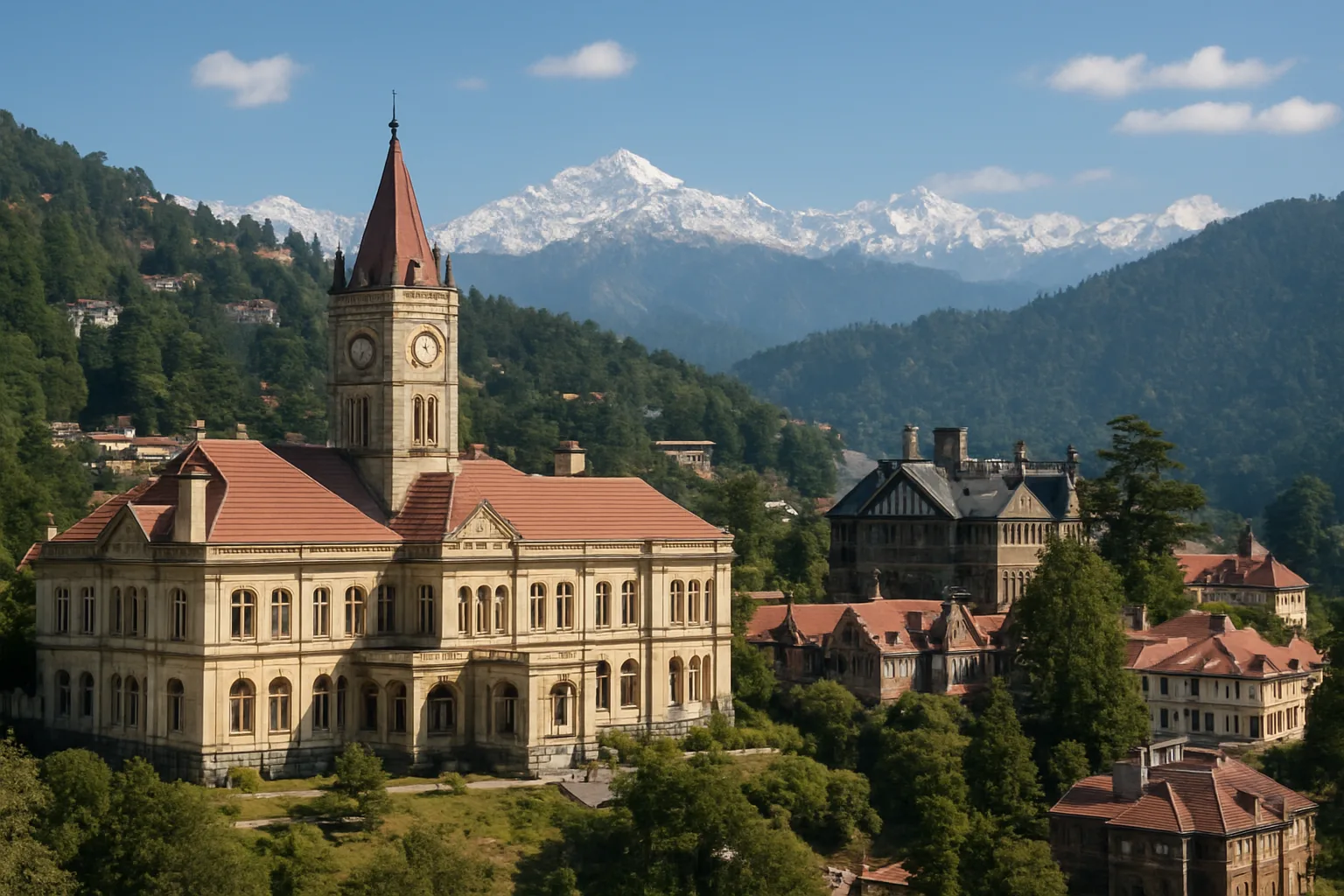
The first rays of sun slip quietly over the jagged ridges of the middle Himalayas, casting a mosaic of gold across Shimla’s steep lanes and colonial rooftops. In the waking city, echoes of the past linger alongside the hum of administrative life—file bearers on the Mall, the tolling of bells from Christ Church, and the distant chant of morning prayers in hillside temples. Shimla, once the summer seat of the British Raj, stands now as the heart of Himachal Pradesh, tasked with balancing the demands of modern governance against the enduring weight of its heritage.
From Provincial Outpost to State Capital
Shimla’s emergence as a political center is inseparable from the history of modern Himachal Pradesh. Documented records indicate that in 1947, as British India fractured into independent India and Pakistan, Shimla briefly served as the capital of East Punjab. The city’s administrative importance deepened in 1966, when the Punjab Reorganisation Act transferred the hilly districts of Punjab—including Shimla—to the nascent state of Himachal Pradesh. By 1971, Himachal Pradesh attained full statehood, and Shimla was formally designated as its capital.
These transitions, chronicled in state gazetteers and government archives, set the stage for an era of rapid institutional growth. Government offices, courts, and legislative chambers found homes within the city’s colonial-era structures, while new buildings rose to accommodate increasing bureaucratic demands. The rhythms of governance became woven into the city’s daily life, yet Shimla’s unique character—shaped by its geography, history, and communities—remained ever-present beneath the administrative veneer.
Negotiating Heritage: The Colonial Legacy
The legacy of British rule, still visible in Shimla’s architecture and public spaces, posed both a challenge and an opportunity for post-Independence administrations. The Mall, Gaiety Theatre, Viceregal Lodge, and the Ridge—each a relic of imperial ambition—had become part of the city’s identity. Yet these sites also symbolized a complex past, prompting debates over their preservation, adaptation, and role in a democratic India.
Local oral traditions and municipal records from the late 20th century reveal how residents and policymakers navigated these dilemmas. Some buildings, like the Viceregal Lodge, were repurposed for new uses: it became the Indian Institute of Advanced Study, serving as a center for scholarship rather than colonial power. Others, including the Gaiety Theatre, were restored and reopened as public cultural spaces, blending historical memory with contemporary civic life.
Over the decades, Shimla’s municipal authorities grappled with balancing the city’s heritage with the pressures of development. Urban planning initiatives sought to protect the skyline and pedestrian promenades, while conservation societies advocated for the maintenance of old stone churches, timbered cottages, and period lampposts. These efforts, sometimes contentious, underscored a persistent tension: how to honor the past without impeding the city’s growth as a state capital.
Communities and Continuity: Layers of Identity
Shimla’s demographic landscape has always been layered. Throughout the 20th century, successive waves of migration—officials, clerks, traders, educators—brought new customs and languages to the city’s hills. Beneath the colonial and administrative presence, older communities persisted: the Pahari-speaking locals, the Gorkha diaspora, and the artisans whose lineages stretched back to pre-colonial times.
Oral traditions in villages such as Jakhoo and Sanjauli recall ancient hill deities, seasonal festivals, and local legends that long predate British arrival. These beliefs, woven into the fabric of daily life, provided a sense of continuity through decades of political change. Meanwhile, religious sites like the Kali Bari Temple and Jakhoo Temple continued to serve as focal points for communal identity, bridging the colonial era and the modern present.
Throughout the late 20th and early 21st centuries, the interplay between old and new became a defining feature of Shimla’s cultural life. Schools and colleges, many established during the Raj, evolved into centers for regional scholarship, while local artists and writers drew inspiration from the city’s unique confluence of traditions. The result was a society at once cosmopolitan and rooted, shaped by the currents of migration, governance, and memory.
Governance, Urbanization, and the Mountain Environment
As the capital city developed, the challenges of governance extended beyond administrative infrastructure. The hilly terrain and fragile ecology of Shimla posed persistent difficulties for urban planners and policymakers. State records from the 1980s and 1990s document efforts to manage water supply, waste disposal, and transport in a city where every new road or building risked destabilizing the slopes.
Population growth and tourism brought prosperity, but also intensified pressure on the environment and heritage sites. In the early 2000s, a series of building regulations and conservation guidelines were introduced to limit unplanned expansion and protect historic precincts. Civic activism grew, with residents and environmental groups advocating for sustainable development that respected both the city’s natural and built heritage.
Yet, these efforts were not without setbacks. Periodic landslides, water shortages, and the strain on municipal services became recurring themes in local governance. Despite these challenges, Shimla’s status as the administrative and cultural heart of Himachal Pradesh continued to draw new residents, students, and visitors, reinforcing its central role in the state’s identity.
The Contemporary City: Heritage in a Changing World
By the early 21st century, Shimla had become a city of paradoxes. The seat of government coexisted with vibrant marketplaces, historic landmarks with modern hotels, and old neighborhoods with expanding suburbs. Annual events—such as the Summer Festival and local fairs—brought together the city’s diverse communities in celebration of both tradition and change.
Heritage conservation remained an ongoing project. The city’s inclusion in tourism circuits spurred renewed interest in restoring historic sites, while educational institutions championed research into Shimla’s layered past. At the same time, debates over infrastructure, environmental risk, and the meaning of public spaces continued to animate civic life.
Documented policy shifts, from heritage walks to green initiatives, reflected an evolving understanding of what it means to be a capital city in the Himalayas. The lessons of the past—of adaptation and negotiation, memory and modernity—continued to inform the choices of administrators, citizens, and cultural leaders alike.
Echoes of the Past, Questions for the Future
Shimla’s journey from a seasonal colonial outpost to the enduring capital of Himachal Pradesh is a testament to the city’s resilience and adaptability. The ongoing interplay between governance and heritage, between the demands of administration and the claims of memory, shapes not only the city’s landscape but also its spirit. Ancient festivals are celebrated in the shadow of government offices; colonial facades house new visions for education and policy; and the voices of old communities mingle with those of newcomers and visitors.
As Shimla continues to negotiate its identity in the 21st century, the questions of balance—between growth and conservation, tradition and innovation—remain central to its story. In the next and final part of this series, we will look more closely at how Shimla’s residents, planners, and leaders are imagining the city’s future, drawing on the lessons of history to guide the choices of tomorrow.
Previous: Life of Residents in Contemporary Shimla
Next: Shimla’s Past, Present, and an Uncertain Future