
Series: History of Lahaul & Spiti, Himachal Pradesh, India
Phase 5: Modern Era — Part 25 of 30
This article appears within a continuing historical series that follows the western Himalayas into the modern era. With the end of princely rule and the integration into independent India, long-standing social and political patterns were reconfigured. This phase examines how development, state formation, and memory interact with inherited landscapes, shaping contemporary life while carrying forward echoes of the past.
Morning Light on Spiti’s Roof
The first rays of sun catch on the whitewashed walls of Key Monastery, perched above the tumbling Spiti River. In the thin, crisp air, the valley stirs: a handful of local women set out to their fields, while a small convoy of jeeps winds up the dusty road from Kaza. The scene is timeless, yet unmistakably altered. For centuries, Spiti was a world apart—its high passes snowbound for months, its communities interwoven by ritual and kinship, its rhythm set by the pulse of the seasons. Now, with the arrival of curious travelers, a new current moves through these ancient stones.
From Isolation to Encounters: Spiti’s Historical Crossroads
Spiti, meaning “The Middle Land,” has long stood at a crossroads—not just between India and Tibet, but between worlds of myth, memory, and historical record. Oral traditions recall the valley as a place of lamas and spirits, its earliest inhabitants said to be the Rong people, whose legends survive in songs and winter tales. These stories, passed from hearth to hearth on winter nights, weave a tapestry of supernatural origins and heroic ancestors. Yet, as early regional gazetteers note, the documented record emerges much later, shaped by the ebb and flow of Himalayan polities and Buddhist monasticism.
By the 10th and 11th centuries, Spiti’s identity was increasingly tethered to the great Buddhist revival sweeping the western Himalayas. Monasteries such as Tabo—founded in 996 CE—became both spiritual and cultural anchors, drawing teachers, artisans, and manuscripts along the ancient trade routes that linked Kashmir, Ladakh, and the Tibetan plateau. Through these centuries, Spiti’s communities remained small, their survival dependent on irrigation, barley, and careful negotiation with the elements and with distant rulers.
Belief, Community, and the World Beyond
While Spiti’s remoteness fostered a unique syncretism—where pre-Buddhist animist rites blended with Tibetan Buddhist practice—it also ensured a distinct cultural resilience. Oral histories still recall a time when the valleys were scored by rival clans, and every village had its own guardian deity. Over time, the establishment of monastic authority brought greater unity, with the Gelugpa order (Yellow Hat) playing a central role in shaping local governance and spiritual life.
Yet Spiti was never wholly isolated. The region’s strategic location ensured that traders, pilgrims, and occasional emissaries traversed its high passes. Salt, wool, tea, and turquoise moved through the valleys, and with them, news of distant wars and dynasties. The chronicles of Ladakh and the records of the Bushahr state speak to periods of suzerainty, tribute, and shifting alliances. Still, the rhythm of life remained much as it had for generations—governed by the seasons, the monastery’s calendar, and the demands of survival in a fragile landscape.
Opening the Valleys: The Dawn of Modern Access
For much of the colonial period, Spiti’s remoteness shielded it from the upheavals reshaping the subcontinent. British administrators, when they ventured here, were struck by the valley’s isolation and the tenacity of its people. Early accounts—such as those in the Imperial Gazetteer—marveled at the region’s stark beauty and the endurance of its monastic traditions. Roads remained few, and for most outsiders, Spiti was a name on a map, shrouded by snow and rumor.
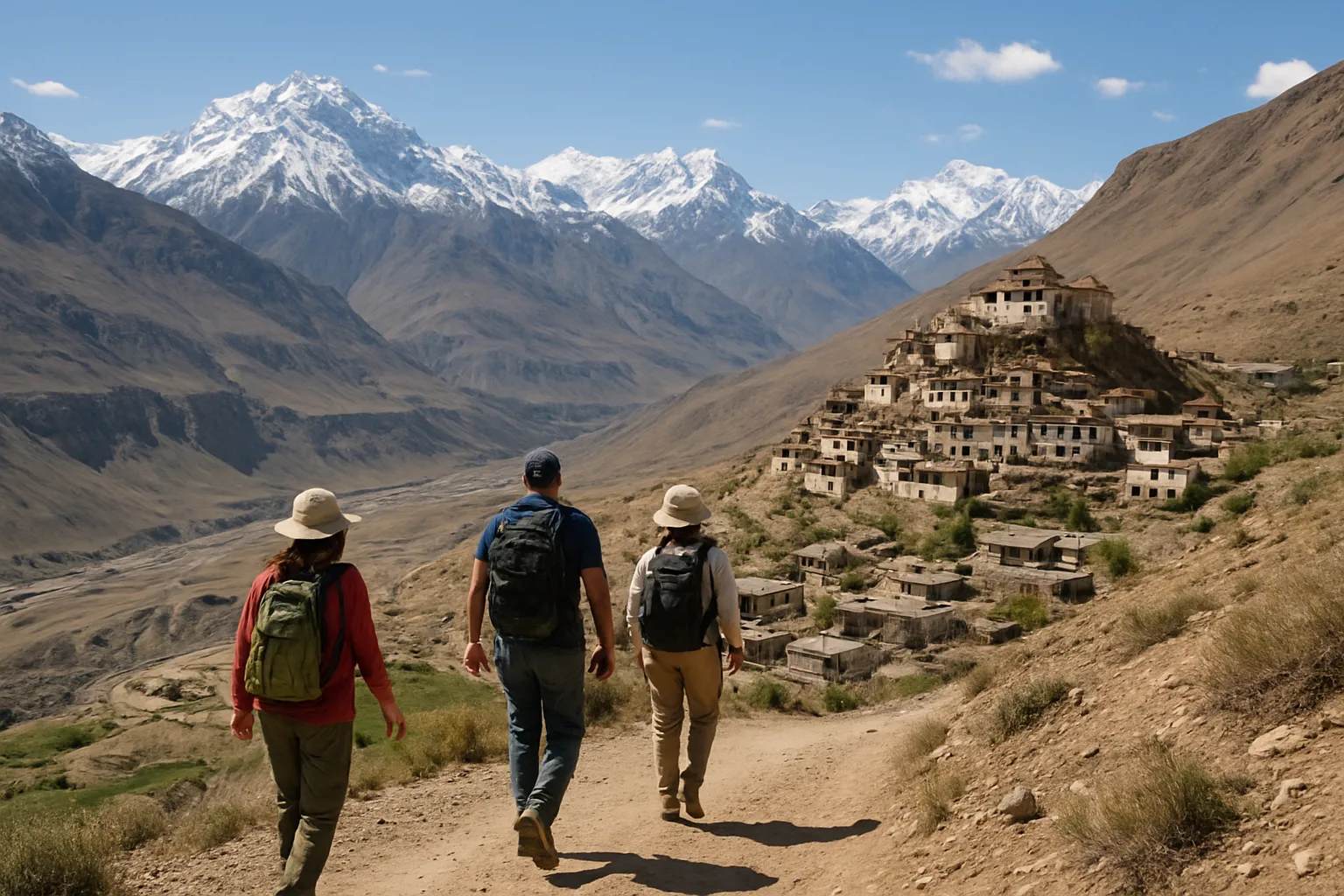
It was not until the late 20th century, with the improvement of roads and the development of Himachal Pradesh’s tourism infrastructure, that Spiti began to open in earnest. The completion of the Manali–Kaza road in the 1980s marked a turning point. Suddenly, what had once been a journey of weeks could be accomplished in a matter of days. The first adventurous travelers—mountaineers, scholars, a handful of intrepid backpackers—brought new eyes and fresh curiosity to the valley’s ancient stones.
The Tourism Wave: New Rhythms, Old Challenges
The rise of tourism in Spiti has been both swift and transformative. By the late 1990s, word had spread of a valley where monasteries perched on cliffs, chortens glimmered in the sun, and the Milky Way seemed close enough to touch. Homestays flourished, offering visitors a chance to share in the rhythms of local life. Community festivals—once private affairs—began to attract guests from distant cities. Young Spitians, many of whom had traveled outside for education, returned with new skills and ambitions, eager to bridge tradition and opportunity.
- Trekking and adventure tourism have become central pillars of the local economy.
- Monasteries like Tabo and Dhankar now welcome streams of visitors, balancing preservation and access.
- Village homestays and eco-tourism initiatives strive to offer authenticity while supporting sustainable livelihoods.
Yet these changes have not been without challenge. The influx of outsiders brings economic opportunity, but also pressures: on water, on traditional ways of life, and on the fragile balance of a high-altitude ecosystem. There are tensions—sometimes spoken, often not—about cultural dilution, the commodification of tradition, and the risk of losing what makes Spiti unique.
Encounter and Adaptation: Cultural Exposure and Identity
As Spiti’s valleys welcome travelers from around the world, the region is undergoing subtle but profound shifts. Young people, more connected than ever through education and digital media, navigate the space between ancestral custom and modern aspiration. Festivals are now performed for cameras as well as for gods. Ancient murals—once the domain of monks and villagers—draw conservators and art historians from afar. Stories that once traveled only by word of mouth now circulate on screens, reaching audiences unimaginable a generation ago.
Local communities have responded with creativity and pragmatism. Many have formed cooperatives to manage homestays, guide services, and heritage projects. Monasteries host workshops to train locals in conservation and traditional art forms. There is pride in Spiti’s heritage, but also a clear-eyed recognition that adaptation is essential for survival in a changing world.
Echoes of the Past, Hopes for the Future
In the quiet moments before dusk, when the wind drops and the valley glows with the last light, Spiti’s enduring spirit is unmistakable. The same mountains that once marked the edge of the known world now frame a region in flux—where ancient stones meet the footsteps of new visitors, and where the stories of ancestors mingle with the hopes of the present generation.
These transformations are not unique to Spiti, yet they bear the imprint of a place where history is lived as much as remembered. As we look ahead in this series, the focus will turn to the challenges and opportunities of environmental change in the region—an issue that, like tourism, will continue to shape the destiny of Lahaul and Spiti for years to come.
Previous: Roads, Tunnels, and Connectivity Transforming the Region
Next: Climate Change and Environmental Fragility