
Series: History of Kangra, Himachal Pradesh, India
Phase 5: Modern Era — Part 23 of 30
This article appears within a continuing historical series that follows the western Himalayas into the modern era. With the end of princely rule and the integration into independent India, long-standing social and political patterns were reconfigured. This phase examines how development, state formation, and memory interact with inherited landscapes, shaping contemporary life while carrying forward echoes of the past.
The Quiet Before the Turning Point
Dawn in the spring of 1959 brought a rare tranquility to the lush Kangra valley. The Dhauladhar peaks still wore their last snows, villagers tended to wheat and barley, and the hum of daily life—temple bells, market calls, the laughter of children—seemed unchanged. Yet, beneath this ordinary rhythm, an extraordinary chapter of modern history was about to unfold.
Kangra, known for its ancient temples and storied Rajput heritage, had always stood at a crossroads. Its strategic passes and river valleys had once channeled armies, merchants, and pilgrims. But never before had it been called to shelter an exiled government and an entire people fleeing across the Himalayas. The arrival of the Tibetan Government-in-Exile would reverberate through Kangra’s towns and villages, quietly but indelibly altering its social and cultural fabric.
Exodus Across the Himalayas
The crisis began miles away, on the Tibetan plateau. In March 1959, a popular uprising in Lhasa against Chinese rule was violently suppressed. Fearing for his life and the survival of his people, the 14th Dalai Lama, Tenzin Gyatso, set out on a perilous journey over the mountains, disguised as a soldier and accompanied by a handful of trusted aides.
After weeks evading patrols and braving the high passes, the Dalai Lama crossed into India near Tawang. News of his flight and the plight of thousands of Tibetan refugees spread rapidly. The Indian government, led by Prime Minister Jawaharlal Nehru, extended asylum—a decision that would have far-reaching diplomatic and humanitarian consequences.
Initially, Tibetan refugees were scattered across camps in Assam, West Bengal, and the Himalayan borderlands. But the sheer scale of the exodus soon overwhelmed these temporary arrangements. The search began for a more permanent sanctuary, one with the space and climate to nurture a displaced nation.
Dharamshala: A New Capital in Exile
The choice of Dharamshala was at once practical and symbolic. Nestled on a ridge above the Kangra valley, Dharamshala had been a modest hill station since colonial times, with a small British-era cantonment and scattered local villages. Its cool climate, reminiscent of Tibet, and relative remoteness offered both familiarity and security.
In May 1960, after months of deliberation, the Dalai Lama and his closest advisors established the Central Tibetan Administration (CTA) here. What began as a handful of humble buildings and tents soon grew into a bustling enclave—McLeod Ganj—where the Tibetan flag flew again, schools and monasteries reopened, and the rhythms of exile life took root.
For Kangra, the influx was dramatic. Local gazetteers of the era record a sudden surge in population, with new settlements rising on previously forested slopes. Yet, even as tents and bamboo huts multiplied, the Tibetan newcomers and their hosts found unexpected common ground. Both communities shared a reverence for the mountains, a tradition of subsistence farming, and a legacy of spiritual devotion—Buddhist and Hindu, often intertwined through centuries of Himalayan trade and migration.
Negotiating Identity and Belonging
The early years of exile were marked by hardship and uncertainty. Tibetan families, uprooted from familiar villages and monasteries, struggled to adapt to new crops, new languages, and the unfamiliar rhythms of the Indian plains. Oral traditions from both sides recall moments of tension—over land, water, and customs—but also of mutual aid. Local Himachali families provided food and shelter to the new arrivals; Tibetan artisans brought new crafts and rituals to Kangra’s markets and festivals.
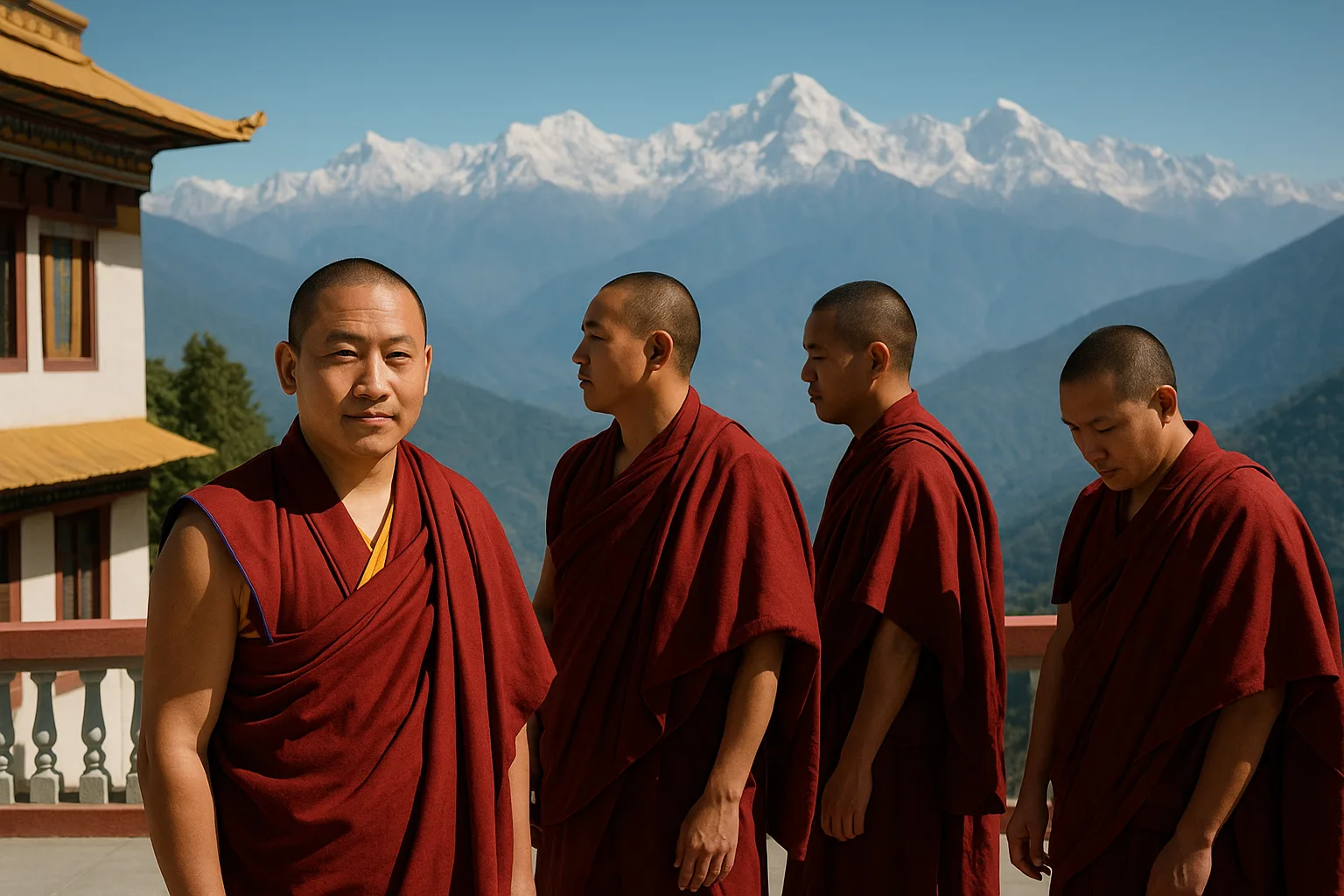
The Dalai Lama’s presence transformed Dharamshala into a global center for Tibetan Buddhism. Monasteries such as Namgyal and Gyuto rose alongside ancient Hindu temples, their prayer flags fluttering in the same Himalayan breezes. Over time, McLeod Ganj became a kind of living museum, preserving Tibetan language, art, and governance even as its residents forged bonds with their Kangra neighbors.
This period is richly documented in state records, travelogues, and the reminiscences of early Tibetan settlers. Yet, beneath the official narrative, there persists a vibrant oral history—of shared harvests, joint festivals, and the slow weaving together of two distinct but resilient communities.
Political and Diplomatic Reverberations
The establishment of the Tibetan Government-in-Exile in Kangra was more than a local event; it became a geopolitical flashpoint. China protested the presence of the Dalai Lama on Indian soil, and tensions simmered along the Himalayan frontier, culminating in the Sino-Indian War of 1962. Kangra, once on the fringes of subcontinental politics, found itself at the center of international attention.
Yet, for many in the valley, the daily realities of exile and adaptation loomed larger than distant headlines. Tibetan schools and hospitals sprang up, supported by Indian authorities and international aid groups. New trade routes developed between Kangra and Tibetan settlements elsewhere in India, weaving the region into a wider diaspora network. Over time, Kangra’s identity as a hill district became inseparable from its role as a sanctuary—and a crossroads of cultures in flux.
Enduring Legacy in the Valley
By the late twentieth century, the presence of the Tibetan Government-in-Exile had left a deep imprint on Kangra. McLeod Ganj, once a sleepy outpost, buzzed with pilgrims, activists, and artists from across the world. Local markets brimmed with Tibetan crafts—thangkas, carpets, herbal medicines—while prayer wheels and Buddhist chants became part of the valley’s soundscape.
The relationship between Tibetan exiles and the people of Kangra matured into one of cautious respect and mutual enrichment. Intermarriage remained rare, but cultural exchange flourished in art, cuisine, and public life. Annual festivals brought both communities together in celebration and remembrance. Kangra’s ancient character—rooted in Rajput valor, Hindu devotion, and centuries of trade—was now layered with the resilience and creativity of a displaced nation.
Memory and Modernity: Kangra’s Evolving Identity
Today, the story of the Tibetan Government-in-Exile is woven into the fabric of Kangra’s modern identity. Generations born in exile now call the valley home, even as they nurture hopes of return to Tibet. The Dalai Lama’s teachings attract seekers from every continent. Kangra’s role as a crossroads—between ancient kingdoms, faiths, and now nations—has deepened, making it a living archive of adaptation and coexistence.
Yet, as local oral traditions remind us, Kangra’s hospitality is not new; it has been a refuge since the days of wandering mendicants, Rajput warriors, and Silk Road traders. The arrival of the Tibetan Government-in-Exile stands as the latest and perhaps most poignant chapter in this enduring legacy.
As the series continues, we will turn to the late twentieth and early twenty-first centuries, exploring how Kangra’s evolving society balances tradition and modernity, and how the memories of exile continue to shape the valley’s future.
Previous: Growth of Dharamshala as a Regional Centre
Next: Tea Gardens and Economy of Kangra