
Series: History of Hamirpur, Himachal Pradesh, India
Phase 5: Modern Era — Part 24 of 30
This article appears within a continuing historical series that follows the western Himalayas into the modern era. With the end of princely rule and the integration into independent India, long-standing social and political patterns were reconfigured. This phase examines how development, state formation, and memory interact with inherited landscapes, shaping contemporary life while carrying forward echoes of the past.
Fields at Dawn: Hamirpur’s Living Landscape
In the pale blue of an early spring morning, the hills of Hamirpur stir awake. The gentle rustle of wheat, the glint of dew on paddy stubble, and the distant echo of a temple bell—all these are threads in a tapestry woven over centuries. Beneath this everyday rhythm lies a story of profound change. Hamirpur’s agricultural transformation, set against a backdrop of ancient hills and persistent rivers, is both a tale of survival and adaptation.
From Ancient Terraces to British Surveyors: A Region’s Agricultural Roots
Hamirpur’s earliest fields were shaped not by the plough but by the slow, deliberate clearing of forests on hill slopes. Long before the British chronicled the region’s soils, oral traditions spoke of communities coaxing sustenance from the land. The Katoch dynasty, whose legacy still lingers in local legend, oversaw a patchwork of villages where agriculture and ritual were inseparable.
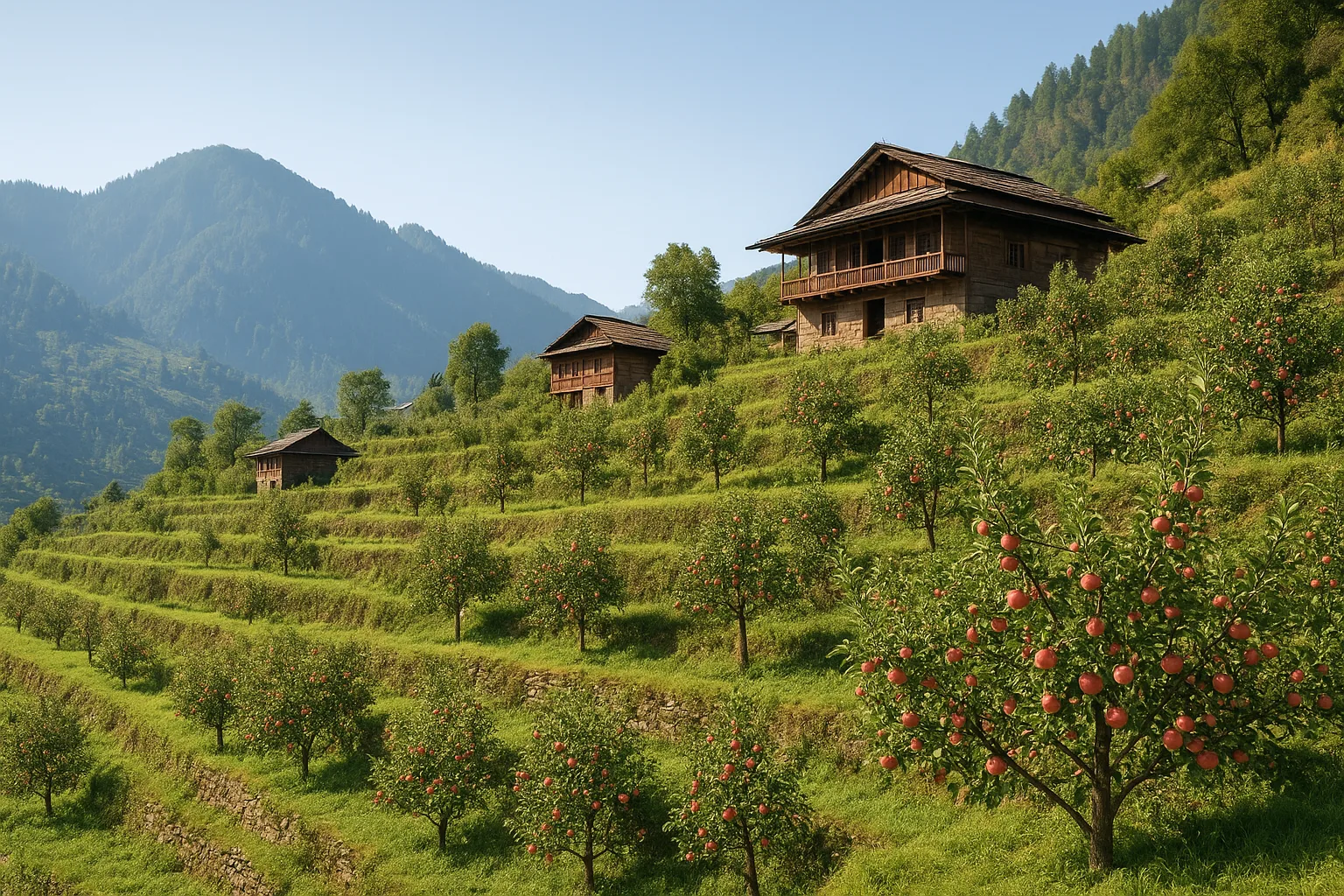
Travelers along the old trade routes—linking the valleys of Kangra to the plains of Punjab—would have seen terraced farms hugging the contours of the hills. These terraces, often credited in local lore to “wise ancestors” or the intervention of village deities, echo a practical response to the unpredictable Himalayan rains. While mythology weaves its own explanations, historical inference—and early gazetteers—point to the persistence of smallholder farming, shaped by necessity and innovation alike.
Colonial Encounters: Gazetteers and the Arrival of Scientific Agriculture
It was during the latter half of the 19th century that Hamirpur came under the notice of British administrators. The Punjab Settlement Reports and regional gazetteers of that era document a landscape in flux. Surveyors noted the prevalence of wheat and barley, the importance of cattle for ploughing, and the intricate systems of water management—kuhls (channels) carved painstakingly from hillside streams.
While British records often underestimated the sophistication of local practices, they also marked the beginning of new interventions. The introduction of cash crops, encouragement of commercial fruit orchards, and experiments with new grain varieties altered both the rhythms of planting and the fortunes of the farming classes. Taxation systems based on agricultural output, sometimes indifferent to the vagaries of monsoon, added layers of complexity and hardship.
Community and Change: Castes, Commons, and Cooperative Spirit
The story of Hamirpur’s fields cannot be told without its people. Rajput and Brahmin landholders, Scheduled Castes who tilled and shared in the harvest, and the Gujjar and Gaddi herders all played roles in the agricultural cycle. Belief systems—rooted in animist traditions, later entwined with Hindu ritual—governed not just sowing and reaping, but communal obligations and rights to water and land.
Village panchayats (councils) mediated disputes and organized collective labor, especially for maintaining terrace walls or repairing irrigation. Oral traditions, passed down in late-night gatherings or the measured chants of harvest festivals, preserved memories of famines, bumper crops, and the fortitude of ancestors who faced both with stoic resolve.
Post-Independence Aspirations: The Green Revolution’s Reach
The decades after 1947 brought new hope and new pressures. Hamirpur, now a district in Himachal Pradesh, found itself at the edge of India’s agricultural transformation. The Green Revolution—marked by the spread of high-yield seeds, chemical fertilizers, and improved irrigation—began to touch even the hill districts. Extension officers, many recalling their own peasant roots, traveled from hamlet to hamlet, distributing seeds and advice in equal measure.
Yet, the transformation was uneven. The very topography that had once protected Hamirpur’s villages from large-scale incursions now complicated the spread of tractors and intensive monoculture. Small plots, fragmented holdings, and erratic rainfall defied the logic of large-scale mechanization. Instead, incremental adoption—hybrid seeds here, a new pesticide there—combined with age-old practices. Local fairs in Nadaun and Sujanpur became showcases for agricultural innovation, as well as forums for sharing anxieties about debt, market prices, and changing weather patterns.
New Realities: Migration, Remittances, and Shifting Landscapes
By the late 20th century, a different kind of change swept across Hamirpur’s fields. As educational opportunities expanded and government jobs beckoned, many young men left the land for the towns of Punjab, Delhi, and beyond. Migration, once seasonal, became permanent for some families. Remittances flowed back, financing new houses, tractors, and sometimes the conversion of terraced fields into orchards or even non-agricultural plots.
The landscape itself began to shift. While wheat and maize remained staples, the cultivation of fruits—especially mango, citrus, and litchi—gained ground. Women, often left to manage the fields, adapted with ingenuity, experimenting with vegetable gardens, dairy cooperatives, and microfinance groups. The arrival of rural roads and better market access brought both opportunity and challenge: with new crops came new risks, and traditional knowledge was sometimes sidelined by the imperatives of commerce.
Continuity and Contradiction: Hamirpur’s Fields Today
Today, the fields of Hamirpur bear witness to centuries of transformation. The old and the new live side by side: a solar-powered pump irrigates a centuries-old terrace; a smartphone app advises on the best time to plant maize. Yet, echoes of the past persist. Rituals to the village deity still precede the first sowing. Oral histories, recounted by elders under the shade of a peepal tree, remind listeners of cycles of scarcity and plenty, of resilience and renewal.
This agricultural story, grounded in both myth and meticulous record, is far from finished. It remains a testament to the ingenuity of those who have shaped Hamirpur’s hills—often against the odds, always with an eye to the future.
What Endures: Ancient Roots, Modern Branches
The agricultural transformation of Hamirpur is more than a shift in crops or techniques. It is a reflection of the region’s capacity to absorb change, preserve memory, and imagine new possibilities. The terraced fields, the village commons, and the marketplaces of today all carry the imprint of countless generations. As we continue following Hamirpur’s journey in this series, the next chapter will turn to the rise of education and civic life—tracing how learning and public engagement have redefined identity and ambition across the district.
Previous: Rise of Hamirpur as an Education Hub of Himachal
Next: Roads, Connectivity, and Development in Hamirpur