
Series: History of Solan, Himachal Pradesh, India
Phase 5: Modern Era — Part 24 of 30
This article appears within a continuing historical series that follows the western Himalayas into the modern era. With the end of princely rule and the integration into independent India, long-standing social and political patterns were reconfigured. This phase examines how development, state formation, and memory interact with inherited landscapes, shaping contemporary life while carrying forward echoes of the past.
Morning on the Ridge: Solan Awakens to Knowledge
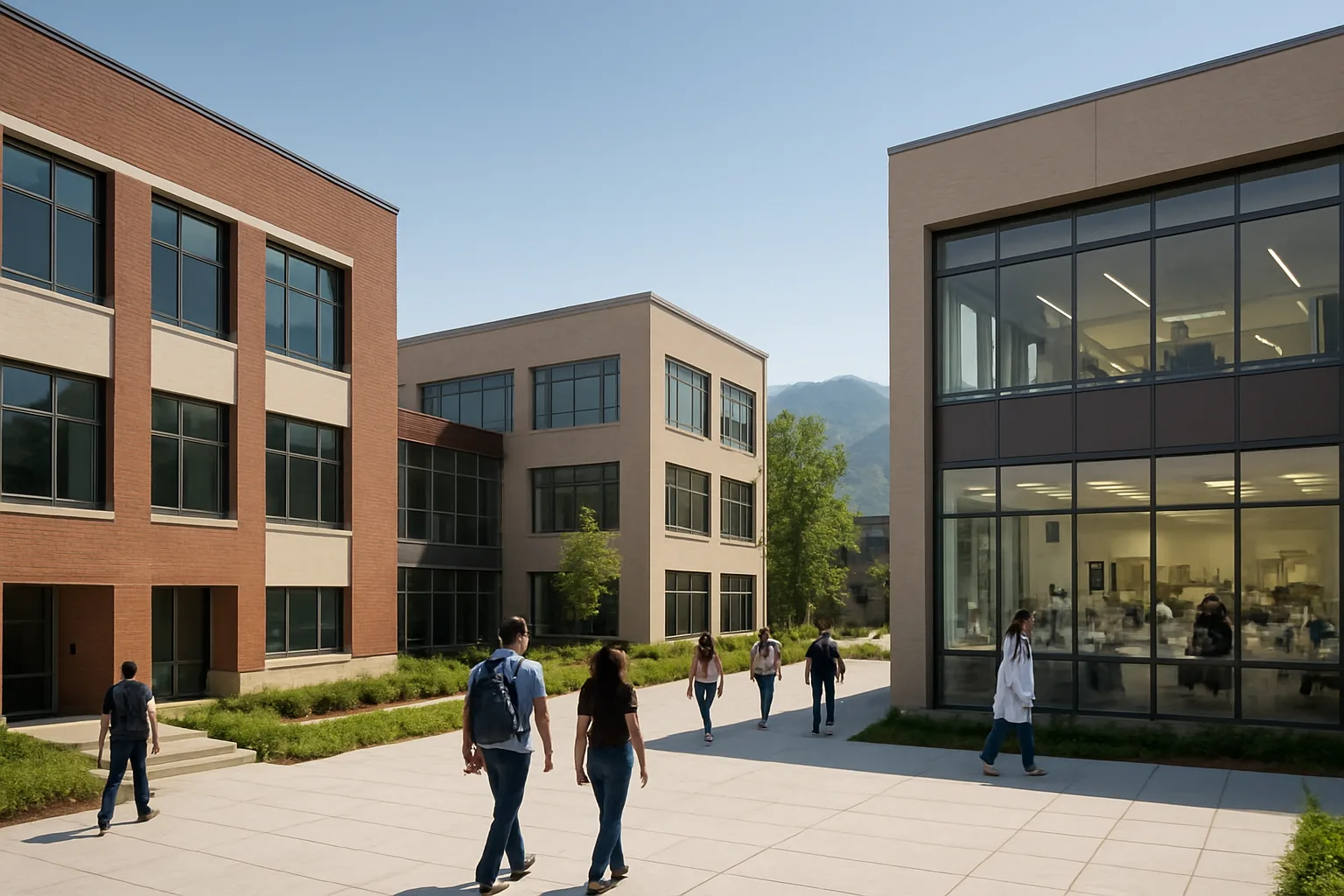
On a crisp spring morning in Solan, the mist clings to the cedar boughs as schoolchildren make their way up the winding road to their classes. In the heart of the town, the bells of the Government Model Senior Secondary School echo as they have for generations. Across the valley, the stately campus of Dr. Yashwant Singh Parmar University of Horticulture and Forestry gleams in the sunlight, a symbol of Solan’s enduring commitment to knowledge. It is easy to overlook the remarkable journey that brought Solan from its colonial-era beginnings to a center of educational and scientific endeavor in Himachal Pradesh. The story of Solan’s schools and institutes is not just a local chronicle—it is a reflection of the region’s aspirations, resilience, and vision for the future.
From Cantonment to Classroom: Colonial Foundations
Solan’s earliest brush with formal education dates to the late nineteenth century, when British officers and administrators established a cantonment in the town. The British, keen to maintain administrative efficiency and social order, set up the first basic schools for their own children and for the children of Indian staff. The Church Mission Society opened one of the first formal primary schools in the 1890s, catering to a handful of Anglo-Indian and local students. Education at this time was an exclusive affair—curricula emphasized English, arithmetic, and Christian catechism, with little room for vernacular knowledge or indigenous culture.
The early 20th century saw a gradual broadening of educational opportunities. Local leaders, inspired by national reform movements, began to push for more inclusive schools. The Government High School, established in the 1920s, was a milestone—its doors opened to children from across the community, regardless of caste or creed. Oral histories recall teachers like Master Ram Lal and Miss Edith D’Costa, who became local legends for their dedication and discipline. These educators planted the seeds of curiosity in a generation that would later steer the region into independence and self-governance.
Post-Independence Reforms: Schools for a New India
After 1947, education in Solan underwent a dramatic transformation. The newly-formed Himachal Pradesh government, echoing Nehruvian ideals, prioritized universal access to education as an engine for progress. The 1950s and 1960s saw a surge in the construction of primary and secondary schools in Solan and its surrounding villages. Girls’ schools, technical institutes, and teacher training colleges began to appear, thanks in part to the tireless advocacy of figures such as Shakuntala Sharma, a pioneering educator born in Solan, and the reform-minded District Collector, Rajinder Singh.
During these decades, education became a vehicle for social mobility and empowerment. Families who had once viewed schooling with skepticism began to recognize its transformative power. The opening of the Government Model Senior Secondary School in the heart of Solan in 1962 marked a watershed moment, setting new academic standards and nurturing talent from all walks of life. The school’s alumni would go on to serve as doctors, engineers, and administrators across India, carrying with them memories of rigorous morning assemblies and the scent of deodar trees after rain.
Scientific Ambition: The Rise of Research Institutions
Perhaps the most profound legacy of modern Solan is its emergence as a center for scientific research, especially in agriculture and horticulture. This trajectory began in the late 1960s, as the green revolution swept through northern India and the need for specialized research became urgent. Agricultural officers and scientists, many trained in Punjab and Delhi, identified Solan’s unique climate and soil as ideal for experimentation.
The founding of the Dr. Yashwant Singh Parmar University of Horticulture and Forestry in 1985, named after the first Chief Minister of Himachal Pradesh, was a turning point. Set amidst rolling hills in Nauni, just outside Solan town, the university quickly became a beacon for agricultural innovation. Early faculty members like Dr. S.P. Guleria and Dr. K.K. Pramanik led pioneering work in apple cultivation, disease-resistant crops, and sustainable forestry. The university’s extension programs brought cutting-edge research directly to local farmers, transforming livelihoods and making Solan a model for rural development.
Other Institutes and Their Impact
Solan’s scientific landscape expanded further with the establishment of the Central Research Institute (CRI), originally founded in Kasauli in the early 20th century but with significant collaborations and outreach in Solan. CRI’s work on vaccines and public health intersected with the town’s growing health infrastructure, influencing everything from disease prevention to nutrition education in the region’s schools.
Meanwhile, the Indian Institute of Science Education and Research (IISER) Mohali, though headquartered in Punjab, has partnered with Solan-based researchers on Himalayan ecology and sustainable development. These collaborations underscore Solan’s reputation as a crossroads of scientific inquiry and community engagement.
Private Colleges and the Education Economy
By the late 1990s and early 2000s, Solan saw a new chapter in its educational journey: the rise of private colleges and technical institutes. Prompted by growing demand for professional degrees and the liberalization of India’s economy, entrepreneurs and philanthropists invested in new campuses. Shoolini University, established in 2009, became a trailblazer—emphasizing research, biotechnology, and entrepreneurship. Its founder, Prem Kumar Dhumal, envisioned a world-class institution that would both serve local students and attract talent from across the country.
Private schools such as Pinegrove School and Gurukul International School introduced innovative curricula and extracurricular opportunities, setting high benchmarks for holistic education. These institutions attracted faculty from metropolitan centers, fostering a dynamic, cosmopolitan academic environment in the foothills of Himachal.
Women’s Education: Breaking Barriers
The story of education in Solan would be incomplete without highlighting the role of women and girls. While early schools were predominantly male, post-independence reforms—and persistent advocacy by local leaders—gradually broke down barriers. Government Girls Senior Secondary School, established in the 1970s, became a symbol of this change. Visionaries like Savitri Devi and Meena Thakur, both headmistresses in their time, championed the cause of women’s literacy and vocational training.
By the turn of the millennium, women from Solan were enrolling in universities, pursuing careers in medicine, engineering, and the sciences. Alumni networks of women professionals now mentor younger students, ensuring that the doors opened by one generation remain wide for the next.
Solan Today: Innovation, Community, and the Road Ahead
Walk through Solan today and the evidence of this educational transformation is everywhere. University buses crisscross the town each morning; libraries and laboratories hum with activity; debates, science fairs, and cultural festivals fill the calendar. The presence of world-class institutions has not only elevated academic standards but also created new opportunities for employment, research, and entrepreneurship.
Education and research have also shaped Solan’s identity as a town that values inquiry, tolerance, and progress. The children who once learned under colonial-era teachers now attend schools that celebrate local culture and global knowledge alike. The scientists who pioneered horticultural breakthroughs have made Solan a leader in sustainable agriculture, inspiring other Himalayan regions.
In the echoes of school bells and the quiet focus of laboratory benches, one can sense the soul of Solan—a community that has always believed in the power of learning to transform not just individuals, but the world around them. As Solan moves forward, its educational legacy stands as both a foundation and a beacon, guiding future generations toward discovery, resilience, and hope.
Previous: Why Solan Is Known as the Mushroom City of India
Next: Urban Growth and Changing Lifestyles in Solan Town