
Series: History of Mandi, Himachal Pradesh, India
Phase 5: Post-Independence & Modern Mandi — Part 24 of 30
This article appears within a continuing historical series that follows the western Himalayas into the modern era. With the end of princely rule and the integration into independent India, long-standing social and political patterns were reconfigured. This phase examines how development, state formation, and memory interact with inherited landscapes, shaping contemporary life while carrying forward echoes of the past.
A New Morning in the Valley: Mandi, 1948
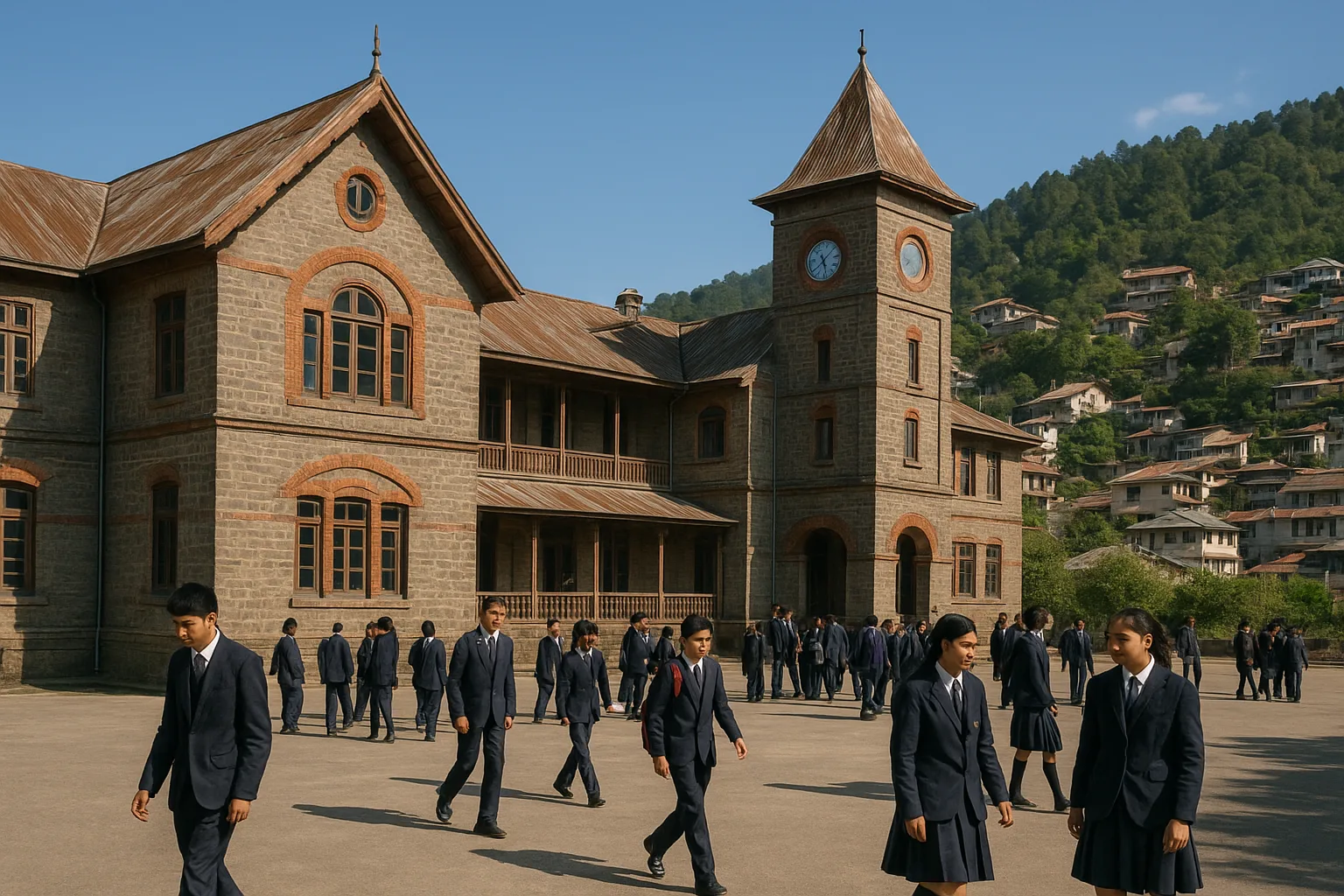
It is the spring of 1948. The sun climbs above the Beas River, illuminating the cluster of slate-roofed homes nestled within the Mandi valley. The scent of damp earth and pine drifts through the air as a small procession—schoolchildren in crisp uniforms—make their way toward a modest building. Their chatter mingles with the peal of the temple bells, signaling not just another day, but the awakening of a new era for Mandi.
The dust had barely settled on the events of 1947: India’s independence and the subsequent integration of the princely states. For Mandi, once a princely state with its own rulers, the transition was more than political—it was a profound social rebirth. The town, steeped in centuries-old traditions and rituals, now stood at the threshold of modernity.
From Royal Patronage to Public Schools: Educational Beginnings
Mandi’s educational history, before independence, was intricately linked to its rulers and temples. The Rajahs had long supported Sanskrit pathshalas and gurukuls, where Brahmin boys learned scriptures and local lore. Oral traditions recall the prestige of these institutions, with tales of scholars traveling from near and far. Yet, access was tightly bound to caste and privilege; the masses, particularly women and so-called lower castes, remained on the margins of formal learning.
British influence, which arrived in the hills by the late 19th century, introduced new models: English-medium schools and missionary initiatives. By the 1930s, Mandi had a handful of state-supported schools, but these served a small urban elite. The wider population relied on age-old oral transmission—folk stories, ballads, and family craft knowledge.
After 1948, the first elected state governments—guided by both local reformers and national policy—expanded access. The government high school in Mandi town became a beacon, its corridors echoing with the voices of children from every neighborhood and background. Regional gazetteers from the period note a sharp rise in school enrollments, a testament to the hunger for learning unleashed by independence.
Agents of Change: Reformers and Community Movements
Social reform in Mandi was never the work of a single hero. Rather, it was propelled by a network of teachers, activists, and community leaders. Women’s collectives, inspired by the national freedom movement, began advocating for girls’ education. Figures like Smt. Shakuntala Devi—a name still spoken with reverence among the town’s elders—traveled from village to village, persuading families to send their daughters to school.
Local panchayats, or village councils, took up the cause of literacy. They organized night schools for adults, many of whom had been denied education by tradition and circumstance. Oral accounts from the late 1940s and early 1950s describe how, after a day’s labor, workers gathered under flickering lanterns to learn their letters.
Religion, too, played a complex role. Temples and gurudwaras, once guardians of orthodoxy, gradually became sites for community meetings and literacy drives. Reform-minded priests invoked the egalitarian ideals found in ancient scriptures, challenging entrenched hierarchies in the process.
Breaking Barriers: Caste, Gender, and the Classroom
The road to educational equality was neither smooth nor uncontested. Mandi’s social fabric, woven from centuries of caste distinctions and gender expectations, did not unravel overnight. Resistance came from some quarters—elders who saw new schools as threats to tradition, or landlords who feared that literate tenants would demand their rights.
Yet the tide of reform was relentless. Newly appointed teachers, many themselves from humble backgrounds, insisted on mixed classrooms. Over time, the sight of girls and boys, Brahmins and Dalits, sitting side by side became less remarkable. Oral tradition records tensions and even protests, but also moments of solidarity: villagers pooling resources to build a schoolhouse, or wealthy families sponsoring scholarships for the poor.
By the late 1950s, the first generation of educated girls in Mandi was stepping into public life. Some took up teaching, others became nurses or clerks, their careers quietly undermining old taboos. The transformation was gradual, yet unmistakable.
Beyond the Blackboards: Literacy, Health, and Social Mobility
The impact of education in post-independence Mandi rippled far beyond the classroom. Increased literacy opened the door to government employment—a secure path eagerly sought by many hill families. The new bureaucracy, itself hungry for clerks and teachers, became both employer and engine of social mobility.
Health campaigns, from vaccination drives to maternal care, leveraged the newly literate population. Schoolchildren carried home pamphlets, spreading modern knowledge into the remotest hamlets. Oral histories recall the excitement—and occasional suspicion—as new ideas about hygiene and nutrition circulated through the bazaars and village squares.
Trade, too, was transformed. Merchants and farmers, newly able to read contracts and keep records, found themselves less vulnerable to exploitation. The opening of roads and bus routes further connected Mandi to the wider world, bringing new goods, ideas, and aspirations.
Remembering the Past, Shaping the Future
Mandi’s educational and social reforms, rooted in the upheavals of independence, have left an indelible mark on the region’s identity. Today, the town’s schools and colleges are filled with young people whose grandparents once learned by lamplight. Even as modern challenges persist—inequality, migration, and the pressures of a changing economy—the spirit of reform endures in community debates and policy initiatives.
The ancient hill state, once a tapestry of insular traditions and oral memory, now pulses with the energy of a society redefining itself, generation by generation. In the next part of our series, we will trace how the economic development and infrastructure expansion of the late 20th century further shaped the lives and landscapes of Mandi’s people.
Previous: Roads, Transport, and the Modernisation of Mandi
Next: IIT Mandi: A New Chapter in the Region’s History