
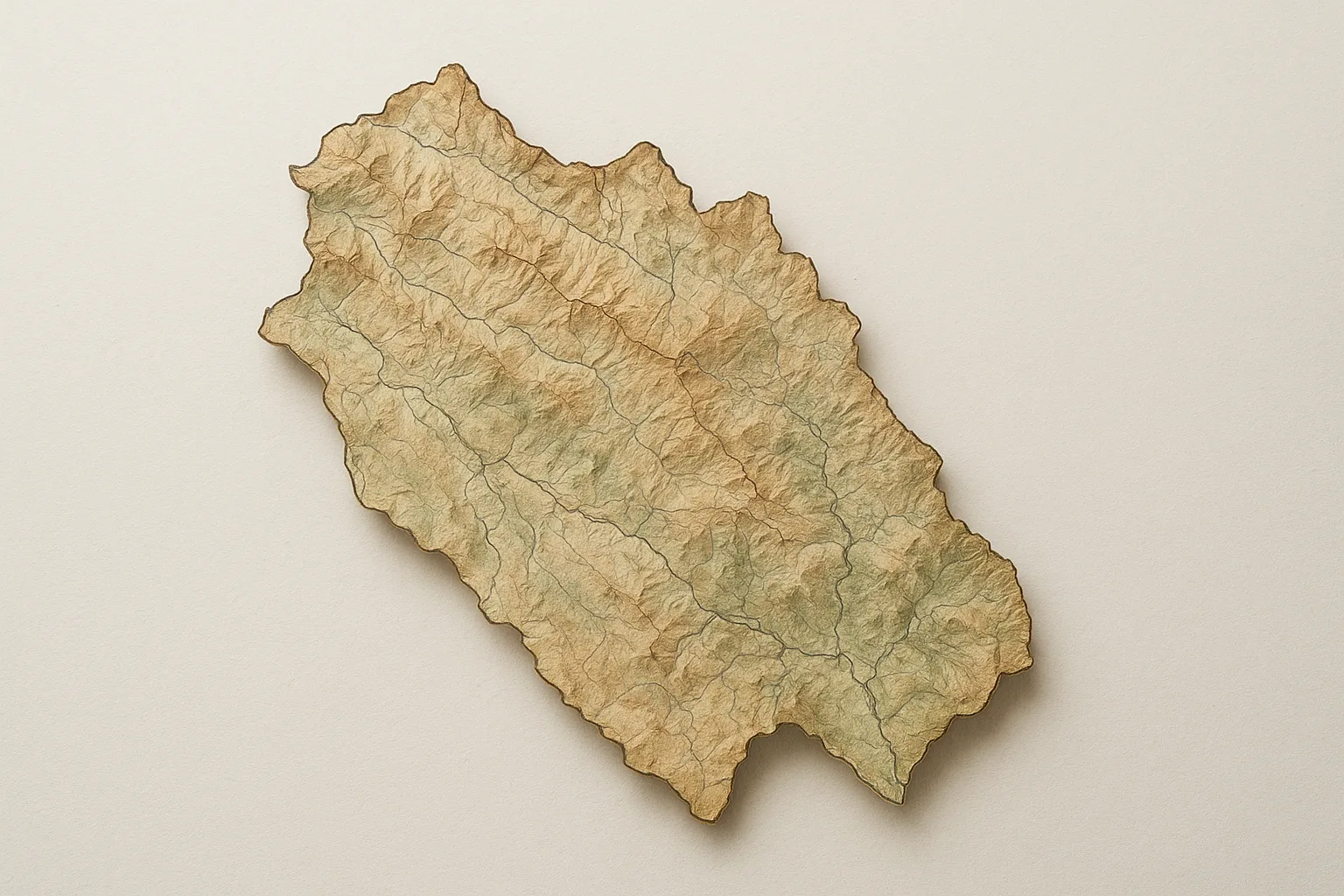
Series: History of Lahaul & Spiti, Himachal Pradesh, India
Phase 5: Modern Era — Part 22 of 30
This article appears within a continuing historical series that follows the western Himalayas into the modern era. With the end of princely rule and the integration into independent India, long-standing social and political patterns were reconfigured. This phase examines how development, state formation, and memory interact with inherited landscapes, shaping contemporary life while carrying forward echoes of the past.
Winter’s Silence: A Scene in Lahaul–Spiti, 1950s
The wind sweeps low across the frozen Chandra River. In the heart of Lahaul, under a pewter sky, a cluster of stone-roofed houses seems to huddle for warmth. The silence is profound, interrupted only by the low murmur of elders recalling tales by the hearth, their voices mingling with the hiss of yak-dung fires. Far from the teeming plains, life here is measured by the slow turning of seasons, the rhythm of harvest and migration, and the memory of ancient caravans that once traced these valleys.
It was in such landscapes—remote, formidable, and profoundly beautiful—that the identity of Lahaul–Spiti as a distinctly tribal region took shape. By the mid-20th century, the Indian state would formally recognize this uniqueness, but its roots run far deeper. To understand this recognition, we must first walk the winding paths of history, shaped by isolation, adaptation, and the enduring spirit of its people.
Echoes of the Past: Early Communities and Oral Traditions
Long before the word “tribal” found its place in official records, Lahaul–Spiti’s inhabitants preserved their lineage and customs through stories, rituals, and songs. Oral traditions, passed from ancestor to descendant, recall the arrival of the earliest settlers—some claim descent from legendary hunter-gatherers, others from Buddhist monks who crossed the high passes from Tibet. In these tales, myth and memory intertwine: stories of mountain deities, guardian spirits, and the delicate balance between humans and the harsh environment.
While such narratives are shaped by imagination as much as fact, they offer insights into how communities adapted to high-altitude life. The harsh winters, short summers, and thin soils demanded resilience and resourcefulness. Families banded together in tightly knit villages, sharing labor and harvests, invoking a sense of kinship that underpins the tribal character recognized today.
Historical Inference: The Emergence of Distinct Societies
By piecing together evidence from regional chronicles and early colonial gazetteers, historians now trace the gradual crystallization of Lahaul–Spiti’s unique social fabric. Archaeological remnants—petroglyphs, chortens, and ruined fortifications—point to ancient migration waves, likely from Central Asia and the Tibetan plateau. These early settlers brought with them not only their languages and beliefs, but also new agricultural techniques and trade practices suited to the region’s altitude.
From at least the first millennium CE, the valleys of Lahaul and Spiti began to diverge culturally from neighboring regions. While Lahaul maintained closer economic and marital ties with Kullu and Chamba, Spiti’s spiritual and linguistic affinities increasingly leaned toward Tibet. Monastic Buddhism gradually supplanted older shamanistic traditions, but echoes of animism and ancestor worship remained, surfacing in local festivals and oral epics.
Trade Routes and the World Beyond
The remoteness of Lahaul–Spiti was never absolute. For centuries, the valleys formed a vital link between the Indian subcontinent and Central Asia. The ancient trade route—sometimes known as the ‘wool road’—wound its way through high passes like Rohtang and Kunzum, connecting the traders of Ladakh, Tibet, and the Punjab plains. Caravans laden with salt, wool, barley, and turquoise crossed these heights, bringing not only goods but also new ideas, faiths, and genetic lineages.
This exchange fostered a cosmopolitanism rare for such an isolated place. Yet, the region’s formidable geography and unpredictable climate ensured that outside influences never fully eclipsed local autonomy. The communities of Lahaul–Spiti maintained their own councils, customary laws, and oral codes—systems that would later be key in their classification as a tribal district.
Chronicles and Early Political Structures
Documented history becomes firmer from the late medieval period. By the 16th and 17th centuries, regional chronicles (notably the Gazetteer of the Kangra District and local monastic records) describe the rise of small hill principalities. Lahaul was often claimed by the rajas of Kullu and Chamba, their influence waxing and waning with the seasons and the ambitions of local chieftains. Spiti, meanwhile, fell under the suzerainty of the rulers of Ladakh and, in later centuries, was intermittently contested by Tibet.
This patchwork of overlordship, punctuated by periods of de facto independence, preserved the distinctive social structures of the valleys. Local governance remained rooted in hereditary village heads, customary assemblies, and the authority of Buddhist lamas. Even as the British Raj extended its shadow into the hills in the 19th century, it encountered societies whose rhythms and rules were markedly different from those of the plains.
From Colonial Classification to Modern Recognition
The coming of the British brought new forms of documentation and categorization. Early British administrators, struck by the unfamiliar customs, languages, and social organization of Lahaul–Spiti, classified the people as “tribal” or “frontier” communities in official records. The Punjab Frontier Manual and subsequent gazetteers catalogued festivals, dress, and land tenure—sometimes with an anthropologist’s curiosity, sometimes with colonial condescension.
After India’s independence in 1947, the question of how best to govern and support such distinct regions became urgent. The Constitution recognized the need to safeguard the rights and ways of life of India’s tribal peoples. In 1960, Lahaul–Spiti district was officially notified as a Scheduled (Tribal) Area under the Fifth Schedule, affirming its special status and making it eligible for protective legislation and targeted development programs.
This was not merely a bureaucratic exercise: it was an acknowledgment of deep-rooted difference, shaped by geography, history, and culture. The recognition brought both opportunity and challenge—protecting land and customs, while opening the door to new forms of education, health care, and political representation.
The Living Legacy of Tribal Identity
Today, Lahaul–Spiti’s status as a tribal district is more than a legal designation. It is visible in the rhythm of village life, in the continued authority of traditional councils, and in the resilience with which communities navigate change. The region’s ancient roots—shaped by isolation, adaptation, and a mosaic of influences—continue to define its present, even as roads, schools, and modern institutions knit it ever closer to the wider world.
As we look ahead in this series, the next part will trace how the recognition of Lahaul–Spiti as a tribal district shaped its journey through the latter half of the twentieth century and into the present. The story of adaptation, struggle, and renewal is far from over—echoing still in the high valleys where the past is never truly past.
Previous: Lahaul and Spiti’s Integration into Independent India
Next: Strategic Importance of Lahaul–Spiti in Modern India