
Series: History of Una, Himachal Pradesh, India
Phase 5: Modern Era — Part 21 of 30
This article appears within a continuing historical series that follows the western Himalayas into the modern era. With the end of princely rule and the integration into independent India, long-standing social and political patterns were reconfigured. This phase examines how development, state formation, and memory interact with inherited landscapes, shaping contemporary life while carrying forward echoes of the past.
The Rain-Soaked Dawn of Freedom
On 15 August 1947, as the monsoon clouds rolled over the Shivalik foothills, the town of Una stirred with uncertainty. British India had vanished overnight, and the old boundaries—lines that once seemed immutable—had dissolved in the downpour. For residents of Una, nestled on the edge of Punjab and what would soon be Himachal Pradesh, freedom brought not only hope but also an unsettling sense of vulnerability. The Gurdwara bells tolled, mingling with the distant shouts of refugees arriving by foot, their stories heavy with loss.
What would become of Una? Would it be swept into the chaos of partitioned Punjab, remain a princely backwater, or find itself in the arms of a nascent Himachal? The next weeks would decide not just borders, but the very identity of this small but strategic district.
Before the Line Was Drawn: Una’s Pre-1947 Landscape
To understand Una’s fate in 1947, we must look back. Before independence, Una was not a district as we know it today—it was a collection of villages and market towns, hemmed in by the Sutlej and the Siwalik hills. Administratively, much of Una belonged to the sprawling Kangra district of Punjab Province, but its character was shaped by migration, trade, and its proximity to princely states such as Jaswan and Kahlur (Bilaspur).
Life in Una was shaped by both Sikh and Hindu traditions. Families traced their roots to Rajput, Brahmin, and Jat lineages; landownership patterns were tangled, and loyalties ran deep. The town’s main bazaar bustled with traders from as far as Hoshiarpur and Amb. British colonial administrators, who visited rarely, viewed the region as a quiet backwater—yet beneath the surface, the people of Una watched the rising tide of nationalism with careful eyes.
The Tumult of Partition: Refugees and Fear
As the British prepared to leave, communal tensions swept through nearby Punjab and the northwest. For months leading up to August 1947, rumors flickered through Una’s tea shops: trains derailed, villages burned, and caravans of refugees trudged south from Rawalpindi and Lahore, seeking safety. Una’s proximity to the new border put it at the crossroads of a human crisis.
On the day after independence, the local police station overflowed with appeals for help. Sikh families fleeing West Punjab clustered in makeshift camps on the edge of town, while local Muslim families feared being swept into reprisals. The memory of the partition’s violence—documented by writers like Khushwant Singh and in the pages of The Tribune—remains etched in Una’s collective memory.
Yet, amidst the panic, local leaders—men like Bhagat Ram, a prominent Congress activist, and Maulvi Ghulam Nabi, respected for his wisdom—worked tirelessly to keep the peace. Their quiet diplomacy and appeals for restraint saved many lives as Una weathered the first storm of independence.
Negotiating Identity: Between Punjab and Himachal
The question of Una’s political future became urgent. Punjab, battered by partition, was being carved into East and West, with new borders drawn by Cyril Radcliffe’s commission in a matter of weeks. Kangra, including Una, was to remain in India, but the boundaries of Punjab itself were shifting. Meanwhile, leaders in the hill states, especially Raja Anand Chand of Bilaspur, lobbied for the creation of a separate entity—what would become Himachal Pradesh.
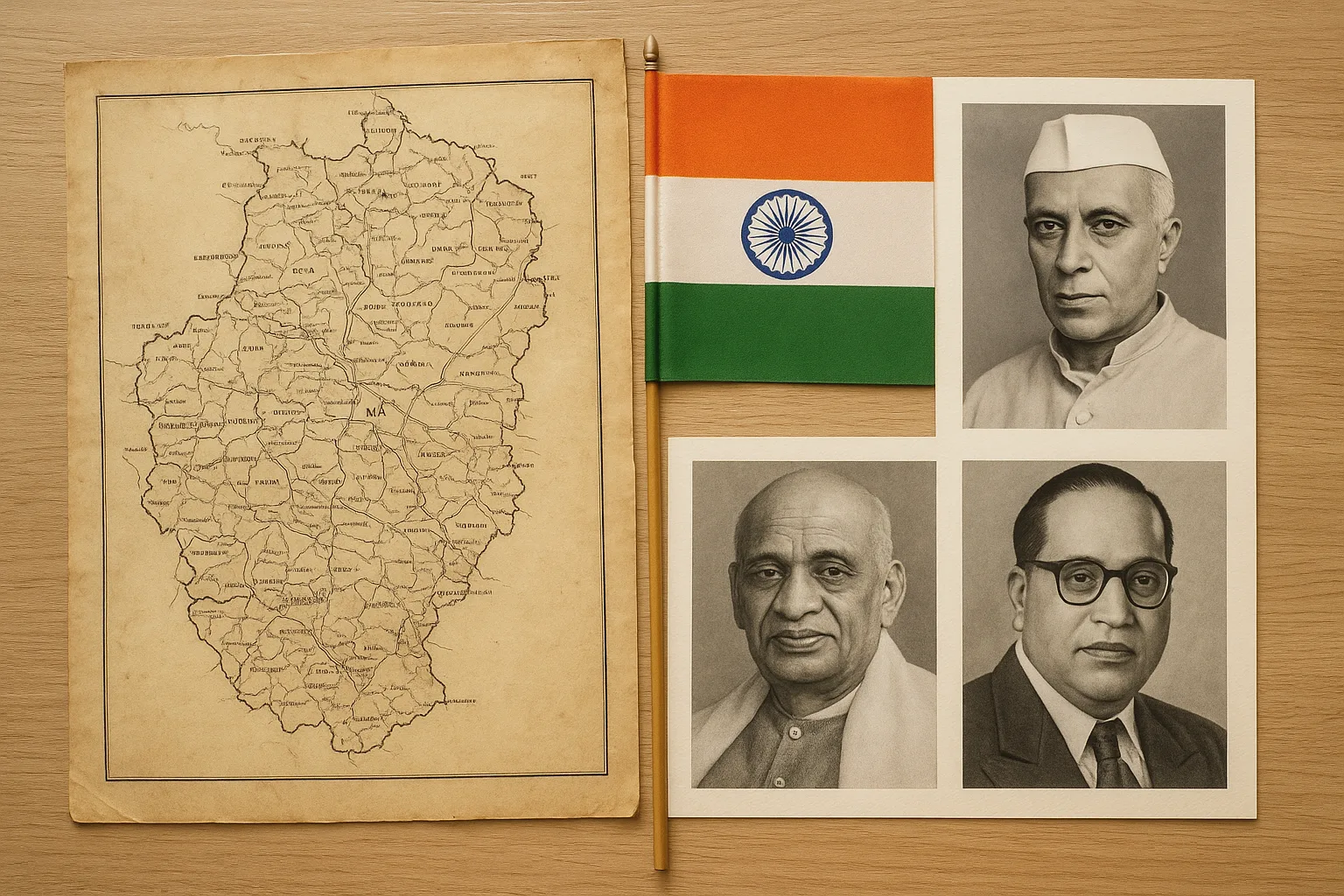
Una’s fate hung in the balance. The Indian National Congress, under Jawaharlal Nehru, sought to integrate the Himalayan foothills into a unified state, arguing for cultural and geographic continuity. Yet, many in Una still looked to Punjab for economic ties and cultural kinship. The debates played out in town halls, on the pages of the Amritsar Gazette, and in the rising voices at Una’s weekly markets.
It was not an abstract question. Would land records be recognized? Would schools teach in Punjabi or Hindi? Who would protect the rights of local cultivators, or decide the fate of evacuee property? Each family weighed these choices as officials from Delhi and Simla arrived to take stock of the new reality.
The Accession: Drawing New Boundaries
By late 1948, the Indian government had decided: the territories of the former princely states and areas like Una, then administered under Kangra, would be folded into the Chief Commissioner’s Province of Himachal Pradesh. The formal notification came on 15 April 1948, marking the creation of Himachal Pradesh as a centrally administered territory. Una’s administrative offices, for the first time, reported not to Lahore or Amritsar, but to the new capital in Simla (later Shimla).
This bureaucratic change was more than a line on a map. For the people of Una, it meant new taxes, new officials, and new opportunities. The arrival of Himachal’s first Chief Commissioner, N.C. Mehta, was marked by a small ceremony near the Una rest house. Local elders, still wary, watched as the tricolor was raised, and the first notes of the national anthem echoed against the rain-washed hills.
Some resisted. Petitions circulated, demanding a return to Punjab. Others, particularly those who had lost homes in partition, saw in Himachal a promise of stability. The debates would simmer for a decade, especially as language and cultural identity became rallying cries across northern India.
The Long Road to District Status
For years after accession, Una remained an outpost within Kangra district. Roads were rough, and government investment slow to arrive. Yet, the seeds of local pride had been sown. Schools opened, electrification crept forward, and agricultural extension officers began to teach new farming methods to smallholders. The construction of the Bhakra Dam in the 1950s transformed the region, bringing both displacement and economic opportunity.
It was not until 1 September 1972, decades after independence, that Una would finally become its own district. This administrative upgrade, championed by local leaders such as Sant Ram and Dr. R.K. Kaushal, was celebrated with a public gathering outside the new district headquarters. The people of Una, once caught in the crosscurrents of partition and princely intrigue, now claimed a distinct identity within Himachal Pradesh.
Legacies of Accession: Memory and Modernity
Today, walking through Una’s bazaars or visiting the quiet banks of the Swan river, the legacy of accession is everywhere. Place names recall old alliances—a street named for Bhagat Ram, a school for Raja Anand Chand. The annual Independence Day parade winds past shops run by families who arrived as refugees in 1947, their stories woven into the district’s fabric.
Yet, the memory of partition and the tension of divided loyalties lingers. In the past decade, debates over language policy, development funds, and the pace of modernization have reignited old questions: What does it mean to be from Una? Is its future still tied to the borderlands, or fully claimed by Himachal’s mountain identity?
The Echoes of 1947 in Una Today
Each August, as the rains return and the tricolor rises over Una, the town remembers its journey. The choices made in 1947—by frightened families, pragmatic leaders, and distant administrators—continue to shape daily life. The legacy of accession is not just a matter of borders, but of resilience: the ability of a small district to navigate the storms of history and emerge, not just as a footnote, but as a vital part of independent India.
Previous: Una’s Contribution to India’s Freedom Movement
Next: Formation of Una as a Separate District