
Series: History of Kangra, Himachal Pradesh, India
Phase 4: British Period — Part 20 of 30
This article is part of a wider series tracing the transformation of the western Himalayas under colonial influence. As British authority extended into the hills, existing political systems were restructured through treaties, administration, and new forms of governance. This phase considers how colonial rule reshaped society, economy, and space while leaving lasting imprints on local identity.
Twilight in the Valley: The First Murmurs of Dissent
In the early years of the twentieth century, as dusk settled over the stone ramparts of Kangra Fort and the cedar forests breathed out cool air, the hills seemed unchanged by the convulsions shaking the wider subcontinent. Yet beneath this quiet façade, the first murmurs of rebellion against British rule were stirring in the heart of Himachal’s most storied valley.
For generations, Kangra had been a mosaic of princely estates, Rajput chieftaincies, and resilient peasant communities. Its temples, bustling bazaars, and winding trade routes had witnessed centuries of legend, invasion, and survival. By 1850, the British administration had woven Kangra more tightly into the Punjab Province, introducing new systems of revenue, governance, and law. But with these changes came tensions—some subtle, others explosive.
From Myth to Memory: Kangra’s Legacy of Resistance
Local oral traditions long spoke of Kangra’s defiant spirit. Stories swirled of Rajas who challenged great empires, and villagers who rallied around their forts in times of siege. While some of these tales—like the exploits of Raja Sansar Chand—blend myth and historical inference, the region’s reputation for independence was real enough to trouble every outside power that sought to rule it.
When the 1857 uprising swept across North India, Kangra’s response was complex. The British, keenly aware of the valley’s martial traditions, kept a close watch. Regional gazetteers from the period paint a picture of a society simmering with quiet grievances, but for the most part, the initial rebellion did not ignite widespread revolt in the hills. Still, the memory of resistance—real and imagined—remained alive in popular consciousness.
New Realities, Old Contradictions: Colonial Governance Takes Root
With the suppression of the 1857 uprising, the British tightened their grip on Kangra. Administrators, often unfamiliar with the nuances of local life, introduced new land settlements and legal codes. While some local elites found opportunities in the colonial order, many peasants, artisans, and former soldiers found their world contracted by new taxes and strictures.
Key hill communities—the Gaddis, Brahmins, Rajputs, and lower-caste cultivators—navigated these changes in diverse ways. Some villages held fast to ancient customs, even as missionaries and British officials built schools and courts in the valley towns. The ancient trade routes connecting Kangra to Tibet, Punjab, and the plains persisted, but under greater scrutiny and regulation than ever before.
Despite the surface calm, the region’s social fabric was being stretched. The 1870s and 1880s saw episodes of popular unrest—tax protests, grain riots, and petitions to distant authorities. Yet, open rebellion was rare. Instead, resistance often took quieter forms: the refusal of new taxes, the protection of traditional forest rights, and the preservation of local religious practices in the face of outside interference.
Rural Assemblies and the Spread of Nationalist Ideas
By the dawn of the twentieth century, nationalist currents from the wider Punjab began to reach Kangra’s valleys. Teachers, lawyers, and small-town traders—some educated in Lahore or Shimla—brought back stories of the Indian National Congress and the Swadeshi movement. Rural assemblies, sometimes held under the guise of religious gatherings or local fairs, became venues for spirited debate about British rule and Indian self-determination.
Documented political history from this period shows a gradual but unmistakable awakening. The formation of local Congress committees in towns like Dharamshala and Palampur signaled a new phase. Young men, inspired by the example of Lala Lajpat Rai and other leaders, began organizing boycotts of foreign goods and spreading nationalist literature—often at great personal risk.
Yet, the movement in Kangra retained its own distinctive flavor. Unlike the great processions of Calcutta or Lahore, here protest was more often a matter of whispered conversations, secret meetings in temple courtyards, and the subtle refusal to cooperate with colonial orders. The rhythms of rural life continued, but now they pulsed with a new sense of purpose and possibility.
Peasants, Soldiers, and the Hidden Networks of Resistance
The British Raj had long relied on hillmen from Kangra and neighboring regions to fill the ranks of its army. Many families sent their sons to distant frontiers—Burma, Mesopotamia, even Europe in the First World War. When these men returned, they brought back not only medals and pensions, but new ideas about justice and equality picked up from comrades in arms.
In the interwar years, Kangra’s freedom movement drew strength from these veterans. Some joined emerging peasant unions, protesting exploitative taxes and the growing burden of debt. Others contributed to clandestine networks that funneled information—and sometimes funds—to nationalist leaders in the plains.
Oral testimony from elders in villages such as Nagrota and Yol hints at a hidden geography of resistance: footpaths through pine forests where messages were passed, and temple festivals that masked secret assemblies. The colonial police were wary of these networks, but found them difficult to penetrate in the labyrinthine hills.
The Tumult of 1942: Kangra and the Quit India Call
When the Quit India Movement erupted in August 1942, even the high valleys of Kangra could not remain untouched. Word of mass arrests and civil disobedience filtered in from Amritsar and Delhi, carried by traveling students, postal workers, and returning soldiers. In Kangra’s towns and villages, the response was measured but resolute.
There are well-documented accounts of local Congress leaders organizing hartals (strikes), sending telegrams of support, and refusing to cooperate with district officials. British authorities responded with a mixture of repression and conciliation—arresting agitators, but also seeking to reassure loyalists among the landed gentry.
Unlike in some parts of India, violence was rare in Kangra, but the sense of a society mobilized for change was unmistakable. By the final years of British rule, even those who had once benefited from colonial patronage found themselves drawn—sometimes reluctantly—into the current of nationalist politics.
Endings and Beginnings: Independence and the Rebirth of Kangra
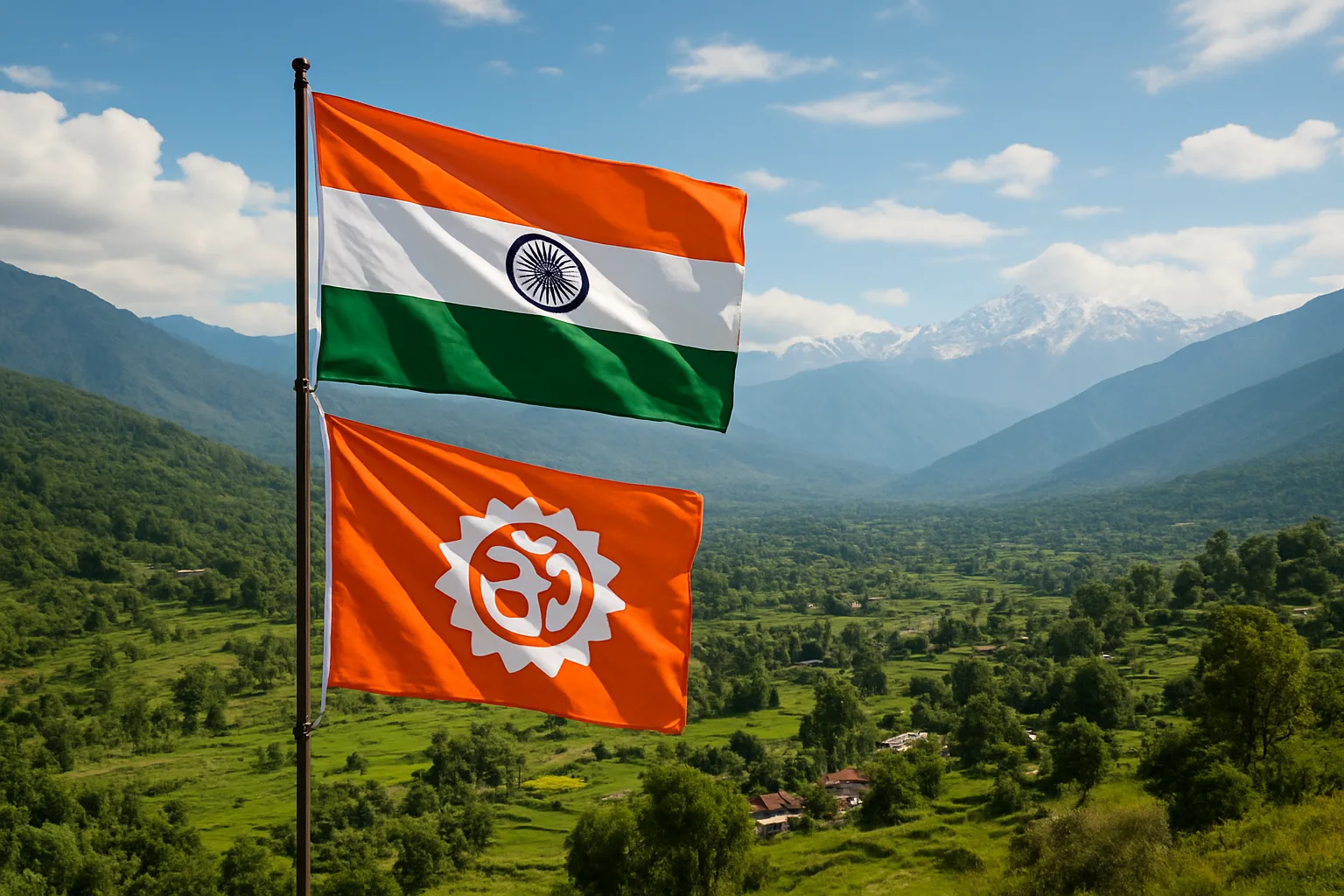
At midnight on August 15, 1947, as tricolor flags were quietly hoisted in homes and temples from Palampur to Baijnath, Kangra entered a new chapter. The legacy of the freedom movement was not only in the speeches or processions of its leaders, but in the transformed expectations of ordinary people. Formerly isolated hamlets now saw themselves as part of a larger national story. The region’s centuries-old traditions of autonomy and self-rule found new expression in the institutions of an independent India.
Today, the echoes of that era still shape Kangra’s identity. The memories of rural assemblies, forthright petitions, and the quiet courage of villagers linger in local folklore and family stories. Schools commemorate the men and women who dared to dream of freedom amid the cedars and pines. The movement forged a bridge between ancient traditions and modern aspirations—a legacy as enduring as the mountains themselves.
As our series continues, we turn next to the early years of independence, when Kangra’s people faced the challenges and opportunities of a new nation. The path from resistance to reconstruction would prove no less compelling than the struggle for freedom itself.
Previous: Social and Educational Changes Under British Rule
Next: Kangra After Independence